
Maine
Maine Data Breach Notification Laws: Reporting Rules & Timelines (2026)
Independently fact-checked against primary sources (last audited August 14, 2026). · Reviewed by the RecordingLaw editorial team. · Law checked current as of August 14, 2026. · 11 primary sources cited on this page. How we verify our legal content

Under Maine's Notice of Risk to Personal Data Act (10 M.R.S. sections 1346 to 1350-B), any business, government agency, or institution that maintains computerized personal information must notify affected Maine residents and the Attorney General or Department of Professional and Financial Regulation within 30 days of discovering a breach and identifying its scope.
Maine's Notice of Risk to Personal Data Act (10 MRSA sections 1346 through 1350-B) sets out some of the strictest breach notification timelines in the United States. While many states allow 45 or 60 days to notify affected residents, Maine caps the window at 30 days from the date an organization discovers the breach and determines its scope.
The law applies broadly. Information brokers, private businesses, government agencies, municipalities, school districts, and universities all fall within its reach. Since taking effect on January 31, 2006, the statute has been amended several times, most notably in 2019 when lawmakers added the 30-day hard deadline and expanded coverage to municipalities and school administrative units.
This guide breaks down every requirement under the Act, from who must notify to what penalties apply.
For a broader overview of data protection in the state, see our Maine Data Privacy Laws hub.
Who Must Comply
Maine's breach notification law covers two categories of entities, each with slightly different obligations.
Information brokers are persons whose primary business involves collecting and compiling personal information about individuals for the purpose of furnishing that data to unaffiliated third parties in exchange for monetary fees. Government agencies whose records are maintained primarily for traffic safety, law enforcement, or licensing purposes are excluded from this definition.
All other persons who maintain computerized data containing personal information must also comply. The statute defines "person" broadly to include individuals, partnerships, corporations, limited liability companies, trusts, estates, cooperative associations, and other business entities. A 2019 amendment explicitly added governmental entities, municipalities, school administrative units, the University of Maine System, the Maine Community College System, and Maine Maritime Academy to this definition. The statute's definition of person also expressly names private colleges and universities.
When multiple entities are involved in the same breach event, the law does not require duplicative notice from each entity. This prevents affected individuals from receiving redundant notifications arising from a single incident.
What Counts as Personal Information
The Act protects specific combinations of data elements. A breach triggers notification only when an individual's first name or first initial and last name are compromised along with one or more of the following unencrypted or unredacted elements:
- Social Security number
- Driver's license number or state identification card number
- Account number, credit card number, or debit card number that can be used without additional authentication
- Account passwords, personal identification numbers (PINs), or other access codes
- Any of the above data elements when the element alone, without the individual's name, would be sufficient to commit identity fraud
The statute explicitly excludes publicly available information from government records and information that is widely distributed by media from the definition of personal information. Third-party claims databases maintained by property and casualty insurance companies are also excluded.
What Is Not Covered
Unlike some states that have expanded their definitions in recent years, Maine's breach notification law does not include biometric data, health or medical information, or email addresses with passwords in the definition of protected personal information. However, health insurance entities that experience breaches are still subject to the notification requirements for any covered data elements they hold.
The Encryption Safe Harbor
Maine provides a clear safe harbor for encrypted data. If the compromised personal information was encrypted using "generally accepted practices," the breach does not trigger notification requirements.
The statute does not define "generally accepted practices" in further detail, leaving organizations to follow current industry standards such as AES-256 encryption. The safe harbor also applies to data that has been redacted, meaning the protected elements have been removed or obscured.
This is a significant protection. Organizations that encrypt personal information at rest and in transit can avoid the entire notification process if the encryption was not also compromised during the breach.

30-Day Notification Timeline
Maine's notification window is among the shortest in the nation. Organizations must provide notice "as expediently as possible and without unreasonable delay" and no later than 30 days after the person becomes aware of the breach and identifies its scope.
This 30-day clock starts running once two conditions are met: the organization knows a breach occurred, and it has determined the scope of the incident. The language "identifies its scope" gives organizations some flexibility to complete an initial investigation before the clock starts. However, organizations cannot use ongoing investigation as a justification for indefinite delay.
Law Enforcement Delay
The one exception to the 30-day deadline involves law enforcement. If a law enforcement agency determines that notification would compromise a criminal investigation, the organization may delay notification. However, this delay cannot exceed 7 business days after law enforcement determines that the notification will no longer interfere with the investigation.
Organizations should obtain written confirmation from law enforcement if they rely on this exception, though the statute does not explicitly require documentation.
Who Must Be Notified
When a breach triggers notification, multiple parties may need to be informed.
Affected Residents
Every Maine resident whose personal information was or is reasonably believed to have been acquired by an unauthorized person must receive notice. The statute draws a distinction between information brokers and other entities:
- Information brokers must notify residents after conducting a reasonable and prompt investigation, regardless of whether actual misuse has occurred.
- Other persons must notify residents when misuse of the personal information has occurred or is "reasonably possible."
State Regulators
Organizations must notify their applicable state regulator. If the entity is regulated by a department within the Maine Department of Professional and Financial Regulation (such as banks, credit unions, or insurance companies), it must notify that department. All other organizations must notify the Maine Attorney General.
The AG's office provides an Electronic Maine Security Breach Reporting Form for submitting notifications.
Consumer Reporting Agencies
If a breach affects more than 1,000 individuals, the organization must also notify nationwide consumer reporting agencies "without unreasonable delay." This notification must include the timing of the breach, the estimated number of affected persons, and the actual or anticipated date of individual notifications.
Third-Party Data Holders
Third-party entities that maintain personal information on behalf of another organization must notify the data owner "immediately" upon discovering a breach. The data owner then bears responsibility for notifying affected individuals and regulators.
Methods of Notification
The statute permits three methods of providing notice to affected individuals.
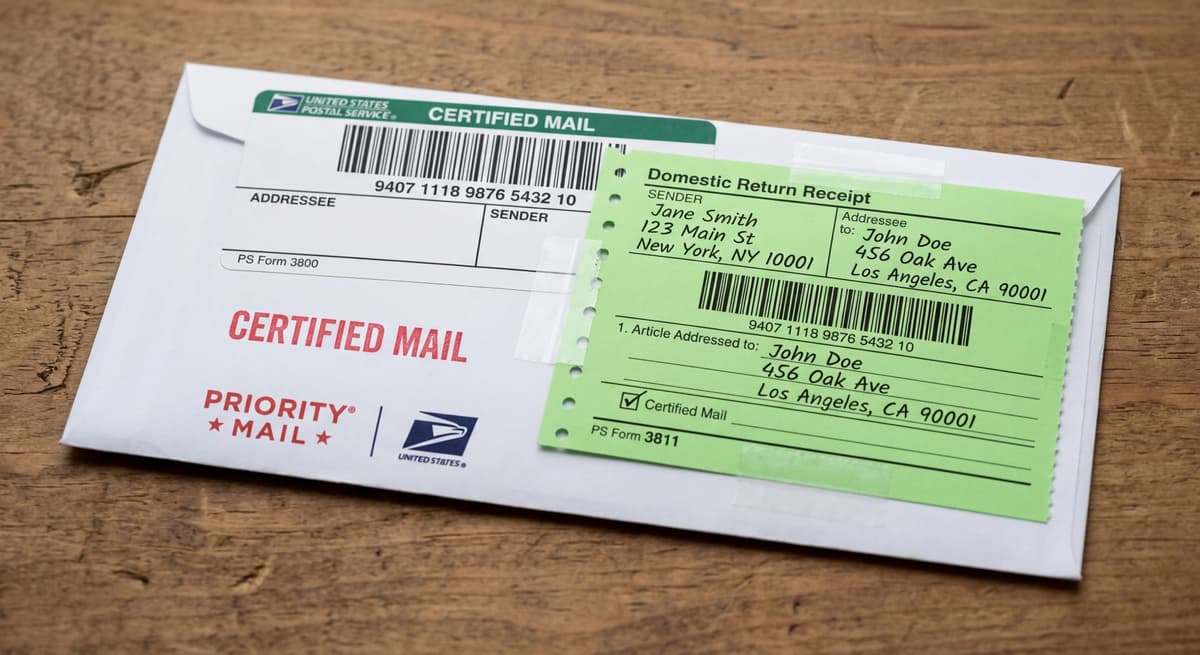
Written notice is the default and most straightforward method. Organizations mail a letter to the last known address of each affected individual.
Electronic notice is permitted if it complies with the federal Electronic Signatures in Global and National Commerce Act (15 U.S.C. section 7001). This generally requires that the recipient has affirmatively consented to receive electronic notices and has not withdrawn that consent.
Substitute notice is available when the organization demonstrates that any one of these conditions is met:
- The cost of providing direct notice would exceed $5,000
- The affected class exceeds 1,000 individuals
- The organization lacks sufficient contact information
Maine's $5,000 cost threshold for substitute notice is among the lowest in the country. New Hampshire uses the same $5,000 cost figure and the same 1,000-person trigger under RSA 359-C:20, III(d). Many states set this threshold at $250,000 or higher. This means smaller organizations that experience a breach affecting even a modest number of people may qualify for substitute notice relatively quickly.
Substitute notice requires all three of the following steps:
- Email notification to all affected individuals for whom the organization has an email address
- Conspicuous posting on the organization's website, if one exists
- Notification to major statewide media outlets
Required Content of Notice
Section 1348(4) specifies that the notice to nationwide consumer reporting agencies must include:
- The date of the breach of security
- An estimate of the number of persons affected, if known
- The actual or anticipated date that individuals were or will be notified
The statute prescribes no content at all for the notice to the Department of Professional and Financial Regulation or the Attorney General; those agencies set their own fields through their reporting forms. The law also does not prescribe the exact content that must appear in notices to affected individuals, but standard practice and Attorney General expectations typically include a description of the incident, the types of information involved, steps the individual can take to protect themselves, and contact information for the notifying organization.

Enforcement and Penalties
Maine divides enforcement authority between two bodies depending on the type of entity involved.
The Department of Professional and Financial Regulation enforces the law against entities it regulates, including banks, insurance companies, and other licensed financial entities.
The Attorney General enforces the law against all other persons.
Civil Penalties
Violators face a civil fine of up to $500 per violation, with a maximum of $2,500 for each day the organization remains in noncompliance. These amounts are relatively modest compared to states like California or New York, which can impose significantly larger penalties.
Government Entity Exemption
State government, municipalities, school administrative units, the University of Maine System, the Maine Community College System, and Maine Maritime Academy are exempt from financial penalties. They remain subject to the notification requirements but face no monetary fines for violations.
Equitable Relief
Beyond monetary penalties, enforcement agencies can seek equitable relief including injunctions to prevent further violations. These remedies are cumulative with any other legal remedies available under state and federal law.
No Private Right of Action
Maine's breach notification law does not create an explicit private right of action. Individuals cannot sue directly under this statute for a breach of their personal information. However, affected individuals may have other legal avenues, such as claims under the Maine Unfair Trade Practices Act (5 MRSA section 207) or common law negligence theories.
Federal Preemption Safe Harbor
Entities that are already subject to and comply with federal or state security breach notification requirements that are "at least as protective" as the requirements under section 1348 are deemed in compliance with the Maine law. This safe harbor benefits organizations subject to regulations like HIPAA, the Gramm-Leach-Bliley Act, or other sector-specific federal rules.
Section 1347-A: Prohibition on Unauthorized Use
Beyond notification requirements, the Act includes a separate prohibition under section 1347-A. This provision makes it a violation for any unauthorized person to release or use an individual's personal information that was acquired through a security breach.
This section targets the bad actors who exploit stolen data, not just the organizations that fail to secure it.
The Maine Online Data Privacy Act (LD 1822): Died in the Legislature
LD 1822, the Maine Online Data Privacy Act, would have created a comprehensive data privacy framework separate from the breach notification statute described in this guide. It did not become law. According to the Maine Legislature's own bill status tracker, LD 1822 died between houses on April 13, 2026, after the Judiciary Committee issued a divided report the previous June.
Maine currently has no comprehensive consumer data privacy statute. The Notice of Risk to Personal Data Act covered throughout this guide remains the state's only data protection law of its kind, and it addresses breach notification only. It does not regulate how organizations collect, use, process, or share personal data before a breach occurs, and it creates no data minimization requirements or consumer rights to access, correct, or delete personal data.
A future legislative session could reintroduce comprehensive privacy legislation in Maine. Until a new bill is enacted, organizations operating in the state need only comply with the breach notification requirements described above; no broader data privacy law currently applies.
Comparison with ISP Privacy Law
Maine also has a separate broadband ISP privacy law (Title 35-A, section 9301), enacted in 2019 through LD 946. This law prohibits internet service providers from using, selling, or distributing customer personal information without express opt-in consent.
The ISP privacy law is distinct from the breach notification statute. It regulates ongoing data practices by broadband providers rather than post-breach obligations. An ISP that experiences a data breach would still need to comply with the Notice of Risk to Personal Data Act in addition to its obligations under Title 35-A.
Practical Steps for Compliance
Organizations that maintain personal information of Maine residents should take these actions to prepare for potential breaches:
Develop an incident response plan that accounts for Maine's 30-day notification deadline. Given the short window, organizations cannot afford to create a response protocol after a breach is discovered.
Know your regulator. Determine in advance whether your organization reports to the Department of Professional and Financial Regulation or the Attorney General. Having the correct reporting form ready saves critical time.
Encrypt personal information using generally accepted practices. This is the single most effective step an organization can take, because properly encrypted data that is breached does not trigger notification at all.
Maintain current contact information for customers and employees whose personal information you hold. Organizations that lack sufficient contact information for direct notice must use the substitute notice process, which involves media notifications and is more public.
Document your investigation timeline. Because the 30-day clock starts when the organization becomes aware of the breach and identifies its scope, maintaining clear records of when discovery occurred and when the investigation concluded is essential for demonstrating compliance.
This article is for informational purposes only and does not constitute legal advice. Data breach notification requirements can change as legislatures amend existing statutes or courts issue new rulings. Consult a qualified attorney licensed in Maine for guidance specific to your situation.
More Maine Laws
Frequently Asked Questions
How quickly must a Maine business notify people of a data breach?
Maine law requires notification no later than 30 days after the organization becomes aware of the breach and identifies its scope. This is one of the shortest hard deadlines in the country. The only exception is a law enforcement delay, which can extend the timeline by up to 7 business days after law enforcement clears the notification.
Does encrypting data protect a business from Maine breach notification requirements?
Yes. Maine provides an encryption safe harbor. If the compromised personal information was encrypted using generally accepted practices, the breach does not trigger the notification obligation. The statute does not specify particular encryption standards, but organizations should follow current industry best practices such as AES-256.
What is Maine's substitute notice provision and when does it apply?
Substitute notice is an alternative notification method available when the cost of direct notice exceeds $5,000, the affected class exceeds 1,000 individuals, or the organization lacks sufficient contact information. Maine's $5,000 cost threshold is among the lowest in the country, matched by New Hampshire. Substitute notice requires emailing affected individuals (if addresses are available), posting conspicuously on the organization's website, and notifying major statewide media outlets.
Can individuals sue under Maine's data breach notification law?
No. Maine's Notice of Risk to Personal Data Act does not create a private right of action. Only the Attorney General or the Department of Professional and Financial Regulation can enforce the statute. However, affected individuals may be able to bring claims under the Maine Unfair Trade Practices Act or pursue common law theories such as negligence.
Does Maine's breach notification law cover health insurance information or biometric data?
The law does not specifically list health insurance information or biometric data as protected personal information. Protected elements are limited to SSN, driver's license or state ID number, financial account numbers with security codes, and account passwords or PINs. However, health insurers that hold any of these data elements must still comply with notification requirements if those elements are breached.
Affected by a data breach or biometric privacy violation?
If your personal data was exposed in a breach, or your fingerprint or face scan was collected without your consent, you may be eligible to join a claim for compensation. Find out for free, with no obligation.
Updates
Corrected the claim that Maine has the lowest substitute-notice cost threshold in the country (New Hampshire uses the same $5,000 figure) and clarified that the statutory notice-content requirements apply to the consumer reporting agency notice only, not to the regulator notice.
Corrected this page to reflect that LD 1822, the Maine Online Data Privacy Act, died in the Legislature on April 13, 2026, and did not become law; Maine currently has no comprehensive consumer data privacy statute beyond breach notification. Also clarified two definitional details: the information-broker exclusion includes agencies with licensing-related records, and the statute's definition of person expressly names private colleges and universities.
Independently fact-checked against the cited primary sources; governing law re-checked for recent changes
Governing law re-checked for recent changes
Reviewed and approved by an editor
The Law Behind This Article
This article rests on the statutory provisions below, held in our own legal record and retrieved from the official source. Tap a section to read the operative text.
Maine Revised Statutes, Title 10: COMMERCE AND TRADE, Part 3: REGULATION OF TRADE, Chapter 210-B: NOTICE OF RISK TO PERSONAL DATA
§ 1348Security breach notice requirementsIn forcecited in 2 of our articles
1. Notification to residents. The following provisions apply to notification to residents by information brokers and other persons. A. If an information broker that maintains computerized data that includes personal information becomes aware of a breach of the security of the system, the information broker shall conduct in good faith a reasonable and prompt investigation to determine the likelihood that personal information has been or will be misused and shall give notice of a breach of the security of the system following discovery or notification of the security breach to a resident of this State whose personal information has been, or is reasonably believed to have been, acquired by an unauthorized person. [PL 2005, c. 583, §6 (NEW); PL 2005, c. 583, §14 (AFF).] B.
Official text (excerpt) · last checked 2026-08-28 · Read the full text in our law library · Verify at legislature.maine.gov
Cited in 4 court opinions in our collectionLatest citing opinion in our collection: 2012
Opinions citing this section in our collection:
- Digital Fed. Credit Union v. Hannaford Bros. Co. (Superior Court of Maine 2012)“…the possible misuse of that personalized information, see 10 M.R.S. § 1348 (2011), to date, the Legislature has n…”
- Digital Federal Credit Union v. Hannaford Brothers Co. (Superior Court of Maine 2012)“…the possible misuse of that personalized information, see 10 M.R.S. § 1348 (2011), to date, the Legislature has n…”
- In Re Hannaford Bros. Co. Customer Data Security Breach Litigation (District Court, D. Maine 2009, 613 F. Supp. 2d 108)“…ring on the claims asserted here. 80 . 10 M.R.S.A. § 1348(1). 81 .…”
Identified automatically from the court opinions citing this section — not a ranking of which case controls.
Also relied on in: Maine Data Privacy Laws: ISP Privacy & Consumer Rights (2026)
§ 1347DefinitionsIn forcecited in 3 of our articles
As used in this chapter, unless the context otherwise indicates, the following terms have the following meanings. [PL 2005, c. 379, §1 (NEW); PL 2005, c. 379, §4 (AFF).] 1. Breach of the security of the system. "Breach of the security of the system" or "security breach" means unauthorized acquisition, release or use of an individual's computerized data that includes personal information that compromises the security, confidentiality or integrity of personal information of the individual maintained by a person. Good faith acquisition, release or use of personal information by an employee or agent of a person on behalf of the person is not a breach of the security of the system if the personal information is not used for or subject to further unauthorized disclosure to another person. 2. Encryption. "Encryption" means the disguising of data using generally accepted practices. 3. Information broker.
Official text (excerpt) · last checked 2026-07-30 · Read the full text in our law library · Verify at legislature.maine.gov
Also relied on in: Maine Biometric Privacy Laws: Facial Recognition Ban & Current Protections (2026)
§ 1349Enforcement; penaltiesIn forcecited in 2 of our articles
1. Enforcement. The appropriate state regulators within the Department of Professional and Financial Regulation shall enforce this chapter for any person that is licensed or regulated by those regulators. The Attorney General shall enforce this chapter for all other persons. 2. Civil violation. A person that violates this chapter commits a civil violation and is subject to one or more of the following: A. A fine of not more than $500 per violation, up to a maximum of $2,500 for each day the person is in violation of this chapter, except that this paragraph does not apply to State Government, municipalities, school administrative units, the University of Maine System, the Maine Community College System or Maine Maritime Academy; [PL 2019, c. 512, §3 (AMD).] B. Equitable relief; or [PL 2005, c. 379, §1 (NEW); PL 2005, c. 379, §4 (AFF).] C. Enjoinment from further violations of this chapter. [PL 2005, c. 379, §1 (NEW); PL 2005, c. 379, §4 (AFF).] 3. Cumulative effect. The rights and remedies available under this section are cumulative and do not affect or prevent rights and remedies available under federal or state law. 4. Exceptions.
Official text (excerpt) · last checked 2026-07-30 · Read the full text in our law library · Verify at legislature.maine.gov
§ 1347-ARelease or use of personal information prohibitedIn force
It is a violation of this chapter for an unauthorized person to release or use an individual's personal information acquired through a security breach. [PL 2009, c. 161, §2 (NEW); PL 2009, c. 161, §5 (AFF).]
Official text (excerpt) · last checked 2026-07-30 · Read the full text in our law library · Verify at legislature.maine.gov
Search our full record of US law — 2.1 million sections, every state + federal →
Sources and References
- Maine Notice of Risk to Personal Data Act, Chapter 210-B(legislature.maine.gov).gov
- Title 10, Section 1347: Definitions(legislature.maine.gov).gov
- Title 10, Section 1348: Security Breach Notice Requirements(legislature.maine.gov).gov
- Title 10, Section 1349: Enforcement and Penalties(legislature.maine.gov).gov
- Title 10, Section 1347-A: Release or Use of Personal Information Prohibited(legislature.maine.gov).gov
- Maine AG: Privacy, Identity Theft and Data Security Breaches(maine.gov).gov
- Maine PFR: Risk to Personal Data FAQs(maine.gov).gov
- Electronic Maine Security Breach Reporting Form(me.accessgov.com)
- LD 1822: Maine Online Data Privacy Act Status (Died Between Houses, Apr 13, 2026)(legislature.maine.gov).gov
- Title 35-A, Section 9301: ISP Privacy Law(legislature.maine.gov).gov
- 15 U.S.C. Section 7001: E-SIGN Act(govinfo.gov).gov
- Public Law Chapter 512: Municipalities and School Districts Breach Notification(legislature.maine.gov).gov
- New Hampshire RSA 359-C:20, III(d): Notification of Security Breach (same $5,000 substitute-notice threshold)(gc.nh.gov)