
Missouri
Missouri Court Records: How to Search Case.net, What's Public, and How Expungement Works
Independently fact-checked against primary sources (last audited August 10, 2026). · 5 primary sources cited on this page. How we verify our legal content

Missouri runs a single, free statewide portal for its court records: Case.net, at courts.mo.gov/casenet. It covers the state's circuit courts, the Missouri Court of Appeals, and the Missouri Supreme Court, and it is the starting point for looking up a case by name or case number anywhere in the state.
Case.net is not a complete window into every document, though. Missouri drew a hard line in 2023: case records filed before July 1, 2023 are not available remotely at all, only in person at the court that has custody of the case. The rule that draws that line, and the general presumption that Missouri court records are open, comes from Missouri Court Operating Rule 2 (COR 2), not from Case.net's own marketing copy.
Information last verified on 2026-08-10. This article has not yet been reviewed by a licensed lawyer.
This guide is part of a broader look at court records by state; for the mechanics of federal versus state versus county searches generally, see how to look up court records and are court records public.
Searching Missouri Court Records on Case.net
Case.net describes itself as the public's access to the Missouri State Courts Automated Case Management System, covering docket entries, parties, judgments, and charges in cases that have been deemed public under Missouri statute. The search supports several free entry points: litigant name, filing date, case number, scheduled hearing, and a judgment index, and none of them require creating an account.
Two practical details are easy to miss. First, Case.net is not available around the clock; the portal's own posted hours are Monday through Friday, 6 a.m. to 1 a.m. Central time, so a weekend search will not go through. Second, the site carries a plain disclaimer that the information it returns "is provided as a service and is not considered an official court record." Treat a Case.net printout as a starting point, not as proof, if the record needs to stand up anywhere official.
Missouri's courts have also had to warn the public about scam sites and messages impersonating Case.net, including fake text messages about traffic tickets designed to spread malware. Only use courts.mo.gov/casenet directly, not a link from a text message or an unfamiliar site claiming to be Case.net.
What's Public, and the July 2023 Document Cutoff
Missouri Court Operating Rule 2 sets the general rule for the whole state: records of the judicial proceedings of all courts are presumed to be open to any member of the public for purposes of inspection or copying, except for records made confidential by statute, court rule or order, or other law. The Supreme Court of Missouri restructured COR 2 by an order entered December 16, 2025 and effective July 1, 2026, rewriting the redaction provisions and moving the definitions of confidential records and confidential information into Court Operating Rule 4.24. The access framework described on this page survived that rewrite. COR 2 still expressly bars automated scraping of Missouri judicial websites, including Case.net, and it still allows the State Courts Administrator to temporarily suspend remote public access whenever the operation of that access adversely affects the statewide court automation system or court operations.
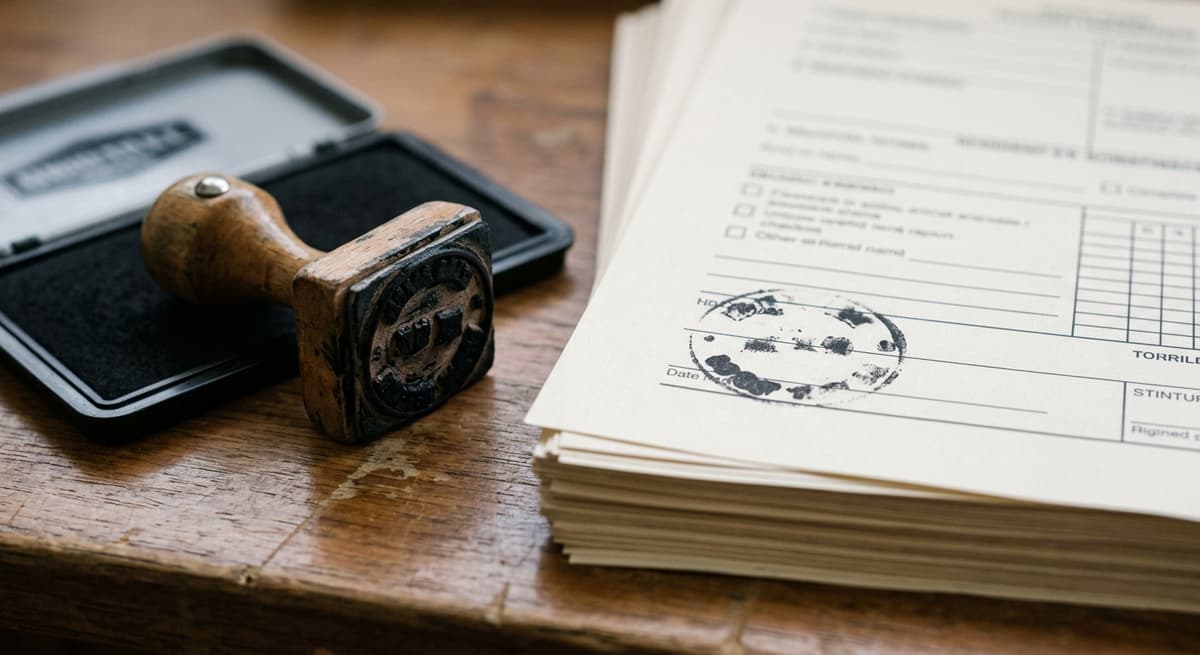
The single most important access fact on this page is the cutoff COR 2 draws through the state's rollout of remote document access: case records filed on or before June 30, 2023 can be obtained only in person, from the court that has custody of the case, during that court's regular business hours. Case records filed on or after July 1, 2023 are the ones that may be obtained remotely over the internet, and the rule adds that remote availability still depends on the case or document type and is unavailable where a statute, a court rule, or an order in the particular case forecloses it. Case docket entries themselves (who filed what, and when) are generally visible on Case.net regardless of date; it is the underlying filed documents from before mid-2023 that require an in-person visit.
Missouri's Expungement Law, and the New SB 1421 Drug Track
Missouri uses the word expungement, not sealing, for its record-clearing process. Under Section 610.140 of the Missouri Revised Statutes, a person may petition to expunge a qualifying record after a waiting period: at least three years since completing the sentence for a felony, or at least one year for a misdemeanor, and no earlier than eighteen months from the date of arrest for an arrest that did not lead to a conviction. The statute caps how many records a person can expunge over a lifetime, no more than three misdemeanor offenses or ordinance violations, and no more than two felony offenses, and it excludes a specific list of serious offenses, including Class A felonies, dangerous felonies, offenses requiring sex-offender registration, felonies involving death or assault, domestic assault, and kidnapping.
Missouri is building a second, narrower track on top of that existing law. Senate Bill 1421, signed by Governor Kehoe on July 9, 2026, directs the state to automatically expunge eligible drug possession and drug paraphernalia convictions, both felony and misdemeanor, without the person having to file a petition. The bill text describes eligible offenses as being automatically expunged "as a matter of law upon eligibility," with the state's central criminal history repository screening records on a rolling basis. Drug trafficking offenses are not covered. The new automatic track is expected to take effect no later than January 1, 2027, so as of this writing it is not yet operating; the existing petition-based process under Section 610.140 remains the only path available today. For eligibility details and the filing process under both tracks, see Missouri expungement laws, which this page does not duplicate.
Certified Copies
A certified copy of a Missouri court document comes from the Circuit Clerk of the county (or the city of St. Louis) where the case was filed, not from any statewide office. Certified-copy fees are set locally and vary by circuit, so confirm the current fee directly with the circuit clerk's office handling the case rather than assuming a single statewide amount.

Using Missouri Court Records the Right Way
Case.net is built for checking your own case, following a matter you are personally involved in, or general public research, not for compiling a background file on someone else. Under the federal Fair Credit Reporting Act, most arrests and civil judgments age off a consumer report after seven years, but criminal convictions are carved out of that limit under 15 U.S.C. section 1681c(a)(5) and can be reported indefinitely unless Missouri has expunged them. Anyone assembling public court records for a hiring or housing decision may be acting as a consumer reporting agency under federal law, and the FTC has enforced this directly: in 2023 it reached a $5.8 million settlement with TruthFinder and Instant Checkmate over marketing public-records reports for tenant and employee screening without following FCRA requirements. A Case.net printout is not a substitute for an FCRA-compliant background check when the decision involves employment or housing, and a common name can return the wrong person entirely, so treat an unverified match as unconfirmed.
Related Resources
Court Records by State covers the full 50-state picture. See also How to Look Up Court Records, Are Court Records Public?, Missouri Expungement Laws, Missouri Background Check Laws, Missouri Warrant Search, and Missouri Public Records Laws.
Disclaimer
This article explains how Missouri's court records tools are organized. It is general legal information, not legal advice. Portal features, hours, and fees change without notice; verify current details with courts.mo.gov or the relevant circuit clerk before relying on them. Consult a Missouri-licensed attorney for advice about a specific case.
Last updated: 2026-08-10. Portal facts and fees reflect their published status as of August 2026.
Frequently Asked Questions
Is Missouri court records search free?
Yes. Case.net, Missouri's statewide portal at courts.mo.gov/casenet, offers free searches by litigant name, case number, filing date, scheduled hearing, and judgment index with no account required.
Can I view Missouri court documents filed before 2023 online?
No. Under Missouri Court Operating Rule 2, case records filed before July 1, 2023 can only be obtained in person from the court that has custody of the case, during its regular business hours. Only records filed on or after that date may be obtained remotely, and then only depending on the case and document type.
Is Case.net available 24 hours a day?
No. Case.net's posted availability is Monday through Friday, 6 a.m. to 1 a.m. Central time.
Is Case.net the official Missouri court record?
No. The site itself discloses that its information is provided as a service and is not considered an official court record. For an official record, request a certified copy from the circuit clerk.
How does Missouri expungement work?
Under Section 610.140 of the Missouri Revised Statutes, a person can petition to expunge a qualifying felony after three years or a misdemeanor after one year, subject to lifetime caps and a list of excluded serious offenses. Missouri Senate Bill 1421 adds a separate automatic track limited to drug possession and paraphernalia convictions, expected to take effect no later than January 1, 2027.
Are there fake Case.net websites?
Yes. Missouri's courts have publicly warned about fake Case.net lookalike sites and fake text messages about traffic tickets used to spread malware. Only use courts.mo.gov/casenet directly.
Can I use Case.net to screen a job applicant or tenant?
Not on its own. Case.net is not built for background screening, and criminal convictions do not age off a consumer report under the Fair Credit Reporting Act. Employment or housing screening decisions should go through an FCRA-compliant consumer reporting agency.
Updates
Corrected the signing date of Senate Bill 1421 to July 9, 2026, and updated the description of Missouri Court Operating Rule 2 to reflect the Supreme Court of Missouri order effective July 1, 2026, which restructured the rule without changing the July 1, 2023 remote-access cutoff.
Independently fact-checked against the cited primary sources
The Law Behind This Article
This article rests on the statutory provisions below, held in our own legal record and retrieved from the official source. Tap a section to read the operative text.
Revised Statutes of Missouri, Title XXXIX (CONDUCT OF PUBLIC BUSINESS), Chapter 610
§ 610.140Expungement of certain criminal records — definitions — petition, contents, procedure — effect of expungement on employer inquiry — lifetime limits.In forcecited in 5 of our articles
1. For the purposes of this section, the following terms mean: (1) "Court", any Missouri municipal, associate circuit, or circuit court; (2) "Crime", any offense, violation, or infraction of Missouri state, county, municipal, or administrative law; (3) "Prosecutor" or "prosecuting attorney", the prosecuting attorney, circuit attorney, or municipal prosecuting attorney. 2. (1) Notwithstanding any other provision of law and subject to the provisions of this section, any person may apply to any court in which such person was charged or found guilty of any crimes for an order to expunge records of such arrest, plea, trial, or conviction. (2) Subject to the limitations of subsection 13 of this section, a person may apply to have one or more crimes expunged if each such crime occurred within the state of Missouri and was prosecuted under the jurisdiction of a Missouri court, so long as such person lists all the crimes he or she is seeking to have expunged in the petition and so long as all such crimes are not excluded under subsection 3 of this section.
Official text (excerpt) · last checked 2026-09-07 · Read the full text in our law library · Verify at revisor.mo.gov
Cited in 15 court opinions in our collectionLatest citing opinion in our collection: 2026
In the courts (editorial summary, independently checked):Perkins v. Bridgeton Police Dept. (2018) read Section 610.140 by its plain text, holding a forgery conviction could not be expunged because the statute did not list it, though the same conduct charged otherwise would qualify. S.E.M. v. St. Louis County (2019) held the statute is remedial, so a later amendment governed a pending petition.
Opinions citing this section in our collection:
- Perkins v. Bridgeton Police Dept. (Missouri Court of Appeals 2018, 549 S.W.3d 504)✓Nine 1991 forgery convictions were expunged below on the reasoning that the same check conduct could have been charged as a fraudulent-device offense the statute allows. The court held section 610.140's list of eligible offenses is plain, forgery is absent, and reversed.
- Randall D. Friedberg v. Mark S. Owen, Platte County Sheriff (Missouri Court of Appeals 2020)✓A sheriff denied a concealed carry permit solely because the applicant pleaded guilty to a 1991 felony later expunged under section 610.140. The court held subsection .9 bars automatic disqualification for an expunged offense, though the sheriff may still weigh it as one factor.
- S.E.M. v. St. Louis County, Missouri, and Missouri State Highway Patrol Criminal Records Repository (Missouri Court of Appeals 2019)✓The state patrol argued a 1993 misdemeanor within seven years of S.E.M.'s discharge barred expunging his 1987 felony drug convictions forever. The court held the seven-year window in the August 2018 version of 610.140.5(1) counts backward from the petition's filing.
Identified automatically from the court opinions citing this section — not a ranking of which case controls.
Also relied on in: Missouri Expungement Laws: Mo. Rev. Stat. § 610.140 Guide (2025), How Long Does a Felony Stay on Your Record? (2026), Missouri Enacts Automatic 'Clean Slate' Expungement for Drug Offenses Under SB 1421
United States Code Title 15
§ 1681cRequirements relating to information contained in consumer reportsIn forcecited in 54 of our articles
Except as authorized under subsection (b), no consumer reporting agency may make any consumer report containing any of the following items of information: Cases under title 11 or under the Bankruptcy Act that, from the date of entry of the order for relief or the date of adjudication, as the case may be, antedate the report by more than 10 years. Civil suits, civil judgments, and records of arrest that, from date of entry, antedate the report by more than seven years or until the governing statute of limitations has expired, whichever is the longer period. Paid tax liens which, from date of payment, antedate the report by more than seven years. Accounts placed for collection or charged to profit and loss which antedate the report by more than seven years. Any other adverse item of information, other than records of convictions of crimes which antedates the report by more than seven years.
Official text (excerpt) · last checked 2026-07-28 · Read the full text in our law library · Verify at uscode.house.gov
Cited in 383 court opinions in our collectionLatest citing opinion in our collection: 2026
In the courts (editorial summary, independently checked):Katz v. Donna Karan Co. (2017) addressed the FACTA truncation rule in 1681c(g) and affirmed dismissal for lack of Article III standing, treating material risk of harm as a fact question. Edward Seamans v. Temple University (2014) held the seven-year window in 1681c(a)(4) is extended for an education loan only until that loan is repaid.
Opinions citing this section in our collection:
- Katz v. Donna Karan Co. (Court of Appeals for the Second Circuit 2017, 872 F.3d 114)✓A shopper sued two stores whose receipts printed the first six digits of his credit card number; the Second Circuit affirmed dismissal for lack of standing, seeing no clear error in the finding that those digits show only the card issuer, not a material risk of identity theft.
- Edward Seamans v. Temple University (Court of Appeals for the Third Circuit 2014, 744 F.3d 853)✓A defaulted university loan kept appearing on a borrower's credit reports after he repaid it because the school never reported the delinquency date; the Third Circuit held the Higher Education Act suspends section 1681c(a)(4)'s aging-off rule only until repayment.
- Gonzales v. Arrow Financial Services, LLC (Court of Appeals for the Ninth Circuit 2011, 660 F.3d 1055)✓A debt buyer offered to settle health club debts over seven years old, saying that if it was reporting the account the bureaus would be told it was settled; the Ninth Circuit, treating those debts as unreportable under section 1681c(a)(4), called that implication misleading.
Identified automatically from the court opinions citing this section — not a ranking of which case controls.
Also relied on in: Alabama Background Check Laws (2026 Guide), Louisiana Background Check Laws (2026 Guide), Tennessee Background Check Laws (2026 Guide)
Search our full record of US law — 2.1 million sections, every state + federal →
Sources and References
- Missouri Courts, Case.net(courts.mo.gov).gov
- Missouri Court Operating Rule 2 (COR 2), Access to Case Records(courts.mo.gov).gov
- Missouri Revisor of Statutes, Section 610.140, Expungement Procedure(revisor.mo.gov).gov
- Missouri Senate, Bill Tracking, SB 1421 (2026)(senate.mo.gov).gov
- Cornell Legal Information Institute, 15 U.S.C. 1681c, Requirements relating to information contained in consumer reports(law.cornell.edu)
- Federal Trade Commission, FTC Says TruthFinder and Instant Checkmate Deceived Users About Background Report Accuracy, Violated FCRA(ftc.gov).gov
- Office of Missouri Governor Mike Kehoe, Governor Kehoe Advances Public Safety Priorities, Signing Legislation (July 9, 2026)(governor.mo.gov)
- Missouri Senate, Truly Agreed To and Finally Passed text of CCS SS SB 1421 (2026), creating Section 610.141 automatic expungement(senate.mo.gov)
- Supreme Court of Missouri, Order of December 16, 2025 (effective July 1, 2026) repealing and readopting Court Operating Rules 2, 4 and 8(news.mobar.org)