
Maine
Maine Court Records: How to Search, What's Public, and How to Seal Them
Independently fact-checked against primary sources (last audited August 10, 2026). · 4 primary sources cited on this page. How we verify our legal content
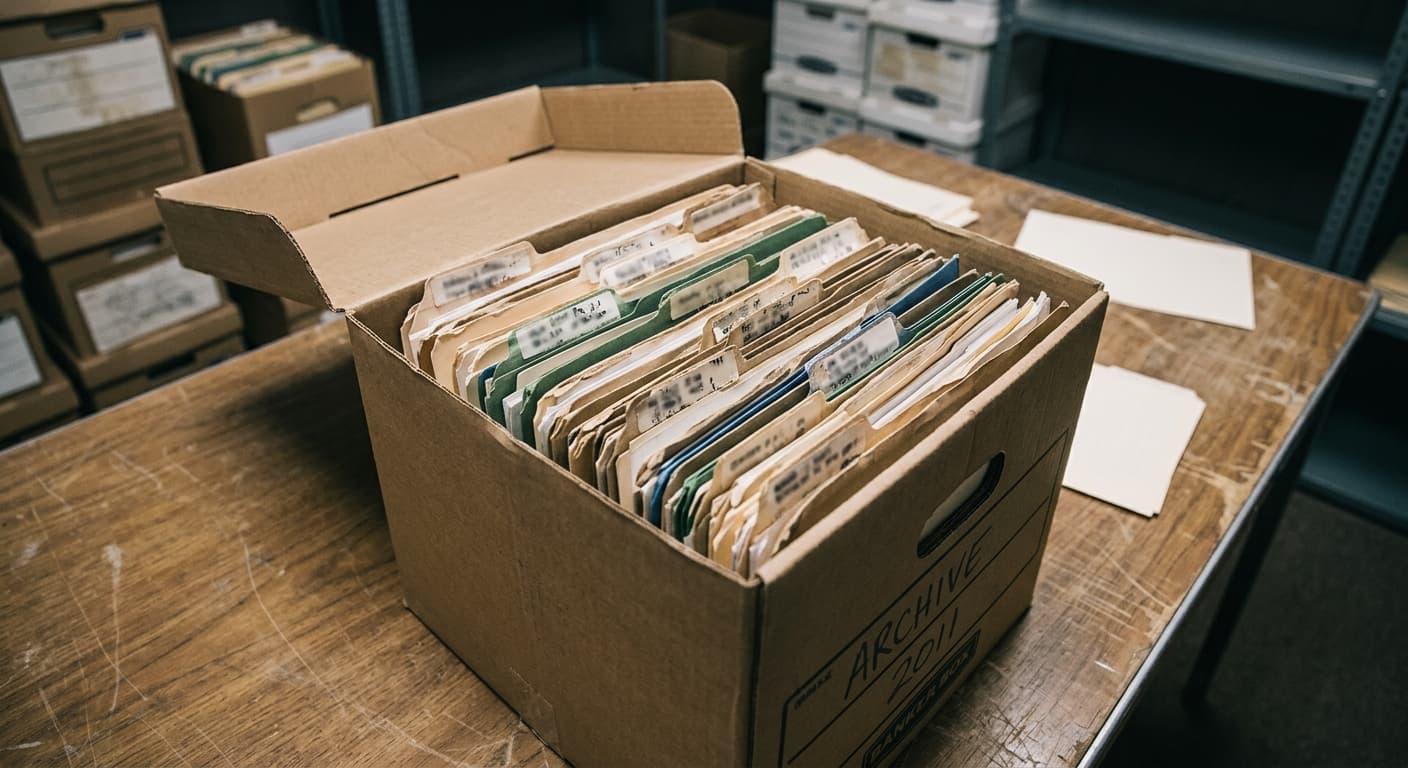
Maine is in the middle of switching from paper court files to an online system called re:SearchMaine, and the rollout is happening region by region rather than all at once. Whether you can search a Maine court case online right now depends heavily on which county the case was filed in and when that county's courts went live on the new system.
This page covers how re:SearchMaine works, which counties are live as of this writing, what stays confidential under Maine law, and how Maine's sealing process, which is not called expungement, actually works.
Information last verified on 2026-08-10. This article has not yet been reviewed by a licensed lawyer.
How to Search Maine Court Records
Maine's court system is mid-transition. The state is rolling out a new electronic case-access system called re:SearchMaine, built by Tyler Technologies, to replace an older tool called the Odyssey Public Portal. Registration is required but there is no fee to register or search.
The catch is coverage. re:SearchMaine is being turned on region by region rather than statewide at once, and as of this writing the confirmed live regions are Androscoggin County (live after June 2025), Oxford and Franklin Counties (live after September 2025), Kennebec and Somerset Counties (live after February 2026), York County (live after March 2026), Aroostook County (live after June 2026), and Hancock and Washington Counties, Judicial Region 7, live as of Monday, July 27, 2026. Counties not on this list simply do not have electronic case search available yet.
Where re:SearchMaine is live, it covers a fairly broad set of case types: criminal, civil violation, and traffic citation cases; Business and Consumer Docket cases; personal injury and non-personal-injury tort and contract cases; constitutional and civil-rights cases; title-to-real-estate cases; appeals under Rules 80B and 80C and other civil appeals; money judgments; and eviction, small claims, and foreclosure cases where the plaintiff prevailed and the case has reached the post-judgment stage.
Maine's own access page is direct about the limitation: the public can only view records "the court makes accessible remotely," not every public document that exists, and courthouse visits remain necessary for anything beyond what's been made available online. In a county that hasn't gone live yet, there is currently no electronic case search at all for criminal, juvenile, or civil-violation records.
What's Public and What's Restricted in Maine
Maine's Judicial Branch describes court records in plain terms rather than pointing to a single named access rule: records are "generally open to the public, although some records and case types are confidential by law," and "the public cannot access court records in cases that are confidential."

Maine's own help page lists a substantial set of confidential case categories: mental health civil commitments, medical malpractice screening proceedings, sterilization proceedings, extreme weapon protection orders, HIV/AIDS testing proceedings, minor settlement proceedings, child protection matters, adoptions, guardianships of minors, name changes for minors, court-authorized abortion petitions for minors, emancipations of minors, assisted reproduction matters, and most juvenile case records.
Beyond the county-by-county re:SearchMaine rollout, there's a deeper structural point: most Maine court records exist only on paper. Electronic records generally only exist for cases filed after November 2020 in courts that had already implemented e-filing at that point. For the large majority of Maine's case history, there is simply no remote access option; a paper request or an in-person clerk's office visit is the only way to see the record. For the broader, nationwide principle behind this presumption of access, see are court records public?
Sealing in Maine (Maine Does Not Use the Word Expungement)
Maine's courts are explicit that the state's remedy is called sealing, not expungement, and the two words are not interchangeable when you're researching your own record here. Under the main sealing provision, 15 M.R.S. section 2262, eligibility generally covers Class E crime convictions, with an exception for offenses under Title 17-A chapter 11 (the sexual assault chapter), and specific marijuana-related offenses committed before January 30, 2017. A separate provision, section 2262-A, covers a conviction for engaging in prostitution under Title 17-A former section 853-A. Maine's sealing chapter contains no separate route for other convictions arising out of sex trafficking, so a trafficking-related conviction that is not a former section 853-A prostitution conviction has to fit the ordinary section 2262 categories or it has no sealing path at all.
The waiting period under section 2262 is at least four years since the person fully satisfied each sentencing alternative imposed, including any imprisonment, probation, administrative release, fine payments, license suspension, restitution, or community service. That four-year rule is not universal: section 2262 opens with the words "Except as provided in section 2262-A," and under section 2262-A a conviction for engaging in prostitution under Title 17-A former section 853-A needs only one year since the sentencing alternatives were fully satisfied, provided the person has no conviction under Title 17-A sections 852, 853, 853-B, or 855 or for substantially similar conduct elsewhere. Section 2262-A is also written in mandatory terms, saying such a record "must be sealed" if its conditions are met, where section 2262 says a record "may be sealed ... only if" its conditions are met.
Maine's courts describe what sealing actually does in practical terms: once sealed, someone "may respond to inquiries from persons other than criminal justice agencies, the court, and other entities... as if the conviction had not occurred." The record is not erased; it is withheld from employers, lenders, landlords, and similar parties who would otherwise be able to find it.
The process runs through a Motion to Seal Criminal History (form CR-218) filed with the District Court clerk. The court holds a hearing, and under 15 M.R.S. section 2264(5) it must grant the motion if the person establishes each statutory prerequisite by a preponderance of the evidence; once granted, the State Bureau of Identification is notified to seal the record. Maine's own page is direct on this point: sealing "is not automatic." There is no Clean Slate mechanism in Maine, so nothing is sealed unless someone files the motion. What the court does not have, once eligibility is proven, is open discretion to refuse.
For eligibility detail beyond what's summarized here, see our Maine expungement guide, which uses Maine's actual sealing terminology in its coverage.
Getting Records When re:SearchMaine Is Not Live in Your County
Where re:SearchMaine has not yet rolled out, Maine offers two alternatives. You can mail a Records Search Request form with a self-addressed stamped envelope to the Judicial Branch Service Center at P.O. Box 266, Lewiston, ME 04240, or reachable by phone at 207-753-2901. Or you can contact the clerk's office of the specific court where the case was heard directly, in person or by phone, with the party names, case type, and docket number if you have them.
Because coverage depends on which county and which case type you're looking for, it's worth checking Maine's own rollout schedule before assuming a search will come back empty; a county that just went live might have records you didn't expect to find online yet, and a county still waiting on the rollout will have nothing searchable regardless of how you phrase the search.
Using Court Records Responsibly: The FCRA Rule
Checking your own case, or a case you have a genuine personal reason to look into, is a normal use of re:SearchMaine or the mail-in records process. Using either one, or a commercial people-search site pulling from the same underlying data, to screen a tenant or job applicant triggers the federal Fair Credit Reporting Act (FCRA), a separate set of obligations from anything Maine's courts require of a records requester.

Under 15 U.S.C. § 1681c, most negative consumer-report information ages off after seven years, but § 1681c(a)(5) exempts criminal convictions from that window, so a conviction can be reported indefinitely unless Maine's sealing process actually restricts it. In 2023, the FTC fined TruthFinder and Instant Checkmate $5.8 million for marketing public-records-based background reports for tenant and employment screening without complying with the FCRA, on the theory that a company marketing reports for that purpose is a consumer reporting agency under the law. Treat re:SearchMaine and the mail-in process as personal-use research, and route any real tenant or employment screening through a properly FCRA-compliant background check.
Related Maine Records Searches
This page is part of our broader Court Records by State guide, and our how to look up court records guide covers name-versus-case-number searching across states in more depth. If you're checking your own history before a job or a lease, see Maine background check laws. If you think you might have an active warrant rather than an ordinary case, see Maine warrant search. For records held by state agencies rather than the courts, see Maine public records laws.
Disclaimer
This article is for general informational purposes only and does not constitute legal advice. Court portals, fees, and coverage change without notice, and the Maine Judiciary is the only authoritative source for its own records. If you need a certified copy or have a legal question about a specific case, contact the clerk of court where the case was filed, or consult a licensed Maine attorney.

Last updated: 2026-08-10. Portal facts and fees reflect their published status as of August 2026.
Frequently Asked Questions
Is re:SearchMaine available in every Maine county?
Not yet. re:SearchMaine is rolling out region by region. As of this writing, Androscoggin, Oxford, Franklin, Kennebec, Somerset, York, Aroostook, Hancock, and Washington Counties are live, with more counties scheduled to follow. Counties not yet on the schedule have no electronic case search available.
Is re:SearchMaine free to use?
Yes. There is no fee to register or to search, though you do need to create an account.
Why can I not find an old Maine court case online?
Electronic records in Maine generally only exist for cases filed after November 2020 in courts that had implemented e-filing at that point. Most older Maine court records exist only on paper, so an online search will not find them regardless of your county's re:SearchMaine status.
Does Maine call its record-clearing process expungement?
No. Maine's courts use the word sealing, not expungement. The two terms are not interchangeable when researching Maine's process specifically.
Is sealing automatic in Maine?
No. Maine's own courts state directly that sealing is not automatic: nothing happens unless the person files a Motion to Seal Criminal History and the court holds a hearing. What the court does not have is open discretion to refuse. Under 15 M.R.S. section 2264(5), the court must grant the motion if the person establishes each statutory prerequisite by a preponderance of the evidence.
How long do I have to wait before I can ask to seal a Maine conviction?
For the main sealing route under 15 M.R.S. section 2262, at least four years must have passed since the person fully satisfied every sentencing alternative imposed. Section 2262-A sets a shorter period for one specific category: a conviction for engaging in prostitution under Title 17-A former section 853-A requires only one year since the sentencing alternatives were fully satisfied.
What types of Maine court records are confidential?
Maine's confidential categories include mental health civil commitments, child protection matters, adoptions, guardianships of minors, and most juvenile case records, among others listed on the state's own court records help page.
How do I get Maine court records if my county is not on re:SearchMaine yet?
Mail a Records Search Request form with a self-addressed stamped envelope to the Judicial Branch Service Center, or contact the clerk's office of the specific court where the case was heard directly, in person or by phone.
Updates
Corrected the Maine sealing section: the four-year wait applies to the main route under 15 M.R.S. section 2262, while a conviction for engaging in prostitution under Title 17-A former section 853-A needs only one year and must be sealed once the statutory conditions are met, and removed an overbroad reference to a sex-trafficking sealing category that Maine law does not provide.
Independently fact-checked against the cited primary sources
The Law Behind This Article
This article rests on the statutory provisions below, held in our own legal record and retrieved from the official source. Tap a section to read the operative text.
Maine Revised Statutes, Title 15: COURT PROCEDURE -- CRIMINAL, Part 4: JUDGMENT AND PROCEEDINGS, Chapter 310-A: POST-JUDGMENT MOTION TO SEAL CRIMINAL HISTORY RECORD
§ 2264Motion and hearing; processIn forcecited in 2 of our articles
1. Filing motion. A motion filed pursuant to section 2263 must be filed in the underlying criminal proceeding. After the motion is filed, the clerk shall set the motion for hearing. 2. Counsel. The person filing a motion pursuant to section 2263 has the right to be represented by counsel but is not entitled to assignment of counsel at state expense. 3. Representation of State. The prosecutorial office that represented the State in the underlying criminal proceeding may represent the State for purposes of this chapter. On a case-by-case basis, a different prosecutorial office may represent the State on agreement between the 2 prosecutorial offices. 4. Evidence. The Maine Rules of Evidence do not apply to a hearing on a motion under this section. Evidence presented by the participants at the hearing may include testimony, affidavits and other reliable hearsay evidence as permitted by the court. 5. Hearing; order; written findings. The court shall hold a hearing on a motion filed under this section.
Official text (excerpt) · last checked 2026-09-02 · Read the full text in our law library · Verify at legislature.maine.gov
Also relied on in: Maine Expungement Laws: Record Sealing Under 15 M.R.S. § 2261 et seq.
United States Code Title 15
§ 1681cRequirements relating to information contained in consumer reportsIn forcecited in 54 of our articles
Except as authorized under subsection (b), no consumer reporting agency may make any consumer report containing any of the following items of information: Cases under title 11 or under the Bankruptcy Act that, from the date of entry of the order for relief or the date of adjudication, as the case may be, antedate the report by more than 10 years. Civil suits, civil judgments, and records of arrest that, from date of entry, antedate the report by more than seven years or until the governing statute of limitations has expired, whichever is the longer period. Paid tax liens which, from date of payment, antedate the report by more than seven years. Accounts placed for collection or charged to profit and loss which antedate the report by more than seven years. Any other adverse item of information, other than records of convictions of crimes which antedates the report by more than seven years.
Official text (excerpt) · last checked 2026-07-28 · Read the full text in our law library · Verify at uscode.house.gov
Cited in 383 court opinions in our collectionLatest citing opinion in our collection: 2026
In the courts (editorial summary, independently checked):Katz v. Donna Karan Co. (2017) addressed the FACTA truncation rule in 1681c(g) and affirmed dismissal for lack of Article III standing, treating material risk of harm as a fact question. Edward Seamans v. Temple University (2014) held the seven-year window in 1681c(a)(4) is extended for an education loan only until that loan is repaid.
Opinions citing this section in our collection:
- Katz v. Donna Karan Co. (Court of Appeals for the Second Circuit 2017, 872 F.3d 114)✓A shopper sued two stores whose receipts printed the first six digits of his credit card number; the Second Circuit affirmed dismissal for lack of standing, seeing no clear error in the finding that those digits show only the card issuer, not a material risk of identity theft.
- Edward Seamans v. Temple University (Court of Appeals for the Third Circuit 2014, 744 F.3d 853)✓A defaulted university loan kept appearing on a borrower's credit reports after he repaid it because the school never reported the delinquency date; the Third Circuit held the Higher Education Act suspends section 1681c(a)(4)'s aging-off rule only until repayment.
- Gonzales v. Arrow Financial Services, LLC (Court of Appeals for the Ninth Circuit 2011, 660 F.3d 1055)✓A debt buyer offered to settle health club debts over seven years old, saying that if it was reporting the account the bureaus would be told it was settled; the Ninth Circuit, treating those debts as unreportable under section 1681c(a)(4), called that implication misleading.
Identified automatically from the court opinions citing this section — not a ranking of which case controls.
Also relied on in: How Long Does a Felony Stay on Your Record? (2026), Alabama Background Check Laws (2026 Guide), Louisiana Background Check Laws (2026 Guide)
Search our full record of US law — 2.1 million sections, every state + federal →
Sources and References
- Maine Judicial Branch, re:SearchMaine Access and Coverage(courts.maine.gov).gov
- Maine Judicial Branch, Court Records(courts.maine.gov).gov
- Maine Judicial Branch, Sealing a Criminal Record(courts.maine.gov).gov
- Reporters Committee for Freedom of the Press, Open Courts Compendium: Maine(rcfp.org)
- Cornell Law School Legal Information Institute, 15 U.S.C. Section 1681c(law.cornell.edu)
- FTC, FTC Says TruthFinder and Instant Checkmate Deceived Users About Background Report Accuracy, Violated FCRA(ftc.gov).gov
- Maine Legislature, 15 M.R.S. Section 2262, Statutory Prerequisites for Sealing Criminal History Record Information(legislature.maine.gov)
- Maine Legislature, 15 M.R.S. Section 2262-A, Special Statutory Prerequisites for Sealing Criminal History Record Information Related to Engaging in Prostitution(legislature.maine.gov)
- Maine Legislature, 15 M.R.S. Section 2264, Motion and Hearing; Process(legislature.maine.gov)
- Maine Legislature, 15 M.R.S. Section 2261, Definitions(legislature.maine.gov)