
California
California Court Records: Why There's No Statewide Portal, and How Each County Search Works
Independently fact-checked against primary sources (last audited August 10, 2026). · 4 primary sources cited on this page. How we verify our legal content
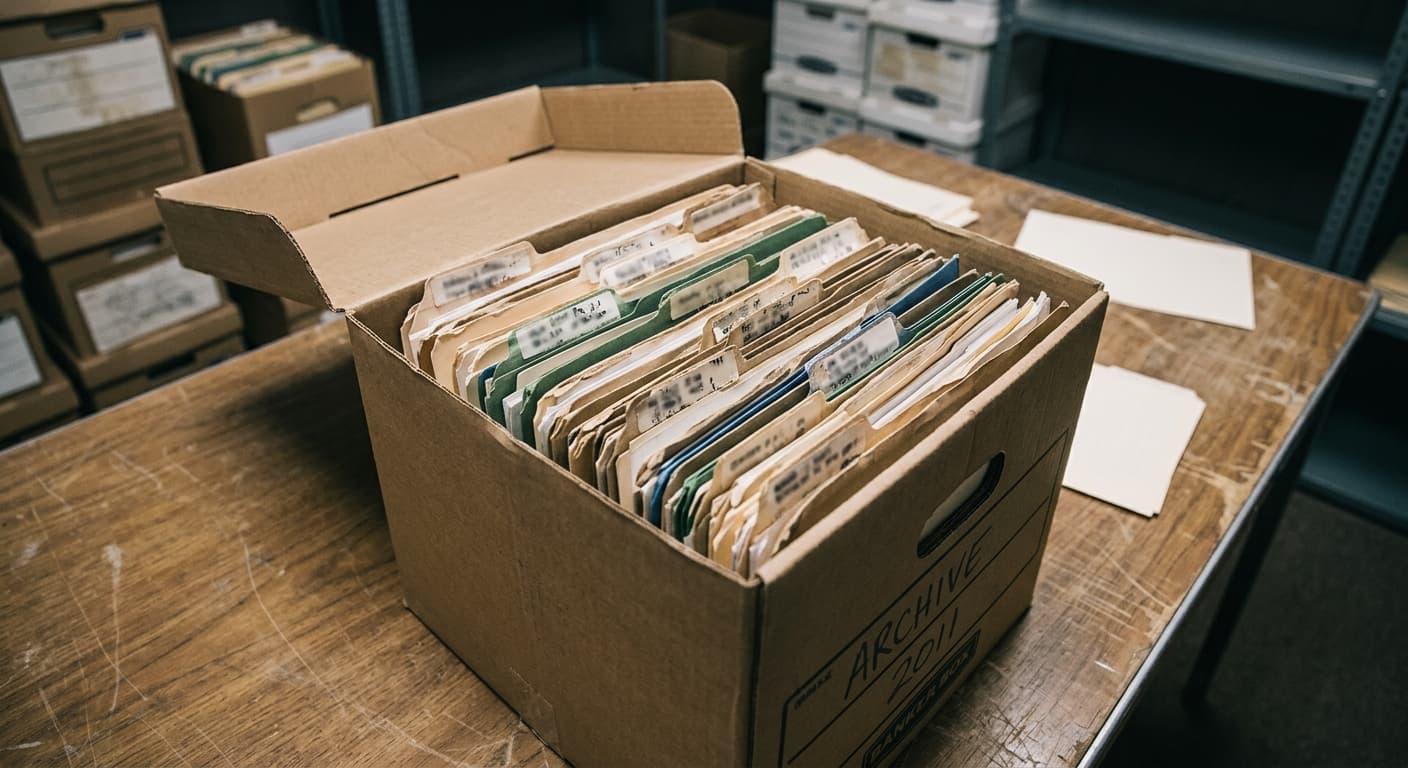
California is the country's largest state court system, and it has no statewide website for searching a case by name. Each of the state's 58 Superior Courts maintains its own records, and California Rule of Court 2.503 places the duty to provide electronic access on whichever court maintains them, only to the extent that court finds it feasible. The real answer to how do I search California court records therefore depends entirely on which county the case is in.
California also has a fact worth knowing before you search at all: some categories of case are public but courthouse-only, which is why a county portal will not show them even when the case itself is fully public. The rule carves out one narrow exception, for criminal cases only, described below.
Information last verified on 2026-08-10. This article has not yet been reviewed by a licensed lawyer.
This guide is part of a broader look at court records by state. For the general mechanics of federal versus state versus county searches, see how to look up court records and are court records public.
Why There's No Single California Court Records Website
There is no statewide portal because there is no statewide court records system to put behind one. Under Government Code section 68150, trial court records may be created, maintained, and preserved in any form, including electronic media, and it is each Superior Court that keeps its own.
California Rule of Court 2.503 works on top of that structure rather than creating it. The rule requires a court that maintains its records in electronic form to provide electronic access to them, both remotely and at the courthouse, but each of its access duties is qualified by the phrase to the extent it is feasible to do so. Subdivision (d) defines feasible by the court's own assessment: a court is required to provide electronic access to the extent it determines it has the resources and technical capacity to do so.
So the rule does not assign custody, and it does not direct a centralized state system either way. The absence of a single statewide search tool is an administrative and budgetary fact about 58 separately resourced courts, not something Rule 2.503 decrees. The consequence for a reader is the same: identify the county where the case was filed, then use that county's own tool, which can differ in cost, coverage, and how far back records go.
The Statewide Rule Everyone Shares: Rule 2.503(c)
Even though access is county-by-county, one part of the rule is genuinely statewide. Rule 2.503(c) lists categories of case that are public in the legal sense, meaning a member of the public may view them, but that no California Superior Court may make available through public remote access. The rule's own list covers records in a Family Code proceeding, a juvenile court proceeding, a guardianship or conservatorship proceeding, a mental health proceeding, a criminal proceeding, proceedings to compromise the claims of a minor or a person with a disability, a civil harassment proceeding under Code of Civil Procedure section 527.6, a workplace violence prevention proceeding under section 527.8, a private postsecondary school violence prevention proceeding under section 527.85, an elder or dependent adult abuse prevention proceeding under Welfare and Institutions Code section 15657.03, and a gun violence prevention proceeding under Penal Code sections 18100 through 18205.
The practical effect: for any of these case types, going to a courthouse in person is normally the only way to view the file, whichever county and whichever portal is involved.
Rule 2.503(e) carves out one narrow exception, and it reaches criminal cases only. Notwithstanding the criminal-proceeding entry at (c)(5), the presiding judge of the court, or a judge assigned by the presiding judge, may exercise discretion to permit remote access by the public to all or a portion of the public court records in an individual criminal case if two conditions are met: the number of requests for access to documents in the case is extraordinarily high, and responding to those requests would significantly burden the operations of the court. That is a case-specific release a judge authorizes for a high-demand file, not a general opening, and the other ten categories in subdivision (c) have no equivalent.
This is distinct from sealing. A sealed record under Rule of Court 2.550 is excluded entirely, even from courthouse viewing; a Rule 2.503(c) record is fully public, just not remote.
Los Angeles County: A Real Per-Search Fee
Los Angeles Superior Court's Case Summary and Public Access Online Services charge for name searches. Per the court's own fee schedule, a registered user pays on a sliding scale from $1.00 per search (for searches 1 through 10) up to $4.00 per search (for searches over 10,000), while a guest user pays a flat $4.75 per name search regardless of how many results come back. The court's own FAQ explains the logic: each search incurs a public access fee to reimburse the court for the costs of providing public access to its electronic records, and the fee applies to each search regardless of the number of results returned. Document images cost $1.00 per page for the first five pages, then $0.40 per page after that, with a $40.00 cap per document. LA's civil, small claims, family law, and probate records are searchable this way; criminal records use a separate index.
Santa Clara County: Free Search, Paid Copies
Santa Clara County Superior Court's Case Information Online tool covers civil, small claims, probate, some family, traffic and local ordinance, and criminal cases, and the search itself is free. The court's own page is direct about what is missing: case documents, meaning the actual filings, are not generally available online. For a document, the copy fee is $0.50 per page, which is not a Santa Clara figure but the statewide rate every California court clerk must charge under Government Code section 70627(a). The court's page also carries a standard access caveat: information provided is subject to applicable law, court rules, and public access guidelines, and the court may limit access to certain information where confidentiality is required by statute or rule.
Other counties, including San Diego, run comparable index-search tools with their own search-fee structures, so confirm the specific county's current search pricing and coverage directly. Copy and certification fees, by contrast, are fixed statewide by statute rather than set county by county.
California's Three Tracks for Hiding a Criminal Record
California does not have one sealing law. It runs three separate, non-overlapping tracks, and mixing them up leads to wrong conclusions about what a record shows.
The first is Penal Code section 1203.4, colloquially called expungement, but legally a plea-withdrawal-and-dismissal. The underlying case is dismissed after a successful petition, but the record remains visible to law enforcement and certain licensing bodies.
The second is automatic record relief under Penal Code sections 851.93 (arrests) and 1203.425 (convictions), created by SB 731 and AB 1076. This is the track most likely to be described online as sealing, and the California Department of Justice's own page corrects that framing directly: automatic record relief is not a dismissal, sealing, or expungement of a person's state summary criminal history information record. The department reviews arrest and conviction records for eligibility on a monthly basis, without requiring a petition, but eligible records simply become subject to a narrower disclosure rule under Penal Code section 11105 rather than being dismissed, sealed, or erased.
The third is civil sealing under Rule of Court 2.550, a motion-based process inside a lawsuit, evaluated under a five-factor overriding-interest test. This track has nothing to do with criminal history; it applies to civil case records a party asks the court to protect.
For the eligibility rules and process for petition-based relief and automatic record relief, see California expungement laws, which this guide does not duplicate.
Certified Copies
A certified copy of a California court document comes from the Superior Court clerk in the county where the case was filed, and the price is set by state statute rather than by county policy.
Government Code section 70627(a) requires the clerk of the court to charge fifty cents ($0.50) per page to cover the cost of preparing copies of any record, proceeding, or paper on file in the clerk's office. Government Code section 70626(a)(4) then sets a fee of forty dollars ($40) for certifying a copy of any paper, record, or proceeding on file in the office of the clerk of any court. So a certified copy generally runs $40 for the certification plus $0.50 per page copied, and that arithmetic is the same in every county.
What does vary by county is the mechanics rather than the price: whether you order by mail, in person, or through an online request form, how long turnaround takes, and how the court accepts payment. Check the specific court's clerk page for those details, and for any additional service fees it charges separately from the two statutory amounts above.
Using California Court Records the Right Way
County portals are built for checking a specific case, whether it is your own or one you have a legitimate reason to look into, not for compiling a background file on someone else. If a California court record is used to screen a job applicant or a tenant, that use is governed separately by the federal Fair Credit Reporting Act and by California's own background-check rules. Because automatic record relief is a disclosure restriction rather than a true sealing or dismissal, a record covered by it may still be treated differently depending on who is asking and under what legal authority, which is a genuinely more layered picture than in most other states.
Related Resources
Court Records by State covers the full 50-state picture. See also How to Look Up Court Records, Are Court Records Public?, California Expungement Laws, California Background Check Laws, California Warrant Search, and California Public Records Laws.
Disclaimer
This article provides general information about California's county-by-county court records model and its three record-relief tracks. It is not legal advice. Portal fees and coverage change and vary by county; verify current details with the relevant Superior Court or a licensed California attorney before relying on anything here for a specific situation.
Last updated: 2026-08-10. Portal facts and fees reflect their published status as of August 2026.
Frequently Asked Questions
Is there a single website to search California court records?
No. Each of California's 58 Superior Courts maintains its own records, and Rule of Court 2.503 places the electronic-access duty on the court that holds them, to the extent that court finds it feasible. There is no centralized state system behind a single search, so you have to search the specific county where the case was filed.
What does public but courthouse-only mean in California?
Under Rule of Court 2.503(c), eleven categories including family law, juvenile, mental health, and criminal cases are legally public but cannot normally be made available through remote online access anywhere in the state, so viewing them means going to the courthouse. Rule 2.503(e) allows one exception: in an individual criminal case, a presiding judge may permit public remote access when requests for documents are extraordinarily high and responding to them would significantly burden the court.
How much does it cost to search Los Angeles County court records?
Per LASC's own fee schedule, registered users pay $1.00 to $4.00 per name search depending on volume, and guests pay a flat $4.75 per search regardless of results.
How much does a certified copy of a California court record cost?
The price is statewide, not per county. Government Code section 70627(a) sets the copy fee at fifty cents ($0.50) per page, and Government Code section 70626(a)(4) sets a $40 fee for certifying a copy of a paper, record, or proceeding on file with the clerk of any court. Ordering methods and turnaround still vary by county.
Does California's automatic record relief seal my record?
No. The California DOJ's own description states automatic record relief under Penal Code sections 851.93 and 1203.425 is not a dismissal, sealing, or expungement. It restricts who may see the record under Penal Code section 11105 while the underlying record stays on file.
What is the difference between California's three record-relief tracks?
Penal Code 1203.4 is a petition-based dismissal that still leaves the record visible to law enforcement and some licensing bodies. Automatic record relief is a monthly, no-petition disclosure restriction, not a sealing. Civil sealing under Rule 2.550 is a separate, motion-based process for civil case records, unrelated to criminal history.
Can I use California court records to screen a job applicant or tenant?
Not on its own. Employment and tenant screening are separately governed by the federal Fair Credit Reporting Act and by California's own background-check rules.
Updates
Corrected the certified-copy fee to the statewide statutory rates set by Government Code sections 70627 and 70626, added the Rule of Court 2.503(e) exception that allows remote access in extraordinary criminal cases, and clarified that Rule 2.503 imposes a feasibility-qualified access duty rather than assigning custody of court records.
Independently fact-checked against the cited primary sources
The Law Behind This Article
This article rests on the statutory provisions below, held in our own legal record and retrieved from the official source. Tap a section to read the operative text.
California Government Code
§ 68150In force
(a) Trial court records may be created, maintained, and preserved in any form or forms of communication or representation, including paper, optical, electronic, magnetic, micrographic, or photographic media or other technology pursuant to the rules adopted by the Judicial Council pursuant to subdivision (c). (b) (1) This section does not apply to court reporters’ transcripts or to specifications for electronic recordings made as the official record of oral proceedings. These records shall be governed by the California Rules of Court. (2) This section does not apply to original wills and codicils delivered to the clerk of the court under Section 8200 of the Probate Code. Original wills and codicils shall be retained as provided in Section 26810. (c) The Judicial Council shall adopt rules to establish the standards or guidelines for the creation, maintenance, reproduction, or preservation of court records, including records that must be preserved permanently. The standards or guidelines shall reflect industry standards for each medium used, if those standards exist.
Official text (excerpt) · last checked 2026-09-02 · Read the full text in our law library · Verify at leginfo.legislature.ca.gov
California Penal Code
§ 1203.4In forcecited in 5 of our articles
(a) (1) When a defendant has fulfilled the conditions of probation for the entire period of probation, or has been discharged prior to the termination of the period of probation, or in any other case in which a court, in its discretion and the interest of justice, determines that a defendant should be granted the relief available under this section, the defendant shall, at any time after the termination of the period of probation, if they are not then serving a sentence for an offense, on probation for an offense, or charged with the commission of an offense, be permitted by the court to withdraw their plea of guilty or plea of nolo contendere and enter a plea of not guilty; or, if they have been convicted after a plea of not guilty, the court shall set aside the verdict of guilty; and, in either case, the court shall thereupon dismiss the accusations or information against the defendant and except as noted below, the defendant shall thereafter be released from all penalties and disabilities resulting from the offense of which they have been convicted, except as provided in Section 13555 of the Vehicle Code.
Official text (excerpt) · last checked 2026-09-01 · Read the full text in our law library · Verify at leginfo.legislature.ca.gov
Cited in 440 court opinions in our collectionLatest citing opinion in our collection: 2026
In the courts (editorial summary, independently checked):Courts treat section 1203.4 relief as statutory rehabilitation, not erasure. Stephens v. Toomey (1959) held a successful probationer is restored to his former status except that the record may be used in later criminal proceedings. People v. Banks (1959) held the relief is not automatic: one who never sought dismissal stayed a felon.
Opinions citing this section in our collection:
- People v. Dueñas (California Court of Appeal, 5th District 2019, 242 Cal. Rptr. 3d 268)✓An indigent homeless mother on probation for driving with a suspended license challenged $220 in court fees and a fine; the court reasoned that a probationer who cannot pay is barred from section 1203.4's absolute right to dismissal, which is no substitute for due process.
- People v. Banks (California Supreme Court 1959, 53 Cal. 2d 370)✓A man completed probation on a vehicle taking charge punishable as a felony or a misdemeanor but never applied under section 1203.4; when later prosecuted for possessing a concealable firearm, the court held that without that statutory dismissal the offense remained a felony.
- Opdyk v. California Horse Racing Board (California Court of Appeal 1995, 34 Cal. App. 4th 1826)✓A professional gambler whose misdemeanor bookmaking conviction was expunged under section 1203.4 was excluded from California racetracks; the court held the statute frees a person only from certain penalties and disabilities and does not obliterate the fact of the conviction.
Identified automatically from the court opinions citing this section — not a ranking of which case controls.
Also relied on in: California Expungement Laws: Dismissal and Record Relief, How to Check if Your Record Has Been Expunged, California DUI Laws: Penalties, BAC Limit & License (2026)
§ 1203.425In forcecited in 4 of our articles
(a) (1) (A) Commencing October 1, 2024, and subject to an appropriation in the annual Budget Act, on a monthly basis, the Department of Justice shall review the records in the statewide criminal justice databases, and based on information in the state summary criminal history repository and the Supervised Release File, shall identify persons with convictions that meet the criteria set forth in subparagraph (B) and are eligible for automatic conviction record relief. (B) A person is eligible for automatic conviction relief pursuant to this section if they meet all of the following conditions: (i) The person is not required to register pursuant to the Sex Offender Registration Act. (ii) The person does not have an active record for local, state, or federal supervision in the Supervised Release File. (iii) Based upon the information available in the department’s record, including disposition dates and sentencing terms, it does not appear that the person is currently serving a sentence for an offense and there is no indication of pending criminal charges.
Official text (excerpt) · last checked 2026-07-28 · Read the full text in our law library · Verify at leginfo.legislature.ca.gov
Also relied on in: Expungement Laws by State: How to Clear Your Record (2026), How Long Does a Felony Stay on Your Record? (2026)
§ 851.93In force
(a) (1) On a monthly basis, the Department of Justice shall review the records in the statewide criminal justice databases, and based on information in the state summary criminal history repository, shall identify persons with records of arrest that meet the criteria set forth in paragraph (2) and are eligible for arrest record relief. (2) A person is eligible for relief pursuant to this section, if the arrest occurred on or after January 1, 1973, and meets any of the following conditions: (A) The arrest was for a misdemeanor offense and the charge was dismissed. (B) The arrest was for a misdemeanor offense, there is no indication that criminal proceedings have been initiated, at least one calendar year has elapsed since the date of the arrest, and no conviction occurred, or the arrestee was acquitted of any charges that arose, from that arrest. (C) (i) The arrest was for a felony offense not described in clause (ii), there is no indication that criminal proceedings have been initiated, at least three calendar years have elapsed since the date of the arrest, and no conviction occurred, or the arrestee was acquitted of any charges arising, from that arrest.
Official text (excerpt) · last checked 2026-07-28 · Read the full text in our law library · Verify at leginfo.legislature.ca.gov
Cited in 2 court opinions in our collectionLatest citing opinion in our collection: 2026
Opinions citing this section in our collection:
- People v. Rifat (California Court of Appeal 2026)“…990022) to seal his arrest and related records pursuant to Penal Code section 851.93,2 which the court denied. On appeal, d…”
- Untitled California Attorney General Opinion (California Attorney General Reports 2022)“…ified event); 45125.01, subd. (f) (same, education agency); Pen. Code, §§ 851.93, subd. (c) (court may not disclose info…”
Identified automatically from the court opinions citing this section — not a ranking of which case controls.
§ 11105In force
(a) (1) The Department of Justice shall maintain state summary criminal history information. (2) As used in this section: (A) “State summary criminal history information” means the master record of information compiled by the Attorney General pertaining to the identification and criminal history of a person, such as name, date of birth, physical description, fingerprints, photographs, dates of arrests, arresting agencies and booking numbers, charges, dispositions, sentencing information, and similar data about the person. (B) “State summary criminal history information” does not refer to records and data compiled by criminal justice agencies other than the Attorney General, nor does it refer to records of complaints to or investigations conducted by, or records of intelligence information or security procedures of, the office of the Attorney General and the Department of Justice.
Official text (excerpt) · last checked 2026-07-28 · Read the full text in our law library · Verify at leginfo.legislature.ca.gov
Cited in 44 court opinions in our collectionLatest citing opinion in our collection: 2026
Opinions citing this section in our collection:
- Kilgore v. Younger (California Supreme Court 1982, 30 Cal. 3d 770)“…summary criminal history information’ within the meaning of California Penal Code § 11105 Plaintiff contended that the Attorney…”
- Central Valley Chapter of 7th Step Foundation, Inc. v. Younger (California Court of Appeal 1979, 95 Cal. App. 3d 212)“…actice of forwarding to the public employers encompassed by Penal Code section 11105, subdivisions (b)(10) and (b)(12) arres…”
- CBS Broadcasting Inc. v. Superior Court (California Court of Appeal 2001, 91 Cal. App. 4th 892)“…of the requested information would not cause DSS to violate Penal Code sections 11105 and 11142, and thus fall within the amb…”
Identified automatically from the court opinions citing this section — not a ranking of which case controls.
Search our full record of US law — 2.1 million sections, every state + federal →
Sources and References
- California Courts, Rule of Court 2.503, Public access to electronic trial court records(courts.ca.gov).gov
- Los Angeles Superior Court, Public Access Fee Information(lacourt.ca.gov).gov
- Santa Clara County Superior Court, Case Information Online(santaclara.courts.ca.gov).gov
- California Department of Justice, Automatic Record Relief (Penal Code §§ 851.93 and 1203.425)(oag.ca.gov).gov
- California Government Code section 70627, clerk copy fees (fifty cents per page)(leginfo.legislature.ca.gov)
- California Government Code section 70626, uniform $40 fee for certifying a copy of a court record(leginfo.legislature.ca.gov)
- California Government Code section 68150, creation, maintenance, and preservation of trial court records(leginfo.legislature.ca.gov)