
Maine
Maine AI Meeting Recording Laws: One-Party Consent and Class C Penalties
Independently fact-checked against primary sources (last audited August 16, 2026). · Reviewed by the RecordingLaw editorial team. · Law checked current as of August 16, 2026. · 3 primary sources cited on this page. How we verify our legal content
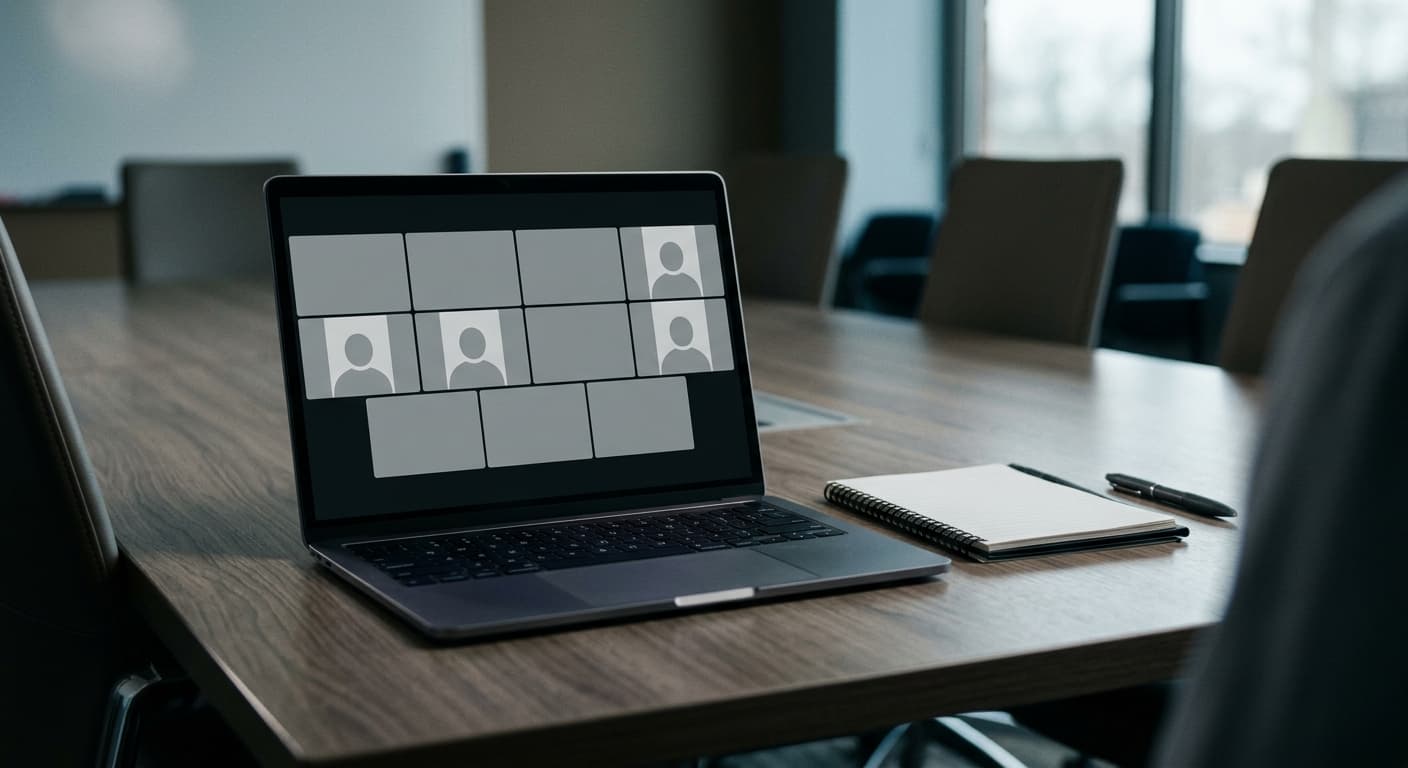
Maine's recording laws sit at an unusual intersection for AI meeting tools. The state follows a one-party consent standard for wire and oral communications under Me. Rev. Stat. tit. 15, Chapter 102, where Section 709(4) defines "intercept" to exclude a party to the communication and anyone that party authorizes, and Section 710 makes unlawful interception a crime. Maine applies a stricter all-party consent requirement for recordings in "private places" under Me. Rev. Stat. tit. 17-A, Section 511 (Violation of Privacy). For AI tools operating through virtual meeting platforms, the one-party standard governs. For tools recording in-person meetings in offices or conference rooms, the private place rule may apply.
Violating Section 710's wire and oral communication rules is a Class C crime, meaning up to 5 years in prison and a $5,000 fine, plus civil remedies of $100 per day of violation under Section 711. Violating Section 511's private place rule is a separate Class D crime, carrying up to 364 days in jail and a $2,000 fine. Either mistake creates real financial and criminal exposure for employers and AI vendors who get the consent calculus wrong.
Maine's Dual Consent Framework
Maine's wiretapping laws create a two-track system that depends on how and where the recording occurs. Understanding which track applies is essential for AI meeting tool compliance.
Section 710: Wire and Oral Communication Interception
Me. Rev. Stat. tit. 15, Section 710 prohibits the intentional interception of any wire or oral communication. The statute makes it a Class C crime for any person to intentionally or knowingly intercept, attempt to intercept, or procure another person to intercept any wire or oral communication. Section 710 carves out only communication common carrier employees, law enforcement officers, investigative officers, corrections employees with law enforcement powers, and jail investigative officers. It contains no party-consent exception, and neither does Section 712, the chapter's dedicated exceptions provision.
Maine's one-party rule is definitional rather than an exception. Me. Rev. Stat. tit. 15, Section 709(4) defines "intercept" as hearing or recording the contents of a wire or oral communication through an intercepting device "by any person other than: A. The sender or receiver of that communication; ... or C. A person given prior authority by the sender or receiver." A participant, or a person that participant authorized, therefore never intercepts at all, so Section 710 is never triggered. That is the mechanism behind Maine's one-party consent standard.
Section 709(4)(C) is the provision that matters most for AI notetakers. A bot deployed by a meeting participant is arguably a person given prior authority by the sender or receiver, which would place it outside the definition of interception entirely. No Maine court has ruled on whether an automated tool or the vendor operating it fits that paragraph, so the question is open.
For AI meeting tools operating through Zoom, Teams, or Google Meet, the communication qualifies as a "wire communication" transmitted electronically between participants. One consenting participant keeps the recording outside Section 710.
Section 511: Private Place Recordings
Me. Rev. Stat. tit. 17-A, Section 511 (Violation of Privacy) addresses a separate scenario: recording in a "private place." Under this provision, a person may not install or use any device to observe, photograph, or record events in any private place without the consent of the persons entitled to privacy there; a related provision reaches devices operated from outside a private place if the images or sounds captured would not ordinarily be visible, audible, or comprehensible from outside that place. A violation is a Class D crime, punishable by up to 364 days in jail and a $2,000 fine.
"Private place" includes areas like bathrooms, hotel rooms, and similar locations where people have a heightened expectation of privacy. Whether a closed conference room or private office qualifies as a "private place" under Section 511 depends on the specific circumstances. Courts consider whether the occupants had a reasonable expectation that their conversations would not be overheard.
Which Standard Applies to AI Tools?
For virtual meetings conducted through electronic platforms, Chapter 102's one-party consent standard governs. The communication travels through wire or electronic channels, placing it squarely within the wiretapping statute.
For in-person meetings where an AI recording device captures audio in a closed office or conference room, Section 511's private place standard may apply. If the room qualifies as a private place, all persons present must consent.
The hybrid meeting scenario creates the most complexity. When some participants join remotely and others sit in a conference room, both statutes may apply simultaneously. The wire communication component follows Chapter 102 (one-party consent), while the in-room recording component may trigger Section 511 (all-party consent in a private place).
How AI Meeting Recorders Operate Under Maine Law
AI meeting tools interact with Maine's recording framework differently depending on their technical architecture.
Cloud-Based Virtual Meeting Tools
Otter.ai, Fireflies.ai, and similar tools that join virtual meetings as bot participants operate through wire communications. When a Maine-based employee activates one of these tools during a Zoom or Teams call, that employee is a consenting party. The recording satisfies Maine's one-party consent standard under Section 709(4).
The employee does not need to announce the recording or obtain permission from other participants as a matter of Maine criminal law. Whether disclosure is advisable as a matter of professional practice is a separate question.
In-Room Recording Devices
AI tools that record through physical devices (smart speakers, conference room microphones, or laptop microphones capturing in-person conversations) may trigger Section 511 if the recording occurs in a private place - a Class D crime carrying up to 364 days in jail and a $2,000 fine. An AI-powered transcription device in a closed conference room could require consent from everyone present, depending on whether the room meets the "private place" definition.
The Otter.ai and Fireflies.ai Litigation
The Brewer v. Otter.ai class action (N.D. Cal., filed August 2025) alleges that Otter's notetaker joined video conferences without obtaining consent from non-account holders. The Cruz v. Fireflies.AI complaint (filed December 2025) raised similar allegations about unauthorized meeting recording and biometric data collection; the plaintiff voluntarily dismissed that case without prejudice in March 2026.
For Maine participants in these scenarios, the one-party consent standard means that if the meeting host who activated the AI tool consented, the recording falls outside the definition of interception in Section 709(4). But if the bot joined a meeting where no consenting party was present (as alleged in the Brewer complaint), the recording is an interception and Section 710 applies.
The Ambriz v. Google "capability test" (N.D. Cal. 2025) adds another dimension. If Maine courts adopted the reasoning that an AI vendor's technical capability to access communication data establishes third-party status, vendors could face liability even when one participant consents. As of April 2026, no Maine court has addressed this theory. Student commentary in the Student Journal of Information Privacy Law, a student-led publication at the University of Maine School of Law, has examined the Ambriz capability theory and its implications for Article III standing in AI privacy cases.
Popular AI Meeting Tools and Maine Compliance
| Tool | How It Records | Maine Compliance |
|---|---|---|
| Otter.ai | Joins as virtual meeting participant | Lawful if the account holder is a consenting participant (Section 709(4)) |
| Fireflies.ai | Joins as bot participant on virtual platforms | Lawful with one consenting participant (Section 709(4)) |
| Microsoft Copilot | Processes Teams audio natively | Lawful when the enabling user participates in the call |
| Google Gemini | Integrates within Google Meet | Lawful when the enabling user is a meeting participant |
| In-room AI devices | Captures audio via physical microphone | May require all-party consent under Section 511 if in a private place (Class D crime) |
Criminal Penalties
Illegal interception of wire or oral communications under Section 710 is a Class C crime in Maine. Class C crimes carry:
- Up to 5 years in prison
- Fines up to $5,000
Several related offenses also carry Class C penalties under Section 710:
- Disclosing the contents of an illegally intercepted communication when the person knows the information was obtained through unlawful interception
- Editing, altering, or tampering with any recording and presenting it in judicial proceedings without indicating the changes made
- Possessing any device designed or commonly used for intercepting wire or oral communications
Selling or furnishing interception devices is treated more seriously as a Class B crime, which carries up to 10 years in prison and $20,000 in fines.
Private Place Recording Penalty
Violating Section 511 (Violation of Privacy) by recording in a private place without consent is a Class D crime, carrying:
- Up to 364 days in jail
- Fines up to $2,000
This is a separate, less severe penalty than the Class C crime under Section 710.
Civil Remedies Under Section 711
Me. Rev. Stat. tit. 15, Section 711 provides a private right of action for victims of unlawful interception. Any party to a communication intercepted, disclosed, or used in violation of Chapter 102 may bring a civil suit and recover:
- Actual damages but not less than liquidated damages of $100 per day for each day of violation
- Reasonable attorney's fees and litigation disbursements
This civil remedy is limited to Chapter 102 violations (wire and oral communication interception under Section 710); it does not extend to private place recording violations under Section 511, which carries only the criminal penalty above. Unlike Louisiana and Maryland, Maine's civil damages statute does not explicitly provide for punitive damages or a $1,000 statutory minimum. The $100 per-day floor still creates meaningful exposure over extended periods of unauthorized recording.
Employer and Workplace Considerations
Maine employers benefit from the one-party consent standard for virtual meeting recording but must navigate the private place exception for in-office scenarios.
Virtual Meeting Policies
For remote and hybrid workplaces, Maine's one-party consent standard under Chapter 102 allows employers to deploy AI meeting tools on virtual calls when the employee activating the tool is a participant. No additional consent from other participants is required under Maine law.
Best practice still favors disclosure. An employer policy that informs employees about AI transcription tools reduces friction and avoids disputes about whether recordings were made for legitimate business purposes.
In-Office Recording Considerations
Employers using AI-powered devices in conference rooms or offices should assess whether those spaces qualify as "private places" under Section 511. If employees reasonably expect that conversations in a closed conference room will remain private, the all-party consent standard may apply.
Posting notices that meetings in certain rooms may be recorded can help establish that the space is not a "private place" for Section 511 purposes, though this approach has not been tested in Maine courts.
Interstate Meeting Complications
When Maine employees join virtual meetings with participants in all-party consent states, the stricter state's law may apply. Recording without consent from a participant in Maryland, California, or Florida could violate that state's wiretapping statute. Employers with multi-state operations should implement consent protocols that satisfy the highest applicable standard.
Penalties at a Glance
| Category | Details |
|---|---|
| Wire/Oral Communication Consent | One-party consent (Sections 709(4) and 710) |
| Private Place Consent | All-party consent (Section 511) |
| Criminal Penalty (Section 710) | Class C crime: up to 5 years, $5,000 fine |
| Private Place Penalty (Section 511) | Class D crime: up to 364 days, $2,000 fine |
| Device Trafficking | Class B crime: up to 10 years, $20,000 fine |
| Civil Damages | $100/day minimum, plus attorney's fees (Section 711) |
| Federal Floor | 18 U.S.C. Section 2511: up to 5 years, $250,000 fine |
| Key Distinction | Dual framework: virtual meetings vs. private place recordings |
This article provides general legal information about Maine's recording laws as they apply to AI meeting tools. Maine's dual consent framework, split between wire communication interception and private place recording, creates nuances that other one-party consent states do not share. Laws and court interpretations continue to evolve as AI recording technology advances. Consult an attorney licensed in Maine for advice specific to your situation.
More Maine Laws
Frequently Asked Questions
Is Maine a one-party consent state for recording phone calls and virtual meetings?
Yes. Me. Rev. Stat. tit. 15, Section 709(4) defines 'intercept' to exclude the sender or receiver of a communication and any person given prior authority by them, so a participant who records is not intercepting. A participant who activates an AI recording tool during a Zoom, Teams, or Google Meet call therefore does not violate Section 710 and needs no permission from other participants.
Does Maine require all-party consent for recording in offices or conference rooms?
It depends. Under Section 511 (Violation of Privacy), recording in a 'private place' without consent from all persons entitled to privacy is a Class D crime, punishable by up to 364 days in jail and a $2,000 fine. Whether a closed office or conference room qualifies as a private place depends on the specific circumstances. Open office environments generally do not trigger this requirement.
What are the criminal penalties for illegal recording in Maine?
Unlawful interception of wire or oral communications is a Class C crime in Maine, carrying up to 5 years in prison and a $5,000 fine. Selling or furnishing interception devices is a Class B crime with penalties up to 10 years and $20,000.
Can I use AI meeting tools like Otter.ai in Maine without notifying other participants?
Under Maine's one-party consent law for wire communications, the person activating the tool satisfies the legal requirement by being a consenting party. Notification is not legally required for virtual meetings. However, professional courtesy and company policies may call for disclosure. Consult an attorney for advice specific to your situation.
How do Maine recording laws apply to hybrid meetings with remote and in-person participants?
Hybrid meetings implicate both Section 511 (private place) and Chapter 102 (wire communication). The wire communication component follows one-party consent. If in-room participants are in a private place, the in-room recording may require all-party consent under Section 511. Organizations should obtain consent from all in-room participants when recording hybrid meetings in enclosed spaces. Consult an attorney for advice specific to your situation.
Updates
Corrected the source of Maine's one-party consent rule: it comes from the definition of 'intercept' in Me. Rev. Stat. tit. 15, Section 709(4), which excludes a party to the communication and anyone that party authorizes, not from an exception in Section 710; also corrected the name of the journal that published the Ambriz capability-theory commentary.
Independently fact-checked against the cited primary sources; governing law re-checked for recent changes
Governing law re-checked for recent changes
Corrected a citation error: the article's 'private place' recording discussion (KeyTakeaways, dual-framework section, AI-tool analysis, penalty tables, employer guidance, and FAQ) was attributed throughout to 'Me. Rev. Stat. tit. 15, Section 709,' but Title 15, Section 709 is actually the definitions section of Maine's wiretapping chapter (Chapter 102), not a private-place recording statute. Verified directly against legislature.maine.gov, including the Maine Law Library's own FAQ page on recording/surveillance (which this article already cited): Maine's actual private-place recording statute is Me. Rev. Stat. tit. 17-A, Section 511 (Violation of Privacy), a Class D crime carrying up to 364 days in jail and a $2,000 fine - not the Class C felony-range penalty implied elsewhere on the page for wire/oral interception under Section 710. Also clarified that Section 711's $100/day civil remedy is limited to Chapter 102 (Section 710) interception violations and does not extend to Section 511 private-place violations, which the prior text did not make clear. Updated all citation references from Section 709 to Section 511, added the correct Class D penalty in a new 'Private Place Recording Penalty' subsection and in the Penalties at a Glance table, and fixed the citations list entry to point to Title 17-A Section 511 instead of Title 15 Section 709. The Section 710 (Class C, 5 years/$5,000) and Section 711 (civil, $100/day) figures were already correct and are unchanged.
Reviewed and approved by an editor
The Law Behind This Article
This article rests on the statutory provisions below, held in our own legal record and retrieved from the official source. Tap a section to read the operative text.
Maine Revised Statutes, Title 15: COURT PROCEDURE -- CRIMINAL, Part 2: PROCEEDINGS BEFORE TRIAL, Chapter 102: INTERCEPTION OF WIRE AND ORAL COMMUNICATIONS
§ 710OffensesIn forcecited in 17 of our articles
1. Interception, oral communications prohibited. Any person, other than an employee of a communication common carrier, a law enforcement officer, an investigative officer, another employee of the Department of Corrections authorized to exercise law enforcement powers as described in Title 34‑A, section 3011 or a jail investigative officer or a jail employee acting at the direction of a jail investigative officer, carrying out practices otherwise permitted by this chapter, who intentionally or knowingly intercepts, attempts to intercept or procures any other person to intercept or attempt to intercept any wire or oral communication is guilty of a Class C crime. 2. Editing of tape recordings in judicial proceedings prohibited. Any person who knowingly or intentionally edits, alters or tampers with any tape, transcription or other sound recording, or knows of such editing, altering or tampering, and presents that recording in any judicial proceeding or proceeding under oath, without fully indicating the nature of the changes made and the original state of the recording, is guilty of a Class C crime. 3. Disclosure or use of wire or oral communications prohibited.
Official text (excerpt) · last checked 2026-08-28 · Read the full text in our law library · Verify at legislature.maine.gov
Cited in 5 court opinions in our collectionLatest citing opinion in our collection: 2022
In the courts (editorial summary, independently checked):Williams v. Poulos (1993) affirmed section 710(1) liability for intercepting employee calls and held section 710(3)(A) and (B) require only knowledge the information came through interception. Glenn A. Griffin v. Cristie J. Griffin (2014) allowed a parent's vicarious consent for a young child only on a good faith best-interest belief.
Opinions citing this section in our collection:
- Glenn A. Griffin v. Cristie J. Griffin (Supreme Judicial Court of Maine 2014, 92 A.3d 1144)✓A father recorded his six-year-old daughter's nightly calls with her mother after overhearing abusive remarks; the court held a parent with a good faith, objectively reasonable best-interest belief may vicariously consent under section 709(4)(C), so section 710 was not violated.
- Archer v. Androscoggin County (Superior Court of Maine 2022)✓An attorney sought recordings of another inmate's jail calls under Maine's public records law; the court applied the wiretap chapter that makes interception a crime under section 710 and held a court-appointed defense lawyer is not within the section 712(4) disclosure exception.
- Williams v. Poulos (Court of Appeals for the First Circuit 1993)✓Company owners secretly recorded employee phone calls using alligator clips wired to a VCR, and their lawyers then used the tapes; the First Circuit affirmed liability under section 710, holding subsection 3 requires only knowledge that the material came from an interception.
Identified automatically from the court opinions citing this section — not a ranking of which case controls.
Also relied on in: Maine Dashcam Laws: Mounting Rules, Audio Recording, and Evidence (2026), Maine Landlord-Tenant Recording Laws: Cameras, Audio, and Privacy Rights (2026), Maine Phone Call Recording Laws: Consent Rules for Cell, Landline, and VoIP (2026)
Maine Revised Statutes, Title 17-A: MAINE CRIMINAL CODE, Part 2: SUBSTANTIVE OFFENSES, Chapter 21: OFFENSES AGAINST PUBLIC ORDER
§ 511Violation of privacyIn forcecited in 15 of our articles
1. A person is guilty of violation of privacy if, except in the execution of a public duty or as authorized by law, that person intentionally: A. Commits a civil trespass on property with the intent to overhear or observe any person in a private place; [PL 1997, c. 467, §1 (AMD).] B. Installs or uses in a private place without the consent of the person or persons entitled to privacy in that place, any device for observing, photographing, recording, amplifying or broadcasting sounds or events in that place; [PL 1997, c. 467, §1 (AMD).] C. Installs or uses outside a private place without the consent of the person or persons entitled to privacy therein any device for observing, photographing, hearing, recording, amplifying or broadcasting images or sounds originating in that place that would not ordinarily be visible, audible or comprehensible outside that place; [PL 2023, c. 227, §1 (AMD).] D.
Official text (excerpt) · last checked 2026-08-31 · Read the full text in our law library · Verify at legislature.maine.gov
Cited in 6 court opinions in our collectionLatest citing opinion in our collection: 2026
In the courts (editorial summary, independently checked):In State of Maine v. Mark W. Strong Sr. (2013) the Maine Supreme Judicial Court read section 511(1)(B) to require an objectively reasonable expectation of being safe from surveillance, and held that people who entered a place solely to engage a prostitute were not persons entitled to privacy there.
Opinions citing this section in our collection:
- State of Maine v. Mark W. Strong Sr. (Supreme Judicial Court of Maine 2013, 60 A.3d 1286)✓A man faced 45 counts of violation of privacy for recording the clients of a Kennebunk prostitute; the Law Court held that people present solely to engage a prostitute were not 'persons entitled to privacy' there, so the indictment failed to charge the offense.
- Friedman v. Public Utilities Commission (Supreme Judicial Court of Maine 2012, 48 A.3d 794)“…statutes: 17-A M.R.S. § 402(1) (2011) (criminal trespass), 17-A M.R.S. § 511 (2011) (criminal violation of privacy),…”
- Cuso Mortgage Corp. v. Gauthier (Superior Court of Maine 2012)“…e counts of criminal invasion of privacy, presumably under 17-A M.R.S. § 511(1)(B), for allegedly filming sexual act…”
Identified automatically from the court opinions citing this section — not a ranking of which case controls.
Also relied on in: Maine Recording Laws (2026): One-Party Consent, § 710 and § 511, Maine Audio Recording Laws: One-Party Consent Rules and Penalties (2026), Maine Laws on Recording in Public: Your Complete Guide (2026)
United States Code Title 18
§ 2511Interception and disclosure of wire, oral, or electronic communications prohibitedIn forcecited in 422 of our articles
Except as otherwise specifically provided in this chapter any person who— intentionally intercepts, endeavors to intercept, or procures any other person to intercept or endeavor to intercept, any wire, oral, or electronic communication; intentionally uses, endeavors to use, or procures any other person to use or endeavor to use any electronic, mechanical, or other device to intercept any oral communication when— such device is affixed to, or otherwise transmits a signal through, a wire, cable, or other like connection used in wire communication; or such device transmits communications by radio, or interferes with the transmission of such communication; or such person knows, or has reason to know, that such device or any component thereof has been sent through the mail or transported in interstate or foreign commerce; or such use or endeavor to use (A) takes place on the premises of any business or other commercial establishment the operations of which affect interstate or foreign commerce; or (B) obtains or is for the purpose of obtaining information relating to the operations of any business or other commercial establishment the operations of which affect interstate or foreign…
Official text (excerpt) · last checked 2026-08-28 · Read the full text in our law library · Verify at uscode.house.gov
Cited in 2,045 court opinions in our collectionLatest citing opinion in our collection: 2026
In the courts (editorial summary, independently checked):Griggs-Ryan v. Smith (1990) applied the Section 2511(2)(d) prior-consent exception, treating a tenant repeatedly told that all incoming calls were taped as having impliedly consented. United States v. United States District Court (1972) read the then-current Section 2511(3) as conferring no presidential surveillance power.
Opinions citing this section in our collection:
- Mitchell v. Forsyth (Supreme Court of the United States 1985, 472 U.S. 511)✓The Attorney General authorized a warrantless 1970 national security wiretap that caught the plaintiff's calls; the Court held the since-repealed Section 2511(3) disclaimer left the tap lawful under Title III, and that Mitchell had qualified immunity.
- United States v. United States District Court for the Eastern District of Michigan (Supreme Court of the United States 1972, 407 U.S. 297)✓The Attorney General approved warrantless wiretaps on members of a domestic group accused of bombing a CIA office; the Court read Section 2511(3) as a congressional disclaimer conferring no surveillance power, then held the Fourth Amendment required prior judicial approval.
- Forsyth v. Barr (Court of Appeals for the Fifth Circuit 1994, 19 F.3d 1527)✓Dallas police used, in an internal affairs probe of an officer, calls private parties allegedly intercepted illegally; assuming that was unlawful, the Fifth Circuit held Section 2517(1) and (2) allowed the disclosure and use, defeating the Section 2511(1)(c) and (d) claims.
Identified automatically from the court opinions citing this section — not a ranking of which case controls.
Also relied on in: Connecticut Recording Laws (2026): Hybrid Consent Rules Explained, Oregon Recording Laws (2026): Hybrid One-Party and All-Party Rules, US Recording Laws by State (2026): All 50 States Explained
Search our full record of US law — 2.1 million sections, every state + federal →
Sources and References
- Me. Rev. Stat. tit. 15, Section 710 - Offenses(legislature.maine.gov).gov
- Me. Rev. Stat. tit. 17-A, Section 511 - Violation of Privacy(legislature.maine.gov).gov
- Me. Rev. Stat. tit. 15, Chapter 102 - Interception of Wire and Oral Communications(mainelegislature.org).gov
- 18 U.S.C. Section 2511 - Federal Wiretap Act(law.cornell.edu)
- Brewer v. Otter.ai Class Action (NPR, August 2025)(npr.org)
- Ambriz Capability Theory and Article III Standing - Maine Law Review(sjipl.mainelaw.maine.edu)
- Maine Recording Guide - Reporters Committee for Freedom of the Press(rcfp.org)
- Me. Rev. Stat. tit. 15, Section 709 - Definitions (definition of 'intercept')(legislature.maine.gov)
- Me. Rev. Stat. tit. 15, Section 712 - Exceptions(legislature.maine.gov)