
United Kingdom
UK E-Scooter Laws Explained: Private Use, Rental Trials, and Penalties (2026)
Independently fact-checked against primary sources (last audited July 23, 2026). · 10 primary sources cited on this page. How we verify our legal content
This article is general information about UK e-scooter law and is not legal advice. If you have had an e-scooter seized or are facing a penalty, speak to a solicitor or Citizens Advice about your specific situation, and check gov.uk for the current list of official trial areas before assuming a rental scheme covers your location. Information last verified on 23 July 2026.
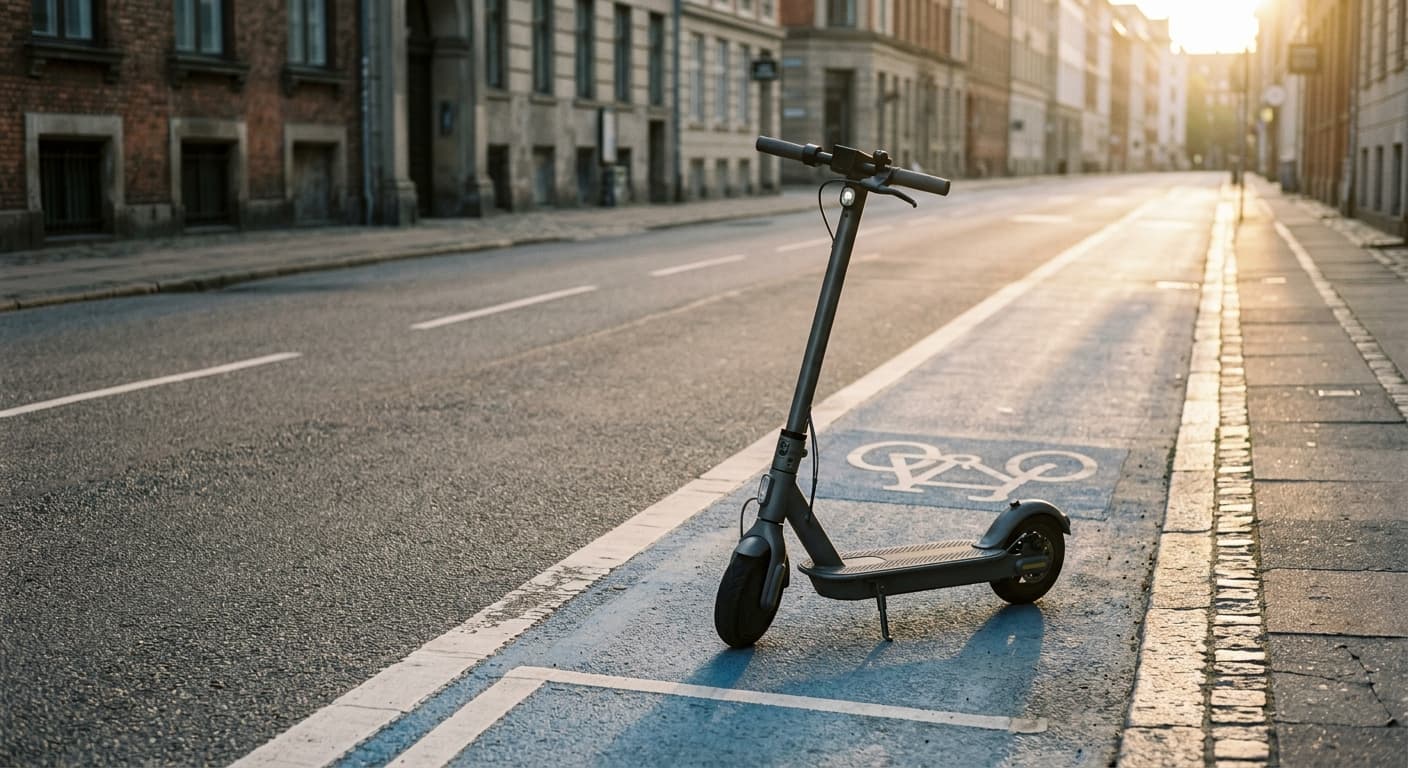
Buying an e-scooter does not make it legal to ride one on a UK public road, pavement, or cycle lane. Privately owned e-scooters remain illegal in public across the whole of the UK. The only lawful public use is a rental e-scooter within an official government trial area, and whether a trial exists at all, and on what terms, differs by nation.
The Legal Position
Private e-scooters: illegal in public everywhere in the UK
An e-scooter meets the definition of a "mechanically propelled vehicle intended or adapted for use on roads," which makes it a motor vehicle under section 185 of the Road Traffic Act 1988. That single definition carries heavy consequences. Using a motor vehicle in public requires third party insurance under section 143, and it requires the rider to hold a licence covering that class of vehicle under section 87.
No insurance product exists for a privately owned e-scooter, and no driving licence category authorises riding one on a public road. A private e-scooter cannot lawfully be used on a road, cycle lane, or pavement anywhere in the UK, regardless of how carefully it is ridden.
Riding on the pavement is a separate offence again, and a much older one. Section 72 of the Highway Act 1835 bans wilfully riding on any footpath or causeway, and it applies to every e-scooter, private or rental, everywhere in the UK.
The one lawful use for a privately owned e-scooter is on private land, with the landowner's permission. That is the main legal use case for a private e-scooter under current law, rather than any road, pavement, or cycle lane open to the public.
Rental e-scooters: legal only inside an official trial area
The only way to legally ride an e-scooter on a public road or cycle lane in the UK is a rental e-scooter operating within an official, government backed trial area. A rider needs at least a provisional car or motorcycle driving licence with category Q entitlement, and a provisional licence holder does not need to display L plates. Foreign licences are accepted on broadly the same terms as for other vehicles.
A cycle helmet is recommended for rental riders but is not a legal requirement. Rental e-scooters are covered by the operator's own third party insurance, rather than something the rider has to arrange separately. The national trial speed ceiling is 15.5 mph, though individual schemes can and do set a lower cap; London's trial, for example, is capped at 12.5 mph.
There is no single nationwide minimum age for rental riders in the Department for Transport's own guidance; age limits are set scheme by scheme. London's trial does apply an 18 and over rule, but that is a London specific requirement, not a national one.
Rental e-scooters exist only in local authority areas that have opted into an official trial, so a rental scheme in one town does not make e-scooters legal in the next one. See our guide to the rental trial areas for the full area-by-area list, and our England e-scooter law page for how the trial framework operates there in detail.
Where You Can and Cannot Ride
| Location | Privately owned e-scooter | Rental e-scooter (official trial area) |
|---|---|---|
| Public road | Illegal | Legal, with at least a provisional licence |
| Cycle lane | Illegal | Legal |
| Pavement | Illegal | Illegal |
| Private land, with the landowner's permission | Legal | Not applicable, rentals are for trial areas |
Pavements are off limits to every kind of e-scooter, private or rental, in every part of the UK. The legal option depends entirely on where you are and whose scooter it is.
Scotland, Wales, and Northern Ireland: The Rules Differ by Nation
England is currently the only nation in the UK with a live rental e-scooter trial. The regulations that created the trial framework, the Electric Scooter Trials and Traffic Signs (Coronavirus) Regulations and General Directions 2020 (SI 2020/663), legally extend to England, Scotland, and Wales. Northern Ireland runs on an entirely separate statute book that this legislation was never extended to.
| Nation | Covered by the 2020 trial regulations? | Live rental trial? | If none, why not |
|---|---|---|---|
| England | Yes | Yes, the only nation with trials currently running | Not applicable |
| Scotland | Yes | No trial has taken place | Transport Scotland says it still needs devolved primary legislation, secondary legislation, and Traffic Regulation Orders that were never put in place before the trial rollout |
| Wales | Yes | No trial has taken place | Signage rules are the one lever devolved to Wales; the rest of e-scooter regulation has been treated as a reserved, UK Government matter |
| Northern Ireland | No, SI 2020/663 was never extended to Northern Ireland | No trial has taken place | Northern Ireland's road traffic law runs through the separate Road Traffic (Northern Ireland) Order 1995 and Road Traffic (Northern Ireland) Order 1981, not the Road Traffic Act 1988 |
Private e-scooter use is illegal in public in all four nations; that part of the law is consistent everywhere. What differs is whether a lawful rental option exists at all, and the legal machinery behind why it does or does not. See the Scotland, Wales, and Northern Ireland pages linked above for the detail specific to each nation, including local enforcement figures and, for Northern Ireland, a currently proposed change to seizure powers that has not yet passed.
Penalties for Illegal Private E-Scooter Use
The figures below are those published by police forces and the Department for Transport as of July 2026. They separate the fixed penalty most riders would actually receive from the higher maximum a court could impose if a case were prosecuted rather than settled by fixed penalty.
| Offence | Fixed penalty | Maximum if prosecuted |
|---|---|---|
| Riding with no insurance | £300 fine and 6 penalty points | A court can impose a larger fine; the e-scooter may also be seized under section 165A of the Road Traffic Act 1988 |
| Riding without the correct licence | £100 fine and 3 to 6 penalty points | A court can impose a larger fine |
| Riding on the pavement | Up to £50 | Up to £500 (level 2 on the standard scale, Highway Act 1835 section 72) |
| Using a handheld phone while riding | £200 fine and 6 penalty points | Not applicable |
| Riding through a red light | £100 fine and possible penalty points | Not applicable |
| Riding under the influence of drink or drugs | Not applicable, this is a court matter | Treated the same as drink or drug driving a car: a fine, a driving ban, and possible imprisonment |
A privately owned e-scooter can also be seized as a nuisance vehicle under section 59 of the Police Reform Act 2002, where it is used in a way that causes alarm, distress, or annoyance. That is a separate power from the section 165A insurance related seizure above. Enforcement of these penalties varies between police forces; Devon and Cornwall Police, for example, say they do not issue fixed penalties for e-scooter offences and use other enforcement methods instead.
One correction worth flagging: some police guidance describes the seizure power for uninsured use as arising "under section 165" of the Road Traffic Act 1988. Section 165 is actually the power to require production of a licence or insurance documents, not the seizure power itself. The seizure power is section 165A, which applies once a rider has failed to produce that documentation and there are reasonable grounds to believe an insurance or licence offence occurred.
The Rental Trials Are Due to Run Until 31 May 2028
The Department for Transport's own guidance for local authorities and rental operators states that trials are due to end on 31 May 2028. Transport for London's guidance corroborates the same date independently, describing it as national guidance that "allows e-scooter trials across the UK to run until 31 May 2028."
This date is a Department for Transport administered extension of the trial programme, not a statutory sunset clause written into the regulations themselves. SI 2020/663, the instrument that created the trial legal framework, contains no expiry clause and has never been amended since it was made in 2020. The trial framework remains in force exactly as originally written, and the end date is set by DfT policy decisions and extensions rather than by any change to the law. Industry reporting has described the current date as the fifth such extension since the trials began in July 2020, though that specific detail rests on trade press coverage rather than a government press release opened directly for this page.
The exact number of live trial areas is reported two different ways in the Department for Transport's own guidance. Its operator guidance states there are 18 live trials across England. Its separate user guidance, last updated 7 July 2026, lists 21 named trial areas. The two figures are not reconciled anywhere in the published guidance; they may reflect some multi-town areas being counted as one trial in one document and several in the other.
See our full list of rental trial areas for the named areas and what changed in the 7 July 2026 update, including areas added and one that ended.
Enforcement in Practice
Police forces across the UK have run seizure operations against illegally used private e-scooters, and enforcement intensity varies significantly by force and by area. Our England, Scotland, Wales, Northern Ireland, and London pages set out force-specific figures where they have been published. None of this enforcement activity changes the underlying legal position.
A private e-scooter being tolerated, rarely stopped, or not seized in a particular area does not make using it legal. Enforcement patterns document how a rule is being applied locally; they are not a form of permission, and they do not change what section 143 and section 87 of the Road Traffic Act 1988 actually require.
Legal History and What May Change
The rental trial framework has been extended repeatedly since it began in July 2020, most recently to 31 May 2028, and new trial areas have been added over time. Brighton and Hove, Cornwall, and Plymouth joined, and the Newcastle trial ended, in the Department for Transport's 7 July 2026 update.
On the separate question of privately owned e-scooters, the Government has repeatedly signalled that it may legalise and regulate them for public road use at some point in the future. As of July 2026, no legislation has been enacted to do this. The government has said future changes may follow the trials, but no bill covering private e-scooter legalisation has passed, so treat any news coverage of a possible future change as a proposal rather than a change to the current law.
For the detail behind each nation, see our guides to e-scooter law in England, Scotland, Wales, and Northern Ireland, our rental trial area index, and our London e-scooter guide for the capital's own rules. For the wider picture, visit the UK driving laws hub and our guide to United Kingdom law. For how other countries handle e-scooters, see our world guide to e-scooter laws.
Frequently Asked Questions
Are e-scooters legal in the UK?
Rental e-scooters used within an official government trial area are legal on roads and cycle lanes. Privately owned e-scooters are not legal on any public road, pavement, or cycle lane anywhere in the UK, including in Scotland, Wales, and Northern Ireland.
Can I ride my own e-scooter on the pavement?
No. Pavements are illegal for every e-scooter, private or rental, everywhere in the UK, under section 72 of the Highway Act 1835.
What happens if I get caught riding a private e-scooter on the road?
You can be given a fixed penalty of £300 and 6 penalty points for having no insurance, or £100 and 3 to 6 points for the wrong licence, and the police can seize the e-scooter.
Do I need a licence to ride a rental e-scooter?
Yes. Rental e-scooter trials require at least a provisional car or motorcycle driving licence with category Q entitlement.
Is it legal to ride an e-scooter on private land?
Yes, with the landowner's permission. Private land is the main lawful use for a privately owned e-scooter under current law.
Are e-scooters legal in Scotland, Wales, and Northern Ireland?
The same UK-wide rule against private e-scooter use in public applies in all four nations. England is currently the only nation with a live rental trial; Scotland and Wales are within the trial law's scope but have never had one, and Northern Ireland runs on a separate statute book that the trial law was never extended to.
When do the UK's e-scooter rental trials end?
The trials are currently due to end on 31 May 2028, a Department for Transport administered extension rather than an expiry built into the underlying regulations.
Will private e-scooters be legalised in the UK?
The Government has said it may legalise and regulate private e-scooters in future, but as of July 2026 no legislation doing so has passed. The current rules still apply until any new law is enacted.
Updates
Independently fact-checked against the cited primary sources
Department for Transport's user guidance added new trial areas in Brighton and Hove, Cornwall, and Plymouth, and confirmed the Newcastle trial had ended.
Department for Transport extended the national rental e-scooter trial programme to 31 May 2028, reported as the fifth such extension since the trials began in July 2020.
The Law Behind This Article
This article rests on the statutory provisions below, held in our own legal record and retrieved from the official source. Tap a section to read the operative text.
Highway Act 1835
s. 72Penalty on persons committing nuisances by riding on footpaths, &c.In forcecited in 5 of our articles
. . . . . . . . . . . . . . . . . . . . . . . . . . . . . . . . If any person shall wilfully ride upon any footpath or causeway by the side of any road made or set apart for the use or accommodation of foot passengers; or shall wilfully lead or drive any horse, ass, sheep, mule, swine, or cattle or carriage of any description, or any truck or sledge, upon any such footpath or causeway; or shall tether any horse, ass, mule, swine, or cattle, on any highway, so as to suffer or permit the tethered animal to be thereon;. . . . . . . . . . . . . . . . . . . . . . . . . . . . . . . . ; every person so offending in any of the cases aforesaid shall for each and every such offence forfeit and pay any sum not exceeding level 2 on the standard scale , over and above the damages occasioned thereby.
Official text (excerpt) · last checked 2026-08-14 · Read the full text in our law library · Verify at legislation.gov.uk
Also relied on in: E-Scooter Laws in England 2026: Trials, Rules and Penalties, E-Scooter Laws in London 2026: TfL Trial Rules, Boroughs and Penalties, E-Scooter Laws in Scotland: Legal Status and Penalties (2026)
Road Traffic Act 1988
s. 143Users of motor vehicles to be insured ... .In forcecited in 7 of our articles
(1) Subject to the provisions of this Part of this Act— (a) a person must not use a motor vehicle on a road or other public place unless there is in force in relation to the use of the vehicle by that person such a policy of insurance ... as complies with the requirements of this Part of this Act, and (b) a person must not cause or permit any other person to use a motor vehicle on a road or other public place unless there is in force in relation to the use of the vehicle by that other person such a policy of insurance ... as complies with the requirements of this Part of this Act. (2) If a person acts in contravention of subsection (1) above he is guilty of an offence. (3) A person charged with using a motor vehicle in contravention of this section shall not be convicted if he proves— (a) that the vehicle did not belong to him and was not in his possession under a contract of hiring or of loan, (b) that he was using the vehicle in the course of his employment, and (c) that he neither knew nor had reason to believe that there was not in force in relation to the vehicle such a policy of insurance ... as is mentioned in subsection (1) above.
Official text (excerpt) · last checked 2026-08-14 · Read the full text in our law library · Verify at legislation.gov.uk
Also relied on in: Driving Without Insurance: Fines, Points and Seizure, Wales E-Scooter Laws: Are Private and Rental E-Scooters Legal? (2026), E-Scooter Laws Around the World: Country-by-Country Map (2026)
s. 165aPower to seize vehicles driven without licence or insuranceIn forcecited in 5 of our articles
(1) Subsection (5) applies if any of the following conditions is satisfied. (2) The first condition is that— (a) a constable in uniform requires, under section 164, a person to produce his licence ... for examination, (b) the person fails to produce them, and (c) the constable has reasonable grounds for believing that a motor vehicle is or was being driven by the person in contravention of section 87(1). (3) The second condition is that— (a) a constable in uniform requires, under section 165, a person to produce evidence that a motor vehicle is not or was not being driven in contravention of section 143, (b) the person fails to produce such evidence, and (c) the constable has reasonable grounds for believing that the vehicle is or was being so driven.
Official text (excerpt) · last checked 2026-08-14 · Read the full text in our law library · Verify at legislation.gov.uk
s. 185Meaning of “motor vehicle” and other expressions relating to vehicles.In forcecited in 3 of our articles
(1) In this Act— “ heavy locomotive ” means a mechanically propelled vehicle which is not constructed itself to carry a load other than any of the excepted articles and the weight of which unladen exceeds 11690 kilograms, “ heavy motor car ” means a mechanically propelled vehicle, not being a motor car, which is constructed itself to carry a load or passengers and the weight of which unladen exceeds 2540 kilograms, “ invalid carriage ” means a mechanically propelled vehicle the weight of which unladen does not exceed 254 kilograms and which is specially designed and constructed, and not merely adapted, for the use of a person suffering from some physical defect or disability and is used solely by such a person, “ light locomotive ” means a mechanically propelled vehicle which is not constructed itself to carry a load other than any of the excepted articles and the weight of which unladen does not exceed 11690 kilograms but does exceed 7370 kilograms, “ motor car ” means a mechanically propelled vehicle, not being a motor cycle or an invalid carriage, which is constructed itself to carry a load or passengers and the weight of which unladen— (a) if it is constructed solely for the ca
Official text (excerpt) · last checked 2026-08-14 · Read the full text in our law library · Verify at legislation.gov.uk
s. 87Drivers of motor vehicles to have driving licences.In forcecited in 5 of our articles
(1) It is an offence for a person to drive on a road a motor vehicle of any class otherwise than in accordance with a licence authorising him to drive a motor vehicle of that class. (2) It is an offence for a person to cause or permit another person to drive on a road a motor vehicle of any class otherwise than in accordance with a licence authorising that other person to drive a motor vehicle of that class. (3) . . . . . . . . . . . . . . . . . . . . . . . . . . . . . . . .
Official text (excerpt) · last checked 2026-08-14 · Read the full text in our law library · Verify at legislation.gov.uk
Search our record of UK legislation — retrieved from legislation.gov.uk →
Sources and References
- Road Traffic Act 1988, section 185 (interpretation: definition of "motor vehicle")(legislation.gov.uk).gov
- Road Traffic Act 1988, section 143 (users of motor vehicles to be insured)(legislation.gov.uk).gov
- Road Traffic Act 1988, section 87 (drivers to have a licence authorising the class of vehicle)(legislation.gov.uk).gov
- Road Traffic Act 1988, section 165A (power to seize vehicles driven without a licence or insurance)(legislation.gov.uk).gov
- Highway Act 1835, section 72 (riding on a footpath or causeway)(legislation.gov.uk).gov
- The Electric Scooter Trials and Traffic Signs (Coronavirus) Regulations and General Directions 2020 (SI 2020/663)(legislation.gov.uk).gov
- gov.uk: E-scooter trials, guidance for local areas and rental operators(gov.uk).gov
- gov.uk: E-scooter trials, guidance for users(gov.uk).gov
- Transport for London: Electric scooter rental trial(tfl.gov.uk).gov
- Police.uk: Advice on e-scooter usage(police.uk).gov