FTC Halts Credit Glory Credit-Repair Scheme in $200M Case
Independently fact-checked against primary sources (last audited August 21, 2026). · 4 primary sources cited on this page. How we verify our legal content
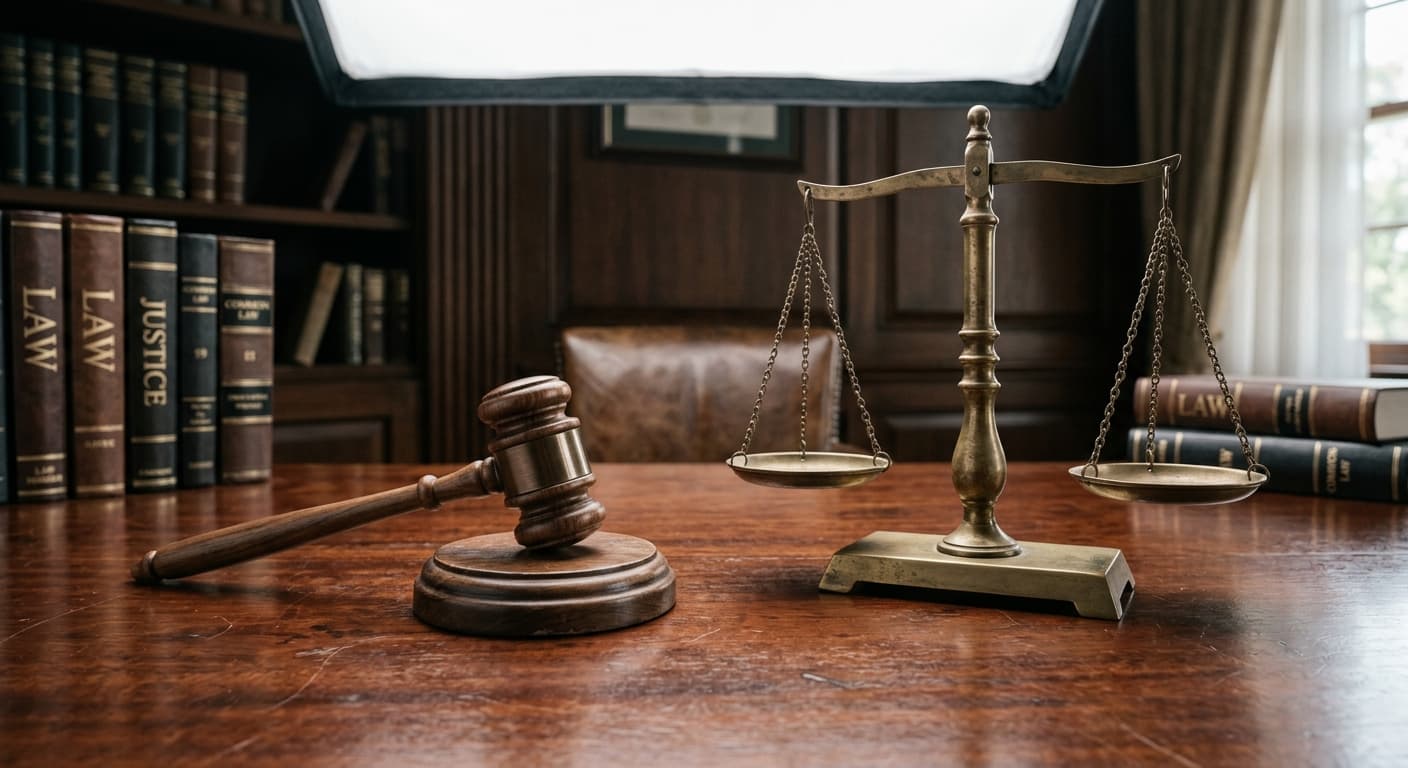
A federal court has temporarily shut down Credit Glory at the FTC's request, a sprawling credit-repair operation the FTC says charged consumers illegal upfront fees, impersonated debt collectors, and locked them into hidden recurring subscriptions. A federal court in Arizona entered the order on August 4, 2026; the FTC unsealed and announced it on August 10.
Information last verified on August 22, 2026.
What Happened
On August 10, 2026, the Federal Trade Commission announced that the U.S. District Court for the District of Arizona had entered an order temporarily halting Credit Glory, a network of 17 related companies and five individuals the agency accuses of running a bogus credit-repair scheme. The FTC says the operation scammed consumers out of nearly $200 million; the complaint pleads that the defendants collected at least $172.5 million in the three years before it was filed.
The complaint names entities including Credit Glory LLC, Credit Glory Inc., Credit Sage LLC, Joy Credit Software LLC, and more than a dozen others, along with principals Alexander Brola, Liam Emery, Marko Petkovic, Joshua Curtis, and David Naylor. The Commission authorized the action by a 2-0 vote, and the case, Federal Trade Commission v. Credit Glory LLC, No. 2:26-cv-05387-SPL (D. Ariz.), remains pending.
The FTC says the defendants bought paid Google search ads timed to appear when people searched for debts owed to specific creditors, including USAA and the Army & Air Force Exchange Service, steering vulnerable consumers and military servicemembers toward telemarketers who, the agency alleges, posed as debt collectors or creditors. Those telemarketers allegedly charged two illegal upfront charges, the FTC says: a $1 charge presented as identity or credit-report verification, and then a separate advance fee typically in the hundreds of dollars, before doing any work. The agency also alleges the company filed false identity theft reports on IdentityTheft.gov in consumers' names without their knowledge, and enrolled people in recurring charges that continued indefinitely despite promises that billing would last only a few months.
"Using paid Google search ads to target and deceive vulnerable consumers, including military servicemembers, through falsely promising to improve their credit is egregious behavior that will not be tolerated by the FTC," said Christopher Mufarrige, Director of the FTC's Bureau of Consumer Protection.
What the Law Actually Says
Credit-repair companies are among the most heavily regulated consumer-service businesses in the country, and the FTC's complaint reaches several federal statutes at once.
The Credit Repair Organizations Act (CROA) flatly bars any credit-repair company from charging or receiving money before it has fully performed the services it promised. This advance-fee ban is the centerpiece of the law, and the FTC alleges that Credit Glory's upfront charges violated it directly. CROA also prohibits untrue or misleading representations about what a credit-repair service can accomplish.
The Restore Online Shoppers' Confidence Act (ROSCA) governs recurring negative-option billing in transactions effected over the internet, the arrangement in which a consumer's silence is treated as consent to keep charging a card. ROSCA requires clear disclosure of the terms, express informed consent before the first charge, and a simple way to cancel. The FTC says consumers were locked into open-ended charges they never knowingly agreed to.
The complaint also invokes the Telemarketing Sales Rule, which separately prohibits advance fees for credit-repair services sold by phone and bars misrepresentations during a sales call, and the Gramm-Leach-Bliley Act, which makes it unlawful to obtain someone's financial information through false pretenses, a practice known as pretexting. The Electronic Fund Transfer Act rounds out the list by requiring written authorization before a business may set up recurring debits from a consumer's bank account.
Filing a false identity theft report in another person's name is its own serious problem. A fraudulent report can trigger alerts, block legitimate accounts, and complicate a real victim's ability to prove what actually happened. Our overview of identity theft law and the practical walkthrough in our guide on how to report identity theft explain the official recovery process.
Analysis: Why This Matters
In the view of the Recording Law Editorial Team, the Credit Glory case is notable less for any single novel legal theory than for how many consumer-finance rules one operation allegedly broke at once. The advance-fee ban, negative-option consent, telemarketing limits, and financial-privacy protections are not obscure. They are the exact guardrails Congress built after decades of credit-repair abuse, and the complaint reads as a catalog of them.
Two details stand out. First, the alleged targeting of military servicemembers through search ads keyed to lenders like USAA shows how precisely a modern scam can find people at a financial low point. Second, if proved, the filing of false identity theft reports would have turned a consumer-protection tool against the very people it is meant to help, and that kind of damage can linger on a credit file even after the underlying scheme is stopped.
A temporary halt is not a final judgment. The defendants have not had their day in court, and the FTC will still have to prove its allegations. What the order did was freeze the defendants' assets and put the businesses under a court-appointed temporary receiver, attorney Thomas McNamara, which is often the practical difference between recovering consumer money and watching it vanish. By its own terms the restraining order expired 14 days after entry unless the court extended it or replaced it with a preliminary injunction.
The broader takeaway for readers is that legitimate credit repair is something you can do yourself for free. No honest company can remove accurate, current, negative information from your report, and none can lawfully demand full payment before the work is finished.
How This Affects You
If you paid Credit Glory or a similar service, you do not need to buy anything to protect yourself. Start by pulling your free credit reports and checking them for errors or accounts you do not recognize. You have the right to dispute inaccurate items directly with the credit bureaus at no cost.
If you suspect fraud, our comparison of a credit freeze versus a fraud alert walks through which tool fits your situation. A freeze locks new creditors out of your file entirely and is free to place and lift.
Because an error on a credit report can also surface when a landlord, lender, or employer runs a screening, it is worth understanding your rights under the rules that govern background and credit checks. If a company charged your card without clear consent, contact your bank about the recurring debits and keep records of every charge and every cancellation request.
This article is legal information, not legal advice, and it does not create an attorney-client relationship. Enforcement actions and their outcomes can change as a case proceeds. For guidance about your specific situation, consult a licensed attorney or contact the FTC directly.
Frequently Asked Questions
What did the FTC accuse Credit Glory of doing?
The FTC alleges that Credit Glory, a network of related companies and five individuals, ran a bogus credit-repair scheme that charged illegal upfront fees, impersonated debt collectors and creditors, enrolled consumers in hidden recurring charges, and filed false identity theft reports in consumers' names. The agency says the operation took nearly $200 million from consumers; its complaint pleads at least $172.5 million collected in the three years before filing.
Is Credit Glory shut down permanently?
Not yet. On August 4, 2026, a federal court in Arizona entered a temporary restraining order halting the operation while the case proceeds. A temporary halt is not a final judgment, and the defendants have not been found liable. The FTC still must prove its allegations in court.
What is the Credit Repair Organizations Act?
CROA is a federal law that regulates credit-repair companies. Its central rule is the advance-fee ban: a credit-repair company cannot charge or collect any money before it has fully performed the services it promised. CROA also prohibits false or misleading claims about what credit repair can achieve, and it gives consumers cancellation rights.
Can a company legally remove accurate negative items from my credit report?
No. No company can legally remove accurate, current, negative information from your credit report. Legitimate credit repair mainly involves disputing information that is genuinely inaccurate or outdated, which you can do yourself for free directly with the credit bureaus.
I paid Credit Glory. How do I try to get my money back?
Refunds in FTC cases depend on the outcome of the litigation and any funds recovered, so there is no guaranteed payout. In the meantime, contact your bank or card issuer about unauthorized or recurring charges, keep records of every charge and cancellation request, and watch the FTC case page for official refund announcements. Never pay a third party who promises to recover your money for a fee.
What should I do if a false identity theft report was filed in my name?
Filing a false report can affect your credit file and your ability to prove what happened. Review your free credit reports for accounts or alerts you do not recognize, dispute anything inaccurate with the bureaus, and consider placing a fraud alert or a credit freeze. Government guides explain the full recovery process step by step.
How can I spot a credit-repair scam?
Common warning signs include demands for payment before any work is done, promises to remove accurate negative information, instructions to dispute true information, pressure to avoid contacting the credit bureaus yourself, and claims that you can build a new credit identity. Any of these is a strong signal to walk away.
Updates
Independently fact-checked against the cited primary sources
The Law Behind This Article
This article rests on the statutory provisions below, held in our own legal record and retrieved from the official source. Tap a section to read the operative text.
United States Code Title 15
§ 1679bProhibited practicesIn force
No person may— make any statement, or counsel or advise any consumer to make any statement, which is untrue or misleading (or which, upon the exercise of reasonable care, should be known by the credit repair organization, officer, employee, agent, or other person to be untrue or misleading) with respect to any consumer’s credit worthiness, credit standing, or credit capacity to— any consumer reporting agency (as defined in section 1681a(f) of this title); or any person— who has extended credit to the consumer; or to whom the consumer has applied or is applying for an extension of credit; make any statement, or counsel or advise any consumer to make any statement, the intended effect of which is to alter the consumer’s identification to prevent the display of the consumer’s credit record, history, or rating for the purpose of concealing adverse information that is accurate and not obsolete to— any consumer reporting agency; any person— who has extended credit to the consumer; or to whom the consumer has applied or is applying for an extension of credit; make or use any untrue or misleading representation of the services of the credit repair organization; or engage, directly or…
Official text (excerpt) · last checked 2026-07-28 · Read the full text in our law library · Verify at uscode.house.gov
Cited in 75 court opinions in our collectionLatest citing opinion in our collection: 2026
Opinions citing this section in our collection:
- Federal Trade Commission v. Keith H. Gill Richard Murkey (Court of Appeals for the Ninth Circuit 2001, 265 F.3d 944)“…it capacity to (A) any consumer reporting agency.... 15 U.S.C. § 1679b(a)(l). Section 1679b(a)(3) prohibits an…”
- Baker v. FAMILY CREDIT COUNSELING COPR. (District Court, E.D. Pennsylvania 2006, 440 F. Supp. 2d 392)“…ng the services provided by the credit repair organization. 15 U.S.C. § 1679b(a)(3). • Engaging, directly or i…”
- Zimmerman v. Puccio (Court of Appeals for the First Circuit 2010, 613 F.3d 60)“…of the services of [a] credit repair organization” under 15 U.S.C. § 1679b(a)(3) and for “engaging] ... [in a] cou…”
Identified automatically from the court opinions citing this section — not a ranking of which case controls.
§ 8403Negative option marketing on the InternetIn force
It shall be unlawful for any person to charge or attempt to charge any consumer for any goods or services sold in a transaction effected on the Internet through a negative option feature (as defined in the Federal Trade Commission’s Telemarketing Sales Rule in part 310 of title 16, Code of Federal Regulations), unless the person— provides text that clearly and conspicuously discloses all material terms of the transaction before obtaining the consumer’s billing information; obtains a consumer’s express informed consent before charging the consumer’s credit card, debit card, bank account, or other financial account for products or services through such transaction; and provides simple mechanisms for a consumer to stop recurring charges from being placed on the consumer’s credit card, debit card, bank account, or other financial account.
Official text (excerpt) · last checked 2026-07-28 · Read the full text in our law library · Verify at uscode.house.gov
Cited in 17 court opinions in our collectionLatest citing opinion in our collection: 2025
Opinions citing this section in our collection:
- Fed. Trade Comm'n v. Credit Bureau Ctr., LLC (District Court, E.D. Illinois 2018, 325 F. Supp. 3d 852)“…the Restoring Online Shoppers' Confidence Act (ROSCA), 15 U.S.C. § 8403 ; and the Free Credit Reports Rule. 1…”
- Federal Trade Commission v. Credit Bureau Center, LLC (District Court, N.D. Illinois 2017, 235 F. Supp. 3d 1054)“…and the Restore Online Shoppers’ Confidence Act (ROSCA), 15 U.S.C. § 8403 . The FTC moved ex parte for a temp…”
- FTC v. Credit Bureau Center, LLC (Court of Appeals for the Seventh Circuit 2023, 81 F.4th 710)“…as acceptance of the offer.” 16 C.F.R. § 310.2(w); see also 15 U.S.C. § 8403 (incorporating the definition by refere…”
Identified automatically from the court opinions citing this section — not a ranking of which case controls.
Search our full record of US law — 2.1 million sections, every state + federal →
Sources and References
- FTC, FTC Stops Sprawling Credit Repair Scheme that Scammed Consumers Out of Nearly $200 Million (Aug. 10, 2026)(ftc.gov).gov
- FTC case page, Federal Trade Commission v. Credit Glory LLC, et al. (D. Ariz.)(ftc.gov).gov
- FTC, Complaint for Permanent Injunction, Monetary Judgment, and Other Relief, FTC v. Credit Glory LLC, No. 2:26-cv-05387-SPL (D. Ariz. filed Aug. 3, 2026)(ftc.gov).gov
- Temporary restraining order with asset freeze and appointment of a temporary receiver, FTC v. Credit Glory LLC, No. 2:26-cv-05387-SPL (D. Ariz. Aug. 4, 2026)(ftc.gov).gov
- 15 U.S.C. 1679b, Credit Repair Organizations Act prohibited practices, including the subsection (b) advance-fee ban (Cornell Legal Information Institute)(law.cornell.edu)
- 15 U.S.C. 8403, Restore Online Shoppers' Confidence Act, negative option marketing on the Internet (Cornell Legal Information Institute)(law.cornell.edu)