
Alaska
Alaska Hit and Run Laws: Penalties and What to Do
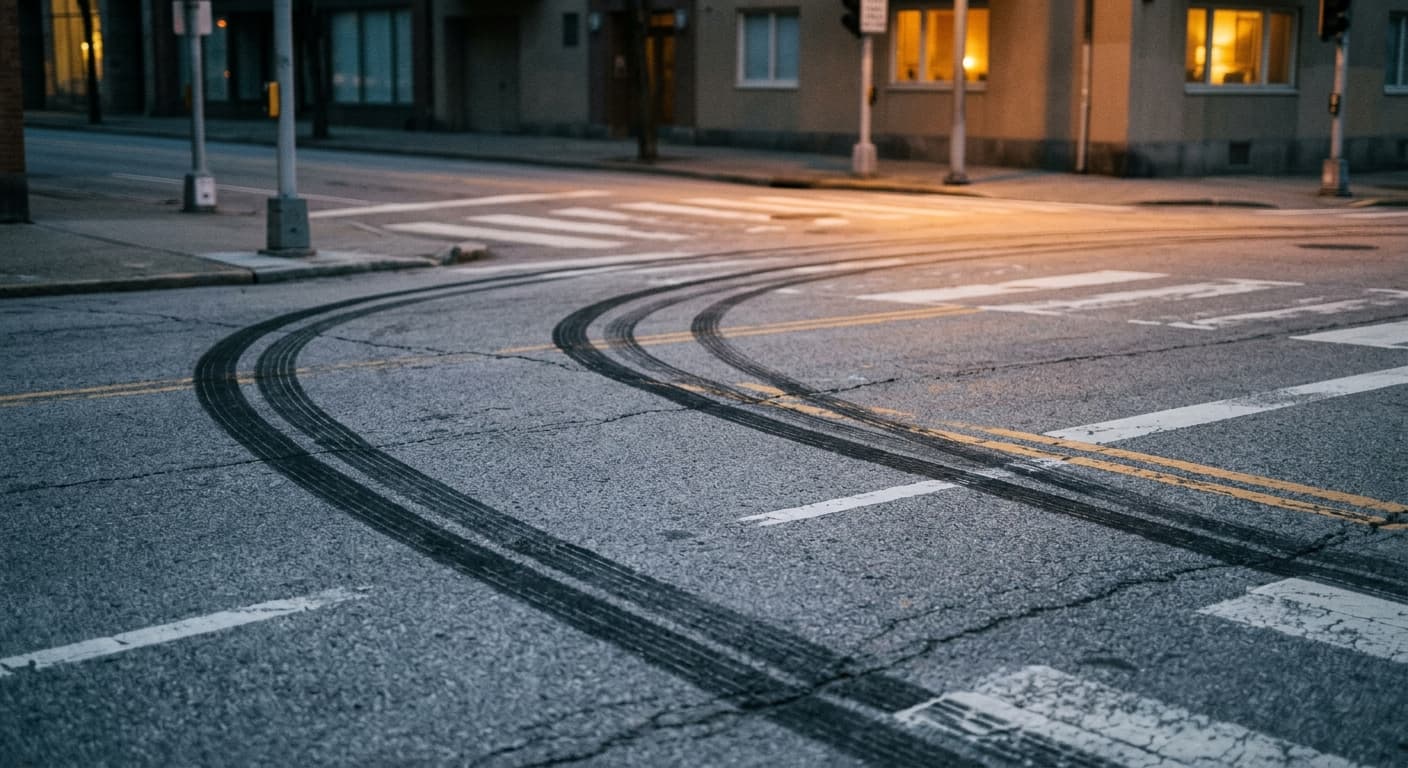
Alaska requires drivers under AS 28.35.050 and AS 28.35.060 to stop, exchange information, and render aid after any accident. Leaving the scene is a misdemeanor. Failing to render assistance to an injured person carries up to 10 years in prison and a $10,000 fine, with mandatory license revocation for convictions involving injury or death.
Hurt in a hit-and-run? If the driver who hit you fled or had no insurance, your own uninsured/underinsured-motorist (UM/UIM) coverage may pay your injury claim. Estimate what it could be worth with our free Alaska Car Accident Settlement Calculator.
Overview of Alaska Hit and Run Laws
Last verified: March 2026. This article reflects current Alaska Statutes Title 28 and recent case law.
Alaska treats hit and run as a serious offense under two interlocking statutes. AS 28.35.050 requires drivers to stop and remain at the scene of any accident. AS 28.35.060 requires drivers to exchange information and render reasonable assistance to injured persons. Violating either statute carries criminal penalties, license revocation, and civil liability.
The severity of consequences depends on the circumstances. A driver who leaves the scene of a minor fender-bender faces misdemeanor charges. A driver who flees after causing serious injury or death and fails to render aid faces potential imprisonment of up to 10 years.
What Alaska Law Requires After an Accident
Duty to Stop (AS 28.35.050)
Under Alaska Statute 28.35.050, any driver involved in an accident must immediately stop at the scene or as close to it as safely possible. This applies to three categories of accidents:
- Injury or death accidents: The driver must stop and remain at the scene until fulfilling all duties under AS 28.35.060.
- Attended vehicle damage: The driver must stop and remain until fulfilling all duties under AS 28.35.060.
- Unattended vehicle damage: The driver must stop, make reasonable efforts to locate and notify the owner of the damaged vehicle, and if the owner cannot be found, leave a written note in a visible location on the unattended vehicle stating the driver's name, address, and a description of the circumstances.
Duty to Give Information and Render Aid (AS 28.35.060)
Once stopped, Alaska law requires drivers to take the following actions:
- Provide your name, address, and vehicle registration number to the injured person, a passenger, or a law enforcement officer.
- Show your driver's license upon request.
- Render reasonable assistance to any injured person.
- Arrange for medical care and transportation to a hospital if treatment appears necessary.
The statute includes an important protection: complying with these requirements and rendering assistance is not considered evidence of liability for the accident. This means helping an injured person cannot be used against you in court.
These obligations do not apply if you are physically incapable of fulfilling them due to your own injuries from the accident.
Penalties for Hit and Run in Alaska
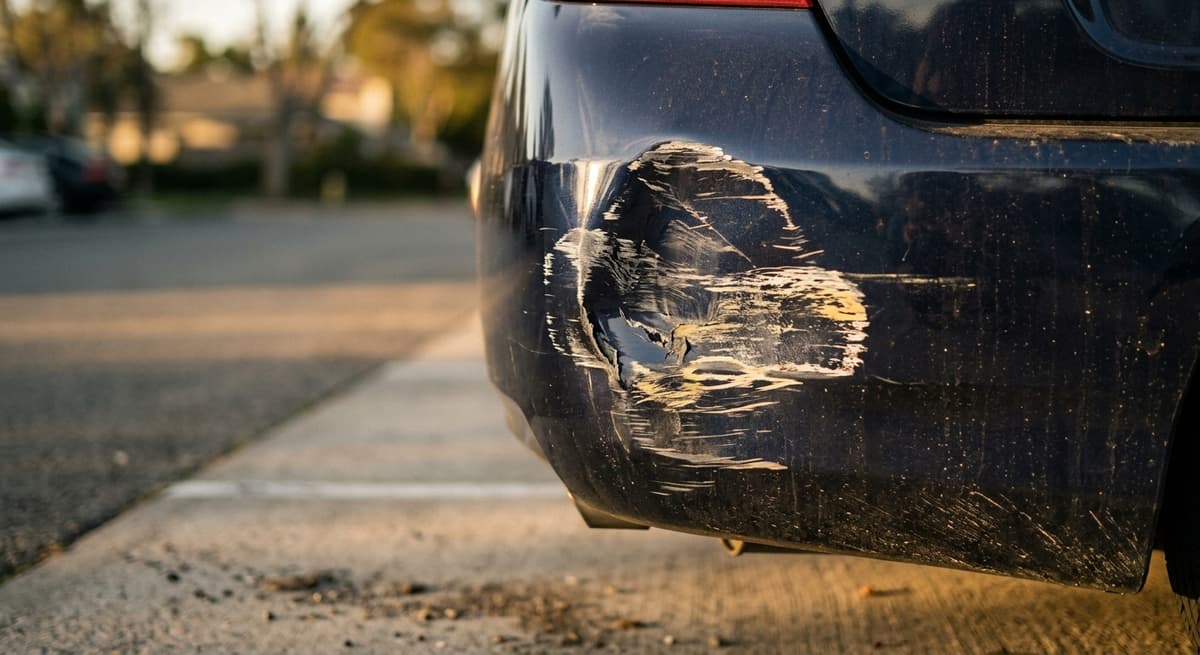
Alaska's hit and run penalties come from multiple statutes and vary based on the type of violation and the severity of the accident.
Penalty Summary Table
| Violation | Statute | Classification | Maximum Imprisonment | Maximum Fine |
|---|---|---|---|---|
| Failure to stop at scene | AS 28.35.050 | Misdemeanor | 90 days | $500 |
| Failure to provide information | AS 28.35.060 | Misdemeanor | 1 year | Per AS 28.90.010 |
| Failure to render assistance | AS 28.35.060 | Felony-level penalty | 10 years | $10,000 |
| Failure to report accident | AS 28.35.080 | Misdemeanor | 90 days | $200 |
Failure to Stop at the Scene
Violating AS 28.35.050 by leaving the scene of any accident is a misdemeanor. Under the general penalty provision of AS 28.90.010, a person convicted of a Title 28 misdemeanor for which no other penalty is specifically provided faces up to 90 days in jail and a fine of up to $500.
Failure to Provide Information
A person who fails to comply with the information-exchange requirements of AS 28.35.060 faces up to one year of imprisonment.
Failure to Render Assistance to an Injured Person
This is the most serious hit and run offense in Alaska. A person who fails to render reasonable assistance to an injured person faces up to 10 years in prison, a fine of up to $10,000, or both. This penalty applies when the driver knows (or should reasonably know) that someone was injured and leaves without providing help.
Driver's License Revocation (AS 28.15.181)
A conviction for failure to stop and render aid when a motor vehicle accident results in death or personal injury triggers mandatory license revocation under AS 28.15.181. The minimum revocation periods are:
- First offense: Not less than 30 days (not less than 60 days if the court grants a limited hardship license)
- Second offense: Not less than 1 year
- Third or subsequent offense: Not less than 3 years
Except for a hardship-limited license on a first offense, the court generally cannot grant limited driving privileges during the minimum revocation period.
Additional Criminal Charges
A hit and run incident can result in charges beyond the hit and run statutes themselves. Prosecutors may add charges such as:
- DUI (AS 28.35.030): If intoxication is involved, a first-offense DUI is a class A misdemeanor carrying a mandatory minimum of 72 hours imprisonment.
- Manslaughter (AS 11.41.120): If a person dies as a result of the accident and the driver's conduct was reckless.
- Vehicular assault or negligent driving (AS 28.35.400): If injuries result from negligent operation of a vehicle.
These additional charges carry their own penalties, which may be imposed on top of hit and run penalties.
Accident Reporting Requirements (AS 28.35.080)
Alaska law requires immediate reporting of certain accidents. You must notify law enforcement by the quickest available means if your accident involves:
- Bodily injury or death
- Total property damage of $2,000 or more
If the accident occurs within a municipality, contact the local police department. If it occurs outside a municipality, contact the Alaska Department of Public Safety.
If law enforcement does not investigate the accident at the scene, you must submit a written or electronic crash report to the Alaska Department of Administration and the local police department within 10 days. You can file this report online through the Alaska DMV using Form 12-209.
Failure to report an accident carries penalties of up to 90 days imprisonment and a fine of up to $200.
Criminal Statute of Limitations
Under AS 12.10.010, Alaska sets a five-year statute of limitations for prosecution of most felonies and all misdemeanors. This means the state has five years from the date of the hit and run to file criminal charges.
The five-year clock stops running if the suspect leaves Alaska. It does not resume until the person returns to the state.
Civil Statute of Limitations
Victims of hit and run accidents have two years from the date of the incident to file a personal injury lawsuit under AS 09.10.070. This deadline applies to claims for medical expenses, lost wages, pain and suffering, and property damage.
Missing this deadline generally bars you from recovering compensation through the courts.
Insurance Implications of Hit and Run in Alaska
Uninsured Motorist Coverage
If you are the victim of a hit and run and cannot identify the other driver, your uninsured motorist (UM) coverage may apply. Alaska law (AS 28.22.201) requires all auto insurance companies to offer UM/UIM coverage, though you can reject it in writing.
Uninsured motorist coverage in Alaska applies to hit and run situations, including cases where your parked vehicle is struck and the other driver leaves. Key details:
- Bodily injury: UM bodily injury coverage pays for your medical bills, lost wages, and pain and suffering.
- Property damage: UM property damage coverage pays for vehicle repairs, subject to a deductible of up to $250.
- Filing threshold: Because of the deductible, only file a UM property damage claim if repair costs exceed $250.
- Phantom vehicle limitation: If both the fleeing driver and vehicle are unknown, UM coverage applies only where there was direct physical contact between the vehicles.
- 24-hour reporting presumption: A driver and vehicle that fled the scene are presumed uninsured only if you report the accident to the appropriate authorities within 24 hours.
Minimum Liability Insurance Requirements
Alaska requires all drivers to carry minimum liability insurance of:
- $50,000 per person for bodily injury
- $100,000 per accident for bodily injury
- $25,000 per accident for property damage
Driving without insurance is a separate violation that compounds the legal consequences of a hit and run.
How Fault Is Determined in Alaska
Alaska follows the pure comparative fault rule under AS 09.17.060. This means:
- You may recover damages even if you were partly responsible for the accident.
- Your damages award is reduced by your percentage of fault.
- A jury determines the fault percentage for each party.
- There is no threshold that bars recovery. Even a plaintiff who is 99% at fault can recover 1% of damages.
Example: If a jury finds you 40% at fault for an accident and your total damages are $100,000, you would recover $60,000.
Why You Should Not Admit Fault at the Scene
Avoid statements like:
- "I apologize"
- "It was my fault"
- "I did not see the other car"
These statements can be used against you in insurance claims and civil litigation. Provide the required information under AS 28.35.060 and let investigators determine fault based on evidence.
What to Do After an Accident in Alaska
Steps for Drivers
- Stop immediately at the scene or as close as safely possible.
- Call 911 if anyone is injured.
- Render reasonable assistance to any injured person, including arranging transportation to a hospital.
- Exchange information with the other party: name, address, vehicle registration, and driver's license.
- Do not move the vehicle if the accident results in serious injury or death, unless directed by law enforcement.
- Report the accident to law enforcement if it involves injury, death, or $2,000 or more in property damage.
- File a written crash report within 10 days if law enforcement did not investigate at the scene.
- Contact a defense attorney before making detailed statements beyond the required information.
Steps for Victims
- Call law enforcement immediately.
- Document the incident: Take photos of vehicle damage, license plates, road conditions, and injuries.
- Record vehicle descriptions and plate numbers of the fleeing vehicle if possible.
- Gather witness contact information.
- Seek medical attention promptly and keep all medical records.
- Contact your insurance company to report the incident and ask about UM/UIM coverage.
- Consult with an attorney about civil claims within the two-year statute of limitations.
Unattended Vehicle Collisions
If you hit a parked or unattended vehicle and cannot locate the owner, you must leave a written note in a visible location on the vehicle. The note must include your name, address, and a description of the circumstances of the accident.
Hit and Run Defenses in Alaska
The facts of each case determine available defenses. Common defenses include:
Lack of Knowledge
Prosecutors must prove you knew you were involved in an accident. If you genuinely did not realize you struck someone or something, this may serve as a defense. Investigators will examine vehicle damage, surveillance footage, and impact evidence to challenge this defense.
Vehicle Not in Your Possession
If your vehicle was stolen or operated by another person at the time of the accident, documentation of this fact may serve as a defense.
Physical Incapacity
AS 28.35.060 explicitly exempts drivers who are physically incapable of complying with the statute's requirements due to injuries sustained in the accident.
Fear for Safety
If you reasonably feared for your personal safety at the scene, you may leave and immediately report to law enforcement. Document your concerns thoroughly and report the accident as soon as you reach a safe location.
Alaska Crash Statistics
Traffic safety data from the Alaska Department of Transportation and Public Facilities provides context for the scope of hit and run incidents:
- Fatal crashes: Alaska recorded 82 traffic fatalities in 2022, and 2024 saw a significant increase in fatal crashes statewide.
- Pedestrian fatalities: Anchorage experienced its highest pedestrian fatality count in the past decade in 2024, with 14 deaths. In the 12 months ending June 2025, 16 pedestrians were killed by vehicles in Anchorage.
- Geographic distribution: Approximately 59% of fatal crashes in Alaska occur in rural areas, where higher speeds and limited infrastructure increase risk.
- Crash volume: Alaska DOT reports approximately 10,200 crashes statewide annually, with Anchorage accounting for roughly 40% of all reported crashes.
These numbers underscore why Alaska enforces strict penalties for leaving the scene of an accident.
Notable Alaska Hit and Run Cases
Larry W. Anderson Jr. Case (2024)
In May 2024, Anchorage police arrested Larry W. Anderson Jr., age 40, for striking and killing a woman crossing A Street in Midtown Anchorage. Anderson fled the scene after the collision. Investigators used surveillance footage and witness statements to identify and locate the suspect, demonstrating how law enforcement pursues hit and run cases even after the driver flees.
Joshua Vargas Case (2025)
In September 2025, 27-year-old Joshua Vargas was arrested and charged with manslaughter following a fatal hit and run in Anchorage. This case illustrated how fleeing the scene can lead to additional serious criminal charges beyond the hit and run statutes.
More Alaska Laws
Frequently Asked Questions
Is hit and run a felony in Alaska?
It depends on the specific violation. Leaving the scene of an accident (AS 28.35.050) is a misdemeanor. However, failing to render reasonable assistance to an injured person (AS 28.35.060) carries felony-level penalties of up to 10 years in prison and a $10,000 fine. Prosecutors may also file additional felony charges such as manslaughter if someone dies.
What is the statute of limitations for hit and run in Alaska?
Criminal charges must be filed within five years of the incident under AS 12.10.010. The clock stops if the suspect leaves Alaska. Victims have two years from the date of the accident to file a civil personal injury lawsuit under AS 09.10.070.
Does uninsured motorist insurance cover a hit and run in Alaska?
Yes, in most cases. Uninsured motorist (UM) coverage applies to hit and run situations in Alaska, including when your parked vehicle is struck by an unidentified driver, though if both the driver and vehicle are unknown, coverage requires direct physical contact between the vehicles, and the fleeing driver is presumed uninsured only if you report the accident within 24 hours. UM bodily injury coverage pays for medical bills and lost wages. UM property damage coverage pays for vehicle repairs, subject to a deductible of up to $250.
What if I hit and run while intoxicated in Alaska?
You will face multiple charges. In addition to hit and run charges under AS 28.35.050 and AS 28.35.060, you will face DUI charges under AS 28.35.030. A first-offense DUI is a class A misdemeanor with a mandatory minimum of 72 hours imprisonment. If someone dies, you may face manslaughter charges as well.
Can I be charged with hit and run if I was not at fault for the accident?
Yes. Hit and run charges are based on leaving the scene without fulfilling your legal duties, not on who caused the accident. Even if the other driver caused the collision, you are still required to stop, exchange information, and render assistance to any injured person. Failing to do so is a separate criminal offense.
Injured in Alaska? Get a free case review from a personal-injury attorney
If someone else's negligence caused your injury, you may be owed compensation for medical bills, lost wages, and pain and suffering. Get a free, no-obligation review from a Alaska personal-injury attorney. Most work on contingency, so there is no upfront cost.
Updates
Fixed the AS 28.15.181 license-revocation ladder (it had copied the DUI schedule from subsection (c) instead of the failure-to-render-aid schedule in subsection (b): 30 days/1 year/3 years, not 90 days/1 year/3 years/5 years) and restored two qualifiers on uninsured-motorist coverage for hit-and-run victims (the physical-contact requirement when both driver and vehicle are unknown, and the 24-hour reporting window for the uninsured presumption).
Governing law re-checked for recent changes
The Law Behind This Article
This article rests on the statutory provisions below, held in our own legal record and retrieved from the official source. Tap a section to read the operative text.
Alaska Statutes, Title 9. Code of Civil Procedure, Chapter 10. Limitations of Actions
§ 09.10.070Actions for torts, for injury to personal property, for certain statutory liabilities, and against peace officers and coroners to be brought in two yearsIn forcecited in 10 of our articles
(a) Except as otherwise provided by law, a person may not bring an action (1) for libel, slander, assault, battery, seduction, or false imprisonment, (2) for personal injury or death, or injury to the rights of another not arising on contract and not specifically provided otherwise; (3) for taking, detaining, or injuring personal property, including an action for its specific recovery; (4) upon a statute for a forfeiture or penalty to the state; or (5) upon a liability created by statute, other than a penalty or forfeiture; unless the action is commenced within two years of the accrual of the cause of action. (b) A person may not bring an action against a peace officer or coroner upon a liability incurred by the doing of an act in an official capacity or by the omission of an official duty, including the nonpayment of money collected upon an execution, unless brought within two years. This subsection does not apply to an action for an escape.
Official text (excerpt) · last checked 2026-07-31 · Read the full text in our law library · Verify at akleg.gov
Cited in 228 court opinions in our collectionLatest citing opinion in our collection: 2026
In the courts (editorial summary, independently checked):Alaska courts apply the two-year limit of AS 09.10.070(a) to personal injury and other tort claims. Cikan v. ARCO Alaska, Inc. (2005) held mental incompetency under AS 09.10.140(a) can toll it, with the competency dispute resolved at a pretrial hearing. Robinson v. Alaska Hous. Fin. Corp. (2019) applied it to dismiss untimely tort claims.
Opinions citing this section in our collection:
- Adkins v. Nabors Alaska Drilling, Inc. (Alaska Supreme Court 1980, 609 P.2d 15)✓A worker who suffered a head injury tripping over a hose at a drilling site added a new defendant eight months after AS 09.10.070's two-year period ran. The court held his evidence of concussion and amnesia raised a fact issue on tolling, so summary judgment was improper.
- Evans Ex Rel. Kutch v. State (Alaska Supreme Court 2002, 56 P.3d 1046)✓Injured plaintiffs facially challenged Alaska's 1997 tort reform, including how AS 09.10.070's two-year limit works with the minors tolling rule. The court held the narrower tolling given to children hurt before their eighth birthday is rationally based and upheld the scheme.
- Cikan v. ARCO Alaska, Inc. (Alaska Supreme Court 2005, 125 P.3d 335)✓A woman who slipped on ice outside an office building and hit her head sued nearly nine years later. The court held AS 09.10.070(a)'s two-year limit would ordinarily bar the claim, but her evidence of post-concussion incompetency required a pretrial evidentiary hearing.
Identified automatically from the court opinions citing this section — not a ranking of which case controls.
Also relied on in: Alaska Dog Bite Laws: Liability and Victim Rights, Alaska Car Accident Laws: Fault, Insurance, and Your Claim, Alaska Defamation Laws: Libel, Slander & Suing (2026)
Alaska Statutes, Title 9. Code of Civil Procedure, Chapter 17. Civil Damages and Apportionment of Fault
§ 09.17.060Effect of contributory faultIn forcecited in 8 of our articles
In an action based on fault seeking to recover damages for injury or death to a person or harm to property, contributory fault chargeable to the claimant diminishes proportionately the amount awarded as compensatory damages for the injury attributable to the claimant's contributory fault, but does not bar recovery.
Official text (excerpt) · last checked 2026-09-08 · Read the full text in our law library · Verify at akleg.gov
Cited in 20 court opinions in our collectionLatest citing opinion in our collection: 2025
In the courts (editorial summary, independently checked):Sowinski v. Walker (2008) described AS 09.17.060 as stating that a claimant cannot recover the portion of damages attributable to the claimant's own fault. Smith v. Ingersoll-Rand Co. (2000) held the 1986 act that enacted this rule broadened comparative fault in strict products liability to include a plaintiff's ordinary negligence.
Opinions citing this section in our collection:
- Sowinski v. Walker (Alaska Supreme Court 2008, 198 P.3d 1134)✓Two minors who drank liquor bought at DelRois Liquor Store died when their ATV struck a cable. The court described AS 09.17.060 as Alaska's codified comparative negligence rule and, with the pure several liability of AS 09.17.080, held the store owed only its 35 percent share.
- Loeb v. Rasmussen (Alaska Supreme Court 1991, 822 P.2d 914)✓A liquor store sold alcohol to a 17-year-old without checking her age, and she was hurt driving drunk. The court read AS 09.17.060 as leaving intact the rule barring the licensee from charging the minor's fault, but Sowinski (2008) called that passage dicta and superseded it.
- Smith v. Ingersoll-Rand Co. (Alaska Supreme Court 2000, 14 P.3d 990)“…s). 28 . Id. 29 . AS 09.17.060. 30 . AS 09.17.900…”
Identified automatically from the court opinions citing this section — not a ranking of which case controls.
Also relied on in: Medical Malpractice Laws in Alaska (2026): Deadlines & Caps, Motorcycle Accident Laws in Alaska (2026): Deadlines & Helmets, Alaska Slip and Fall Laws: Proving Premises Liability
Alaska Statutes, Title 28. Motor Vehicles, Chapter 15. Drivers' Licenses
§ 28.15.181Court suspensions, revocations, and limitationsIn force
(a) Conviction of any of the following offenses is grounds for the immediate revocation of a driver's license, privilege to drive, or privilege to obtain a license: (1) manslaughter or negligent homicide resulting from driving a motor vehicle; (2) a felony in the commission of which a motor vehicle is used; (3) failure to stop and give aid as required by law when a motor vehicle accident results in the death or personal injury of another; (4) perjury or making a false affidavit or statement under oath to the department under a law relating to motor vehicles; (5) operating a motor vehicle or aircraft while under the influence of an alcoholic beverage, inhalant, or controlled substance; (6) reckless driving; (7) using a motor vehicle in unlawful flight to avoid arrest by a peace officer; (8) refusal to submit to a chemical test authorized under AS 28.33.031(a) or AS 28.35.031(a) while under arrest for operating a motor vehicle, commercial motor vehicle, or aircraft while under the influence of an alcoholic beverage, inhalant, or controlled substance, or authorized under AS 28.35.031(g); (9) driving while license, privilege to drive, or privilege to obtain a license, canceled,…
Official text (excerpt) · last checked 2026-07-31 · Read the full text in our law library · Verify at akleg.gov
Cited in 40 court opinions in our collectionLatest citing opinion in our collection: 2026
Opinions citing this section in our collection:
- Wylie v. State (Court of Appeals of Alaska 1990, 797 P.2d 651)“…or reinstatement of his license. Wylie argues that AS 28.15.181(a)(3) which provides for the immediate…”
- Belarde v. Municipality of Anchorage (Court of Appeals of Alaska 1981, 634 P.2d 567)“…r ruled that he was a second offender within the meaning of AS 28.15.181 and therefore revoked his driver’s lice…”
- Tulowetzke v. State, Department of Public Safety (Alaska Supreme Court 1987, 743 P.2d 368)“…e has had two or more prior convictions during that period. AS 28.15.181(c). The DMV must revoke the license for…”
Identified automatically from the court opinions citing this section — not a ranking of which case controls.
Alaska Statutes, Title 28. Motor Vehicles, Chapter 22. Mandatory Motor Vehicle Insurance
§ 28.22.201Uninsured and underinsured motorists coverageIn force
(a) The uninsured and underinsured motorists coverage required under this chapter (1) does not apply to bodily injury, sickness, disease, or death of an insured or damage to or destruction of property of an insured until the limits of liability bonds and policies that apply have been used up by payments or judgments or settlements; (2) must be a single combined coverage; and (3) may be rejected by the insured in writing; if the insured has rejected uninsured or underinsured coverage, the coverage may not be included in a supplemental, renewal, or replacement policy unless the insured subsequently requests uninsured or underinsured coverage in writing. (b) If both the owner and operator of a vehicle are unknown, payment under the uninsured and underinsured motorists coverage may be made only where direct contact between the motor vehicles has occurred. A vehicle and operator that have left the scene of an accident with another vehicle are presumed to be uninsured if the insured person reports the accident to the appropriate authorities within 24 hours.
Official text (excerpt) · last checked 2026-07-31 · Read the full text in our law library · Verify at akleg.gov
Cited in 8 court opinions in our collectionLatest citing opinion in our collection: 2024
Opinions citing this section in our collection:
- Wold v. Progressive Preferred Insurance Co. (Alaska Supreme Court 2002, 52 P.3d 155)“…he express terms *161 of AS 28.20.445(f) and AS 28.22.201(b). Cynthia thus essentially asks us to…”
- Ayres v. United Services Automobile Ass'n (Alaska Supreme Court 2007, 160 P.3d 128)“…is interpretation. As already noted, AS 28.20.445(e)(8) and AS 28.22.201(a)(8) each provide that UIM coverage "m…”
- Allstate Insurance Company v. Nathan Harbour, Allstate Insurance Company v. Kenneth N. Mattison (Alaska Supreme Court 2021, 491 P.3d 374)“…45 (setting out, in AMVSRA, requirements for UIM coverage); AS 28.22.201-.231 (setting out, in Alaska Mandatory…”
Identified automatically from the court opinions citing this section — not a ranking of which case controls.
Alaska Statutes, Title 28. Motor Vehicles, Chapter 35. Offenses and Accidents
§ 28.35.050Action of operator immediately after accidentIn force
(a) An operator of a vehicle involved in an accident resulting in injury to or death of a person shall immediately stop the vehicle at the scene of the accident or as close to it as possible and return to, and remain at, the scene until the operator has fulfilled the requirements of AS 28.35.060. (b) The operator of a vehicle involved in an accident resulting only in damage to a vehicle driven or attended by a person shall immediately stop the vehicle at the scene of the accident or as close to it as possible and return to, and remain at, the scene of the accident until the operator has fulfilled the requirements of AS 28.35.060. (c) The operator of a vehicle involved in an accident resulting only in damage to a vehicle that is unattended shall immediately stop at the scene of the accident and undertake reasonable means and efforts to locate and notify the operator or owner of the damaged unattended vehicle of the name and address of the operator and owner of the vehicle striking the unattended vehicle.
Official text (excerpt) · last checked 2026-07-31 · Read the full text in our law library · Verify at akleg.gov
Cited in 21 court opinions in our collectionLatest citing opinion in our collection: 2025
Opinions citing this section in our collection:
- Wylie v. State (Court of Appeals of Alaska 1990, 797 P.2d 651)“…ng the scene of an accident, a misdemeanor, in violation of AS 28.35.050(a), 1 failure to render as…”
- Drahosh v. State (Alaska Supreme Court 1968, 442 P.2d 44)“…necessary to examine the pertinent statutory sections. Both AS 28.35.050 and AS 28.35.060 define the duties of d…”
- Walsh v. State (Court of Appeals of Alaska 2006, 134 P.3d 366)“…AS 11.46.360(a)(1), AS 28.35.030(a)(1), AS 28.35.032(a), AS 28.35.050(b), AS 11.56.700(a)(1), and AS 28.15.29…”
Identified automatically from the court opinions citing this section — not a ranking of which case controls.
§ 28.35.080Immediate notice of accidentIn forcecited in 2 of our articles
(a) The driver of a vehicle involved in an accident resulting in bodily injury to or death of a person or total property damage to an apparent extent of $2,000 or more shall immediately by the quickest means of communication give notice of the accident to the local police department if the accident occurs within a municipality, otherwise to the Department of Public Safety. (b) The driver of a vehicle involved in an accident resulting in bodily injury to or death of a person or total property damage to an apparent extent of $2,000 or more shall, within 10 days after the accident, forward a written or electronic report of the accident to the Department of Administration and to the local police department if the accident occurs within a municipality. A report is not required under this subsection if the accident is investigated by a peace officer. (c) The form of accident report required under (b) of this section can be obtained from the department's Internet website, any local police department, or the Department of Public Safety.
Official text (excerpt) · last checked 2026-07-31 · Read the full text in our law library · Verify at akleg.gov
Cited in 21 court opinions in our collectionLatest citing opinion in our collection: 2010
Opinions citing this section in our collection:
- Wylie v. State (Court of Appeals of Alaska 1990, 797 P.2d 651)“…ure to report an accident, a misdemean- or, in violation of AS 28.35.080(a), 3 and driving while in…”
- Adkins v. Lester (Alaska Supreme Court 1974, 530 P.2d 11)“…report and the officer's conclusions were privileged under AS 28.35.080(e) [8] and AS 28.35.120. [9] Because…”
- Parnell v. Peak Oilfield Service Co. (Alaska Supreme Court 2008, 174 P.3d 757)“…eal. 20 a. Negligence per se for violating AS 28.35.080 Parnell builds her theory of neg…”
Identified automatically from the court opinions citing this section — not a ranking of which case controls.
Also relied on in: How to Get a Police Report in Alaska (2026): Crash & Incident Reports
Alaska Statutes, Title 28. Motor Vehicles, Chapter 90. General and Miscellaneous Provisions
§ 28.90.010Penalties for violations of law, regulations, and municipal ordinancesIn force
(a) It is a misdemeanor for a person to violate a provision of this title unless the violation is by this title or other law declared to be a felony or an infraction. (b) A person convicted of a misdemeanor for a violation of a provision of this title for which another penalty is not specifically provided is punishable by a fine of not more than $500, or by imprisonment for not more than 90 days, or by both. In addition, the privilege to drive or the registration of vehicles may be suspended or revoked. (c) Unless otherwise specified by law a person convicted of a violation of a regulation adopted under this title, or a municipal ordinance regulating vehicles or traffic when the municipal ordinance does not correspond to a provision of this title, is guilty of an infraction and is punishable by a fine not to exceed $300.
Official text (excerpt) · last checked 2026-07-31 · Read the full text in our law library · Verify at akleg.gov
Cited in 9 court opinions in our collectionLatest citing opinion in our collection: 2025
Opinions citing this section in our collection:
- State of Alaska v. Kai Davidson Meyers (Court of Appeals of Alaska 2020, 479 P.3d 840)“…no right to jury trial or court- appointed counsel.4 Under AS 28.90.010(d), an “infraction” is: 2 P…”
- State v. Fyfe (Alaska Supreme Court 2016, 370 P.3d 1092)“…ffic as an infraction). 12 See, e.g., AS 28.90.010(a) (imposing misdemeanor liability for…”
- Municipality of Anchorage v. Beezley (Court of Appeals of Alaska 2018)“…ed penalty — because Title 28 contains a general provision, AS 28.90.010, which establishes the penalty for all…”
Identified automatically from the court opinions citing this section — not a ranking of which case controls.
Search our full record of US law — 2.1 million sections, every state + federal →
Sources and References
- Alaska Statute 28.35.050: Action of Operator Immediately After Accident(akleg.gov).gov
- Alaska Statute 28.35.060: Duty to Give Information and Render Assistance(akleg.gov).gov
- Alaska Statute 28.35.080: Immediate Notice of Accident(akleg.gov).gov
- Alaska Statute 28.15.181: Court Suspensions, Revocations, and Limitations(akleg.gov).gov
- Alaska Statute 28.90.010: Penalties for Violations of Title 28(akleg.gov).gov
- Alaska Statute 12.10.010: General Time Limitations (Criminal Statute of Limitations)(akleg.gov).gov
- Alaska Statute 09.17.060: Effect of Contributory Fault(akleg.gov).gov
- Alaska Statute 09.10.070: Actions for Personal Injury or Death(akleg.gov).gov
- Alaska Statute 28.22.201: Uninsured and Underinsured Motorists Coverage(akleg.gov).gov
- Alaska DMV: Report a Crash(dmv.alaska.gov).gov
- Alaska DOT: Crash and Fatality Data(dot.alaska.gov).gov
- Alaska Division of Insurance: Auto Insurance Coverage Options(commerce.alaska.gov).gov