
Australia
Child Car Seat Laws in Australia: Age Rules, Fines and Demerits by State
Independently fact-checked against primary sources (last audited August 19, 2026). · 12 primary sources cited on this page. How we verify our legal content
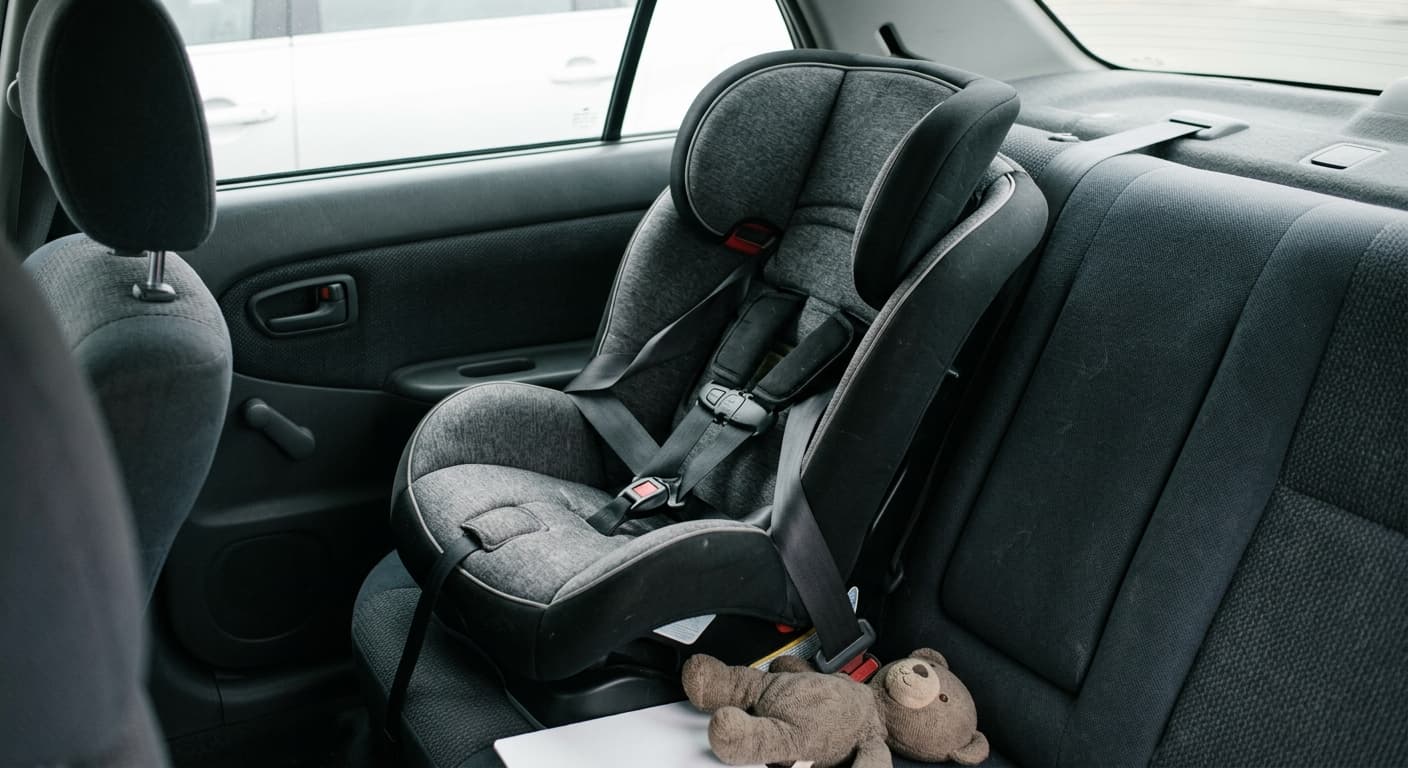
Every Australian state and territory requires young children to travel in an approved car seat, but the exact age bands, the on-the-spot fine and the demerit points are set separately by each jurisdiction's own law, not by a single national statute.
How Child Restraint Laws Work Across Australia
The Australian Road Rules are model legislation maintained by the National Transport Commission, not a law in force anywhere on their own. The NTC's own description is direct: the rules are "a framework for road safety and traffic regulations, not national laws that are in force across Australia," and "each state and territory has copied the Rules into their own laws, however, not every provision of the Rules has been copied exactly in each state and territory." Before this harmonised model existed, a driver crossing a state border faced a different set of road rules on the other side.
For child restraints, this means the enforceable law is always a specific state or territory instrument, such as the Road Rules 2014 (NSW), the Road Safety Road Rules 2017 (VIC) or the Road Traffic Code 2000 (WA), each of which has copied the model's child-restraint rule into local law under its own section numbers. The model text itself sets no dollar penalty at all for a child-restraint breach; it marks the rule only "Offence provision" and leaves the fine, and whether a demerit scheme applies, entirely to each jurisdiction. That is why the fine table further down this page varies so widely from state to state, and why citing "rule 266" as if it were a single uniform national provision is inaccurate; each state spoke on this site cites that state's own current section number.
The National Age Bands (Model Rule 266)
The model rule's age-and-restraint-type structure is adopted in substance almost everywhere, even where a state has renumbered or reworded it. Treat the table below as the shared starting point, and check the state-specific page for that jurisdiction's own section numbers and any local wording difference.
| Age of child | Restraint required |
|---|---|
| Under 6 months | A properly fastened, rearward-facing approved child restraint |
| 6 months to under 4 years | A rearward-facing approved child restraint, or a forward-facing approved child restraint with an inbuilt harness |
| 4 years to under 7 years | A forward-facing approved child restraint with an inbuilt harness, or an approved booster seat used with a properly adjusted lap-and-sash seatbelt or an approved child safety harness |
| 7 years to under 16 years | An approved child restraint, or a properly adjusted and fastened seatbelt |
A few structural points sit alongside the table in the model rule and carry through to every state that has adopted it:
- A child under 4 cannot sit in the front row of a vehicle with two or more rows of seats.
- A child aged 4 to under 7 generally cannot sit in the front row either, unless every seat in the row or rows behind is already occupied by another passenger under 7, or there is genuinely no lawful seating position left for them in the back.
- A medical exemption applies if the driver carries a medical certificate stating a specific alternative restraint arrangement, and produces it immediately if asked by police.
- The whole restraint requirement does not apply on a bus, defined by seating capacity as a vehicle built to carry more than 12 adults including the driver, or on a motorbike. That is a blanket carve-out at the compliance-duty level, not a conditional exemption.
- A separate, narrower exemption applies to taxis, public minibuses and tow trucks, covered below.
None of this is a single national fine. Each state sets its own penalty for breaching its own version of these age bands, which is why the comparison table further down this page is the practical figure to check, not the model rule's bare age structure.
AS/NZS 1754: What Counts as an Approved Restraint
"Approved" restraint is not defined by the road rules themselves; the model text leaves that word to be filled in by "another law of this jurisdiction," which in every state points back to the same national product standard. The Commonwealth's mandatory standard, Consumer Protection Notice No. 3 of 2014, administered by the ACCC, requires a child restraint sold or supplied in Australia to comply with sections of AS/NZS 1754, accepting the 2004, 2010 or 2013 edition of that standard as at the ACCC's own current guidance. A newer 2024 edition of AS/NZS 1754 has been referenced elsewhere, but this page could not confirm whether it has since been added to the ACCC's mandatory-standard acceptance list, so treat "2013 edition or earlier" as the safer assumption rather than the current one.
In practice, state road-safety guidance boils this down to a simple visual check. Queensland's own transport department guidance states it plainly: "Only child restraints that carry the AS sticker have been tested and approved as meeting standard AS/NZS 1754," and warns that a restraint bought overseas must not be used unless it separately complies with AS/NZS 1754. A restraint that is a built-in feature of the vehicle itself, rather than an aftermarket product, sits outside this particular standard.
The Five-Step Booster Test (Guidance, Not a Legal Requirement)
Road-safety agencies recommend a five-step check to judge whether an ordinary adult seatbelt actually fits a child well enough to leave the booster seat behind, once the child has reached the legal minimum age of 7. Transport for NSW states the test as:
- Sit all the way back against the seat back.
- Bend their knees comfortably over the front edge of the vehicle seat.
- Sit with the sash belt across their mid-shoulder.
- Sit with the lap belt across the top of their thigh.
- Stay seated in this position for the whole trip.
This is safety guidance, not a rule written into any state's Road Rules. The legal minimum age to leave a booster or child restraint behind is 7 in every jurisdiction checked for this page; the five-step test is the practical way road-safety agencies suggest checking whether an adult seatbelt genuinely fits, since children grow at different rates and turning 7 does not by itself guarantee a proper fit. Separately, and again as guidance rather than law, agencies commonly recommend keeping children in the back seat until at least 13.
Taxi, Rideshare and Minibus Exemptions
The model rule's own exemption is narrow and closed to three named categories: a public minibus, a taxi, or a tow truck. Where no suitable restraint is available in the vehicle, the driver of one of these is exempt from the ordinary restraint requirement, subject to seating-position conditions, though a child aged 1 to under 7 must still wear a seatbelt to the best extent their size allows.
That narrow, closed list is exactly where states have diverged, and the divergence matters for a rideshare trip. Queensland's own current statute broadens the exemption to a "booked hire vehicle or taxi," and Queensland's statutory definition of a booked hire vehicle points, through its passenger-transport licensing law, to ride-booking services alongside traditional taxis, although this page has not traced that definition to the Passenger Transport Act's own text, so treat the rideshare reach as a strong inference. Western Australia's exemption is written around a single "passenger transport vehicle" category that, traced through its own transport statute, covers both a traditional rank-or-hail taxi and an on-demand booked service, so Western Australia's is the one rideshare reach confirmed from statute rather than inferred.
The position in the other states is less settled from the sources available for this page. Where a state's licensing law separates a taxi service from a booked-hire or chauffeured-vehicle service into different parts of its own transport statute, whether the same restraint exemption reaches a rideshare trip is a structural inference from that licensing split, not something stated in a government FAQ. Treat that as an open question rather than a confirmed exemption unless the relevant state page says otherwise, and never assume a rideshare trip is restraint-exempt without checking.
Fine and Demerit-Point Comparison by State (FY2026-27)
The figures below are the actual on-the-spot infringement fine a driver receives, not a Road Rules "maximum penalty" court ceiling; see the next section for why those two numbers can look very different for the same offence. Figures re-index in most states, commonly on 1 July, so a fine current today may change again within the year.
| State or territory | Fine | Demerit points | Double demerits |
|---|---|---|---|
| New South Wales | $434 flat (from 1 July 2026) | 3 (6 in a double-demerit period) | Yes, holiday periods |
| Victoria | $418.20 (2 penalty units at $209.10 each) | 3 | None found |
| Queensland | $1,295 (7.5 penalty units at $172.70 each) | 4 (plus 4 more on a repeat offence within a year) | Repeat-offence, not calendar |
| Western Australia | $550 (11 penalty units at $50 each) | 4 (8 in a holiday period) | Yes, holiday periods |
| South Australia | $463 for one child, $547 for two or more | 3 (5 for two or more) | None found |
| Tasmania | $350 (single-sourced) | 3 | None found |
| Northern Territory | $500 flat | 3 | None found |
| Australian Capital Territory | $641 | 3 (doubled in holiday periods) | Yes, holiday periods |
Tasmania's figure is single-sourced to Transport Tasmania's own guidance page, with the underlying penalty-unit value unconfirmed, so treat it as the best currently available figure rather than a cross-verified one. The Northern Territory's figures were confirmed from the current regulation reprint, though several of the territory's own consumer-facing pages were reachable only through an archived snapshot at the time of research, not live. Every fine and demerit-point figure on the linked state page for each jurisdiction is the same figure that appears here.
The Maximum-Penalty Trap: Court Ceiling vs Actual Fine
A Road Rules Regulation often states a "maximum penalty" in penalty units directly beside the restraint rule itself. That figure is the ceiling a court could theoretically impose if a matter proceeded to a full hearing rather than being resolved by an infringement notice, and in several states it is confirmed to be much higher than the fine most drivers actually pay.
New South Wales' Road Rules text carries a 20 penalty unit court maximum, well above the $434 flat infringement fine most drivers actually receive. Victoria's rule 266 states a 10 penalty unit maximum, which works out to $2,091 at the current per-unit rate, against an actual on-the-spot infringement fine, set in an entirely separate regulation, of $418.20, a five-fold gap between two genuine but different figures. Queensland states both figures closer together in its own text: a 20 penalty unit court maximum alongside the 7.5 penalty unit, $1,295 figure that is the actual modified penalty most drivers pay.
The rule to take from this: treat the fine figures in the comparison table above, not a bare "maximum penalty: N penalty units" line quoted from a Road Rules Regulation, as the number a driver should actually expect on an infringement notice.
Who Is Liable
The offence is framed as a duty on the driver, not the child's parent or guardian as such. New South Wales, Queensland, Western Australia and South Australia all confirm this directly in their own current statute text: the driver of the vehicle must ensure each passenger under the relevant age is properly restrained, regardless of who that child's parent is or whether a parent is in the car at all. A grandparent, an employer running a work vehicle, or a friend giving a lift all carry the same driver-side obligation as a parent would.
Getting a Car Seat Fitted or Checked
Every state links to at least one fitting or checking service, though the operator differs. New South Wales runs an authorised child restraint fitting station locator through Service NSW. Victoria and the Australian Capital Territory both have a Kidsafe chapter offering fitting and checking services, and the Northern Territory's Kidsafe chapter runs a restraint hire, fit and check service in Darwin. Queensland's transport department lists installation providers directly on its own child-restraint guidance page. Check the fitting-station guidance on your own state's page, linked in the comparison table above, for the specific service closest to you.
For the wider penalty system this offence sits inside, see demerit points explained across Australia and speeding fines in Australia by state, or return to the Australia driving laws hub.
FAQ
Frequently Asked Questions
Is there one national child car seat law in Australia?
No. The Australian Road Rules set a model restraint rule, rule 266, that every state and territory has copied into its own law, but each jurisdiction can and does word it differently, number it differently, and set its own fine and demerit points. The enforceable law in any given place is that state or territory's own Road Rules Regulation, not a single Commonwealth statute.
What are the age rules for child car seats in Australia?
In substance, the same bands apply almost everywhere: a rearward-facing restraint for a child under 6 months old; a rearward-facing restraint or a forward-facing restraint with an inbuilt harness from 6 months to under 4 years; a forward-facing harness restraint or an approved booster seat from 4 to under 7 years; and an approved restraint or a properly worn adult seatbelt from 7 to under 16 years. A child under 4 cannot sit in the front row of a car with two or more rows, and a child aged 4 to under 7 generally cannot either unless the back row is already full of similarly aged children.
How much is the fine for not using a car seat in Australia?
It depends entirely on the state. The confirmed on-the-spot infringement fines are $434 in New South Wales, $418.20 in Victoria, $1,295 in Queensland, $550 in Western Australia, $463 to $547 in South Australia, $350 in Tasmania, $500 in the Northern Territory and $641 in the Australian Capital Territory. Most figures index annually, commonly on 1 July, so check the relevant state's own current page before relying on an older figure.
Why do some sources quote a much higher car seat fine than the amount I was actually charged?
Several states' Road Rules text states a maximum penalty in penalty units, which is the ceiling a court could theoretically impose if a matter went to a full hearing. That is not the amount printed on an ordinary infringement notice. In New South Wales, Victoria and Queensland this is confirmed to be several times higher than the actual on-the-spot fine, so a maximum-penalty figure and an infringement fine can both be genuine and correct while describing two different things.
Do double demerit points apply to child car seat offences?
It depends on the state. New South Wales, Western Australia and the Australian Capital Territory double the demerit points for this offence during designated holiday periods. Queensland adds further points for a second offence within a rolling year, which it also brands double demerit points even though the mechanism is additive rather than a calendar-triggered doubling. Victoria has confirmed no double-demerit scheme of any kind, and South Australia, Tasmania and the Northern Territory have none found in the sources checked for this page.
Are taxis and rideshare vehicles exempt from child car seat laws in Australia?
There is a taxi, minibus and tow-truck exemption in the national model rule, but it is narrow and does not name rideshare services. Western Australia's exemption is confirmed from its own statute text to extend to on-demand booked services; Queensland's booked hire vehicle category very likely does too, though that reading has not been traced to the Passenger Transport Act's definition and should be treated as a strong inference. Whether the exemption reaches rideshare in the other states is not confirmed by a government FAQ in the sources used for this page and should be treated as an open question, not an assumption.
Is the five-step booster seat test a legal requirement?
No. The five-step test, used to judge whether a normal adult seatbelt actually fits a child properly, is road-safety-agency guidance for parents, not a legal test written into any state's Road Rules. The legal minimum age for moving a child out of a booster seat is 7 years old in every jurisdiction checked for this page; the five-step test is a practical check for whether a seatbelt fits properly once a child has reached that age.
Who is legally responsible if a child is not properly restrained, the driver or the parent?
The driver. In every state checked for this page, including New South Wales, Queensland, Western Australia and South Australia, the offence is framed as a duty on the driver of the vehicle to ensure each passenger under 16 is properly restrained, regardless of who the child's parent or guardian is or whether they are in the car.
Updates
Independently fact-checked against the cited primary sources
Sources and References
- Australian Road Rules, model legislation overview, National Transport Commission(ntc.gov.au).gov
- Australian Road Rules, current as at 9 June 2023 (rule 266, Division 3, Part 16), Parliamentary Counsel's Committee(pcc.gov.au).gov
- Child restraints for use in motor vehicles, mandatory standard (AS/NZS 1754), ACCC Product Safety Australia(productsafety.gov.au).gov
- Child car seats, incl. the five-step booster test, Transport for NSW(transport.nsw.gov.au).gov
- Child restraint rules, fine and AS sticker guidance, Queensland Government(qld.gov.au).gov
- Fine and demerit points for an unrestrained child passenger, law part 102356, Judicial Commission of NSW Lawcodes(lawcodes.judcom.nsw.gov.au).gov
- Indexation of fees and penalties (penalty unit value), Victorian Department of Treasury and Finance(dtf.vic.gov.au).gov
- Road Traffic Code 2000 (WA), current consolidated regulation(legislation.wa.gov.au).gov
- Road Traffic (Miscellaneous) Regulations 2014 (SA), Schedule 4 expiation fees for rule 266(1)(legislation.sa.gov.au).gov
- Child restraints, a guide to car seats (fine and demerit points), Transport Tasmania(transport.tas.gov.au).gov
- Traffic Regulations 1999 (NT), current consolidated reprint(legislation.nt.gov.au).gov
- Road Transport (Offences) Regulation 2005 (ACT), current republication(legislation.act.gov.au).gov