
Pennsylvania
Pennsylvania AI Meeting Recording Laws: All-Party Consent and Felony Penalties (2026)
Independently fact-checked against primary sources (last audited August 16, 2026). · Reviewed by the RecordingLaw editorial team. · Law checked current as of August 16, 2026. · 3 primary sources cited on this page. How we verify our legal content

Pennsylvania requires all-party consent before any AI meeting recorder captures a conversation. Under 18 Pa.C.S. 5703 and 5704, recording without every participant's agreement is a third-degree felony carrying up to seven years in prison. No AI meeting tool is compliant in Pennsylvania by default.
Pennsylvania's Wiretapping and Electronic Surveillance Control Act (WESCA) creates one of the most restrictive recording environments in the United States. Under 18 Pa. Cons. Stat. § 5704, recording any wire, electronic, or oral communication requires the consent of all parties. Violations are classified as third-degree felonies carrying up to seven years in prison and a $15,000 fine. For AI meeting recording tools, Pennsylvania is among the highest-risk jurisdictions in the country.
The stakes extend beyond criminal penalties. Civil liability under § 5725 includes a statutory minimum of $1,000 per violation, plus punitive damages and attorney's fees. Pennsylvania courts have demonstrated willingness to apply WESCA broadly, including to website tracking technologies and AI-related data collection. Companies deploying AI meeting tools in Pennsylvania face criminal, civil, and regulatory exposure that demands rigorous compliance protocols.
Pennsylvania's All-Party Consent Framework
WESCA: The Statutory Framework
Pennsylvania's wiretap law, formally known as the Wiretapping and Electronic Surveillance Control Act (WESCA), is codified at 18 Pa. Cons. Stat. §§ 5701 through 5782. Enacted in 1978 and amended over the decades, WESCA is consistently ranked among the strictest wiretap statutes in the nation.
Section 5703 establishes the core prohibition. It makes it a crime for any person to "intentionally intercept, endeavor to intercept, or procure any other person to intercept or endeavor to intercept, any wire, electronic or oral communication." This broad prohibition covers every form of recording: audio, video with audio, electronic transcription, and AI-powered capture.
Section 5704 enumerates the exceptions. The most relevant exception for AI meeting tools is § 5704(4), which permits recording "where all parties to the communication have given prior consent to such interception." This is Pennsylvania's all-party consent requirement: every participant in the conversation must agree before recording begins.
The consent requirement is absolute. Unlike Oregon, which requires notice but not affirmative consent, Pennsylvania demands that each party actually consent. Implied consent arguments are legally risky. Courts have not established a clear standard for when remaining in a recorded meeting constitutes implied consent versus when explicit verbal or written agreement is required.
What "Consent" Means Under WESCA
Pennsylvania courts have interpreted "consent" under § 5704(4) strictly. The Pennsylvania Supreme Court emphasized in Commonwealth v. Spangler (809 A.2d 234, 2002) that WESCA's purpose is to "emphasize the protection of privacy," and courts should interpret the statute accordingly.
Consent must be knowing and voluntary. A recording notification banner in Zoom or Teams may provide notice, but notice alone may not satisfy Pennsylvania's consent standard. The safest approach is to obtain explicit verbal or written consent from every participant before activating any AI recording tool.
For AI meeting tools that join as visible bots (like Otter.ai or Fireflies.ai), the question is whether a participant who sees the bot's name in the attendee list and continues participating has "consented" to recording. Pennsylvania courts have not directly addressed this question, but the strict interpretation of WESCA suggests that passive acquiescence to a bot's presence may not constitute the "prior consent" required by § 5704(4).
The Commonwealth v. Smith Precedent
In Commonwealth v. Smith (136 A.3d 170, Pa. Super. 2016), the Pennsylvania Superior Court addressed recording with modern technology. The court found that recording a conversation using a smartphone's voice memo app constituted use of an "electronic, mechanical, or other device" under WESCA, rather than use of a "telephone" (which has a separate exception for certain recorded calls). The court rejected the argument that because the recording was made on a phone, it fell under the telephone exception rather than the general prohibition.
This ruling has implications for AI meeting tools. Tools that record through a smartphone app, a browser extension, or integrated software are subject to WESCA's full all-party consent requirement. The medium of recording does not create an exception; what matters is whether all parties consented.
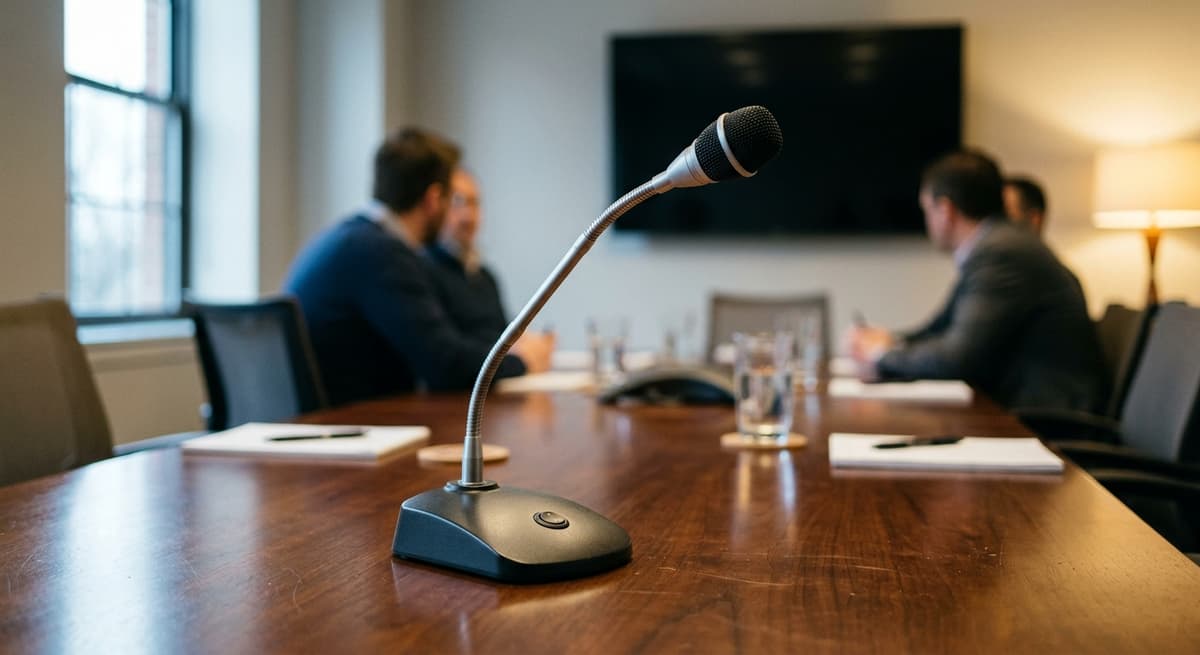
Penalties for WESCA Violations
Criminal Penalties
Pennsylvania classifies unauthorized interception of communications as a third-degree felony under 18 Pa.C.S. § 5703. The penalties are among the harshest in the nation for recording law violations:
| Offense | Classification | Maximum Prison | Maximum Fine |
|---|---|---|---|
| Unauthorized interception | Third-degree felony | Up to 7 years | Up to $15,000 |
| Unauthorized disclosure | Third-degree felony | Up to 7 years | Up to $15,000 |
| Unauthorized use | Third-degree felony | Up to 7 years | Up to $15,000 |
For comparison, a first-offense CIPA violation in California is a wobbler, not a straight misdemeanor: Cal. Penal Code § 632(a) makes even a first violation punishable by a fine, "or imprisonment in a county jail not exceeding one year, or in the state prison," and a state prison term for an offense with no term specified runs up to three years under Cal. Penal Code § 18. Oregon classifies basic violations as Class A misdemeanors (up to 1 year), and most one-party consent states impose lesser penalties. Pennsylvania's immediate felony classification with a seven-year maximum puts it in the top tier of enforcement severity.
Civil Damages (§ 5725)
Section 5725 provides a private right of action for anyone whose communications have been unlawfully intercepted. The damages framework includes:
Statutory minimum: The greater of actual damages, $100 per day of violation, or $1,000. This $1,000 floor means that even a single unauthorized recording triggers meaningful damages regardless of whether the plaintiff suffered quantifiable harm.
Punitive damages: Available at the court's discretion, creating additional exposure for willful or repeated violations.
Attorney's fees and costs: Recoverable by a prevailing plaintiff, which incentivizes litigation and removes a significant barrier for individual plaintiffs.
For AI meeting tool companies, the civil exposure is substantial. If a tool records 500 meetings involving Pennsylvania participants without proper all-party consent, the company faces potential statutory damages of $500,000 or more before punitive damages, attorney's fees, and class-wide multipliers.
Exclusionary Rule
Evidence obtained in violation of WESCA is inadmissible in Pennsylvania courts. AI-generated transcripts, meeting summaries, action items, and any derivative content based on an unlawfully recorded conversation cannot be used in civil litigation, criminal proceedings, or administrative hearings. This rule applies to the recording itself and to any information derived from it.
WESCA's Expansion to Digital Technologies
Website Tracking Litigation
Pennsylvania's WESCA has become a tool in digital privacy litigation, extending the statute's reach far beyond traditional wiretapping. Courts have applied WESCA to website tracking technologies, including third-party analytics tools, session replay software, and cookie-based data collection.
In Popa v. Harriet Carter Gifts, Inc., the Third Circuit held that WESCA could apply to website visitor tracking. While the district court ultimately granted summary judgment to the defendant in March 2025 based on implied consent through the website's privacy policy, the case established that WESCA's interception prohibition can extend to digital data collection technologies.
This precedent is significant for AI meeting tools. If Pennsylvania courts apply WESCA to website tracking software, the statute's reach to AI meeting recording tools (which intercept far more sensitive conversational content) is a natural extension. The legal theory is straightforward: an AI tool that captures, processes, and stores meeting audio and transcripts without all-party consent is "intercepting" communications under WESCA.
Implications for AI Data Practices
WESCA's application to digital technologies creates additional compliance requirements for AI meeting tool providers. Beyond securing all-party consent for recording, companies must consider whether their data practices (model training, analytics, data sharing) constitute separate "interceptions" or "uses" of intercepted communications under the statute.
If an AI tool records a meeting with consent but later uses the recording data for model training without disclosure, that secondary use could potentially violate WESCA's prohibition on unauthorized use of intercepted communications. The statute prohibits not only the initial interception but also the unauthorized disclosure and use of intercepted content.

Federal Law and National AI Recording Litigation
18 U.S.C. § 2511 and Pennsylvania's Stricter Standard
Federal wiretap law follows a one-party consent standard, which is significantly more permissive than Pennsylvania's all-party consent requirement. When both laws apply (as in interstate communications), the more restrictive standard governs. For meetings involving Pennsylvania participants, WESCA's all-party consent requirement takes precedence regardless of where the other participants are located.
This means that a company headquartered in a one-party consent state cannot bypass Pennsylvania's consent requirements by arguing that the recording occurred elsewhere. If a Pennsylvania-based employee participates in a recorded meeting, WESCA may apply to the entire recording.
The Otter.ai Class Action
The Otter.ai class action (In re Otter.AI Privacy Litigation, N.D. Cal., No. 5:25-cv-06911) was filed in California, but its legal theories have direct relevance to Pennsylvania. The case alleges that Otter's AI notetaker recorded meeting participants without legally required consent and used the captured audio to train AI models.
Pennsylvania participants in meetings recorded by Otter.ai may have independent WESCA claims. Because WESCA classifies unauthorized interception as a third-degree felony (compared to California's wobbler classification), the potential criminal exposure for recording without all-party consent in Pennsylvania is arguably more severe.
The case also tests the federal "crime-tort" exception to one-party consent. While this exception is most relevant in one-party consent states (where it could override the single-party consent defense), it reinforces the principle that consent defenses fail when the purpose of recording is tortious. In Pennsylvania, where all-party consent is required regardless, the crime-tort exception adds a federal layer of liability on top of the state-law violations.
The Ambriz v. Google Capability Test
The Ambriz v. Google ruling's "capability test" compounds the risk for AI meeting tools in Pennsylvania. Under this test, an AI tool's theoretical capability to use intercepted data for its own purposes (model training, product improvement) can support a wiretap claim. Combined with WESCA's strict all-party consent requirement, this creates a two-layer risk: state liability for recording without all-party consent, and federal liability based on the tool's data use capabilities.
AI Meeting Tools and Pennsylvania Compliance
No AI Meeting Tool Is Compliant by Default
In Pennsylvania, every AI meeting recording tool requires explicit all-party consent before activation. No notification banner, bot name, or platform feature satisfies WESCA's consent requirement on its own. Each participant must affirmatively agree to be recorded.
| Tool | How It Records | Pennsylvania Compliance Status |
|---|---|---|
| Otter.ai | Bot joins meeting as participant | All-party consent required; bot visibility alone is insufficient |
| Fireflies.ai | Bot joins meeting; calendar integration | All-party consent required; auto-join features create heightened risk |
| Zoom AI Companion | Built into Zoom platform | Notification banner provides notice but may not satisfy consent; verbal confirmation recommended |
| Microsoft Copilot | Integrated into Teams | Teams notification provides notice; explicit consent from each participant recommended |
| Google Gemini in Meet | Native to Google Meet | Notification displayed; explicit consent recommended for Pennsylvania compliance |
| Fathom | Records on host's device | Local recording still requires all-party consent in Pennsylvania |
Recommended Compliance Procedures
Companies using AI meeting tools with Pennsylvania participants should obtain explicit verbal consent at the start of each meeting by asking all participants if they agree to AI recording, provide written notice in meeting invitations stating that AI tools will record and transcribe the conversation, allow participants to decline recording without negative consequences, disable auto-join features for meetings involving Pennsylvania participants unless consent procedures are automated, and document consent for each meeting as evidence of compliance.
Auto-Join Features and Pennsylvania Risk
AI meeting tools with auto-join features create acute risk in Pennsylvania. When a tool automatically joins a meeting based on a calendar invitation, there is no opportunity to obtain all-party consent before the recording begins. The tool starts intercepting communications the moment it joins, potentially violating WESCA before any consent procedure can take place.
Companies with Pennsylvania-based employees or clients should disable auto-join features or implement consent workflows that activate before the AI tool begins recording. Some enterprise plans offer configurable consent prompts that can be tailored to comply with all-party consent requirements.
Employer and Workplace Considerations
Pennsylvania Employers and AI Recording
Pennsylvania employers cannot deploy AI meeting recording tools without the consent of all employees participating in the recorded meeting. WESCA applies fully in the workplace, and the employment relationship does not create an implied consent to recording.
Employers should include AI recording consent provisions in employee handbooks and employment agreements, but even contractual consent provisions should be supplemented with meeting-level consent procedures. A blanket consent clause in an employment contract may not withstand judicial scrutiny if an employee can show they were not specifically informed about AI recording at the time of a particular meeting.
The Telemarketing Exception (HB 1278)
Governor Josh Shapiro signed House Bill 1278 in 2023, effective February 12, 2024. This bill added a new exception to WESCA's all-party consent requirement: consumers may now record incoming telemarketing calls and robocalls without the caller's consent if the recording is made to enforce the federal Telephone Consumer Protection Act (TCPA) or Pennsylvania's Unfair Trade Practices and Consumer Protection Law.
This exception is narrow and does not extend to AI meeting recording. It applies only to incoming telemarketing and robocalls, not to business meetings, workplace conversations, or other communications. However, HB 1278 demonstrates that the Pennsylvania legislature is willing to create targeted exceptions to WESCA's all-party consent requirement when a compelling policy rationale exists. Future legislation could theoretically create an exception for AI meeting tools, though none has been proposed as of April 2026.
Remote and Hybrid Work
Pennsylvania's all-party consent requirement follows the state's residents into virtual meetings regardless of where the meeting is hosted. An employer based in Texas (a one-party consent state) must comply with WESCA if any meeting participant is located in Pennsylvania.
This extraterritorial reach makes WESCA a de facto national compliance standard for companies with employees or clients in Pennsylvania. Given Pennsylvania's population (approximately 13 million) and its position as a major business hub, most national companies will have Pennsylvania-based meeting participants.
Cross-State Implications
Pennsylvania's Nationwide Reach
WESCA's all-party consent requirement effectively reaches beyond Pennsylvania's borders. When a Pennsylvania resident participates in a meeting recorded by someone in a one-party consent state, the Pennsylvania participant may have a WESCA claim for unauthorized interception of their communication.
Courts have generally applied the more restrictive state's law when an interstate communication involves a participant from an all-party consent state. This means that any company using AI meeting tools must consider WESCA if any meeting participant is located in Pennsylvania.
Interaction with Other All-Party Consent States
Pennsylvania's felony penalties make it the most severe of the all-party consent states for recording violations. Companies that have already implemented compliance procedures for California's CIPA (which has lower penalties per offense) should recognize that Pennsylvania exposure carries greater criminal risk.
| State | Consent Standard | Criminal Classification | Maximum Prison |
|---|---|---|---|
| Pennsylvania | All-party consent | Third-degree felony | Up to 7 years |
| California | All-party consent | Wobbler (misdemeanor/felony) | Up to 3 years |
| Oregon (in-person) | All-party notice | Class A misdemeanor | Up to 1 year |
| Illinois | All-party consent | Class 4 felony | Up to 3 years |
Pennsylvania's AI Regulatory Trajectory
Pending AI Legislation
As of April 2026, Pennsylvania has several AI-related bills in various stages of the legislative process. HB 1925 would regulate AI in healthcare, requiring insurers and healthcare providers to disclose their use of AI-based algorithms. HB 1857 would require businesses to disclose AI use in consumer interactions and establish a right to human review for high-impact decisions. SB 1050 addresses AI-generated child sexual abuse materials.
None of these bills directly amend WESCA or create new exceptions for AI meeting recording. However, the legislative attention to AI transparency and disclosure suggests that Pennsylvania may eventually address AI meeting tools through targeted legislation.
State Government AI Policy
Pennsylvania issued an official Artificial Intelligence Policy (effective January 13, 2026) governing the state government's own use of AI systems. While this policy applies to state agencies rather than private companies, it reflects the state's cautious, privacy-protective approach to AI deployment. The policy's emphasis on transparency, accountability, and human oversight is consistent with WESCA's privacy-first philosophy.
This article provides general legal information about Pennsylvania's WESCA and its application to AI meeting recording tools. Pennsylvania's wiretap law imposes some of the strictest requirements and harshest penalties in the nation. Laws and their interpretations can change. Consult an attorney for advice specific to your situation.
More Pennsylvania Laws
Frequently Asked Questions
Is it legal to use AI meeting recording tools in Pennsylvania?
AI meeting recording is legal in Pennsylvania only if all parties to the conversation consent before recording begins. Under 18 Pa.C.S. § 5704(4), WESCA requires all-party consent. No AI meeting tool is compliant by default; explicit consent from every participant is required. Recording without all-party consent is a third-degree felony.
What are the penalties for recording without consent in Pennsylvania?
Unauthorized recording is a third-degree felony under 18 Pa.C.S. § 5703, carrying up to seven years in prison and a $15,000 fine. Civil damages under § 5725 include a statutory minimum of $1,000 (or $100 per day of violation, whichever is greater), plus punitive damages and attorney's fees. These are among the harshest recording law penalties in any state.
Does a Zoom recording notification satisfy Pennsylvania's consent requirement?
A Zoom recording notification provides notice, but notice alone may not satisfy WESCA's consent requirement. Pennsylvania law requires all parties to give 'prior consent,' which courts have interpreted strictly. The safest approach is to verbally ask all participants if they consent to AI recording before activating the tool, rather than relying solely on a platform notification.
Can my Pennsylvania employer record meetings with AI without my consent?
No. WESCA's all-party consent requirement applies in the workplace. Your employer must obtain your consent before recording any conversation, including virtual meetings. The employment relationship does not create implied consent to recording. You have the right to decline AI recording, and your employer cannot lawfully record without your agreement.
How does Pennsylvania's wiretap law compare to other states?
Pennsylvania has one of the strictest wiretap laws in the country. Unauthorized recording is an immediate third-degree felony with up to seven years in prison, compared to California's wobbler (up to three years) and Oregon's Class A misdemeanor (up to one year) for basic violations. Pennsylvania also provides a $1,000 statutory minimum for civil damages, incentivizing private enforcement.
Updates
Corrected the California comparison in the penalties section: a first-offense CIPA violation under Penal Code 632 is a wobbler punishable by up to three years, not a straight one-year misdemeanor, which also resolves a contradiction with the all-party-consent comparison table.
Independently fact-checked against the cited primary sources; governing law re-checked for recent changes
Governing law re-checked for recent changes
Reviewed and approved by an editor
The Law Behind This Article
This article rests on the statutory provisions below, held in our own legal record and retrieved from the official source. Tap a section to read the operative text.
Pennsylvania Consolidated Statutes Title 18 (Crimes and Offenses)
§ 5703Interception, disclosure or use of wire, electronic or oral communicationsIn forcecited in 38 of our articles
Except as otherwise provided in this chapter, a person is guilty of a felony of the third degree if he: (1) intentionally intercepts, endeavors to intercept, or procures any other person to intercept or endeavor to intercept any wire, electronic or oral communication; (2) intentionally discloses or endeavors to disclose to any other person the contents of any wire, electronic or oral communication, or evidence derived therefrom, knowing or having reason to know that the information was obtained through the interception of a wire, electronic or oral communication; or (3) intentionally uses or endeavors to use the contents of any wire, electronic or oral communication, or evidence derived therefrom, knowing or having reason to know, that the information was obtained through the interception of a wire, electronic or oral communication.
Official text (excerpt) · last checked 2026-08-31 · Read the full text in our law library · Verify at palegis.us
Cited in 121 court opinions in our collectionLatest citing opinion in our collection: 2026
In the courts (editorial summary, independently checked):Commonwealth v. Brachbill (1989) held Section 5703(1) is not limited to interceptions made with an intercepting device, so an officer who listened on a telephone extension without the prior approval Section 5704(2)(ii) requires violated the section, and the testimony had to be suppressed.
Opinions citing this section in our collection:
- Commonwealth v. Schaeffer (Supreme Court of Pennsylvania 1987, 370 Pa. Super. 179)“…and other electronic interceptions of communications, see 18 Pa.C.S. § 5703, carved out limited exceptions to these…”
- Commonwealth v. Bennett (Superior Court of Pennsylvania 1976, 245 Pa. Super. 457)“…ode, Act of Dec. 6, 1972, P.L. 1482, No. 334, § 1 et seq. 18 Pa.C.S. § 5703, as amended Dec. 27, 1974, P.L. 1007, N…”
- Commonwealth v. Brachbill (Supreme Court of Pennsylvania 1989, 520 Pa. 533)✓A state trooper listened on an extension phone to a call between a former inmate and a guard charged with abusing him; the court held section 5703 bars any willful interception, not only one using an intercepting device, so the trooper's testimony should have been suppressed.
Identified automatically from the court opinions citing this section — not a ranking of which case controls.
Also relied on in: Pennsylvania Smart Glasses Recording Laws (2026), Pennsylvania Audio Recording Laws: All-Party Consent Rules and Felony Penalties (2026), Pennsylvania Ring Doorbell Laws: What You Need to Know in 2026
§ 5704Exceptions to prohibition of interception and disclosure of communicationsIn forcecited in 19 of our articles
It shall not be unlawful and no prior court approval shall be required under this chapter for: (1) An operator of a switchboard, or an officer, agent or employee of a provider of wire or electronic communication service, whose facilities are used in the transmission of a wire communication, to intercept, disclose or use that communication in the normal course of his employment while engaged in any activity which is a necessary incident to the rendition of his service or to the protection of the rights or property of the provider of wire or electronic communication service. However, no provider of wire or electronic communication service shall utilize service observing or random monitoring except for mechanical or service quality control checks. (2) Any investigative or law enforcement officer or any person acting at the direction or request of an investigative or law enforcement officer to intercept a wire, electronic or oral communication involving suspected criminal activities, including, but not limited to, the crimes enumerated in section 5708 (relating to order authorizing interception of wire, electronic or oral communications), where: (i) (Deleted by amendment).
Official text (excerpt) · last checked 2026-07-29 · Read the full text in our law library · Verify at palegis.us
Cited in 126 court opinions in our collectionLatest citing opinion in our collection: 2026
In the courts (editorial summary, independently checked):Commonwealth v. Schaeffer (1987) concluded Article I, Section 8 requires a warrant for one party consensual electronic eavesdropping, reading 5704(2) as only exempting that practice, not authorizing it. Commonwealth v. Baumhammers (2008) held 5704(14)(i)(C) permits disclosing a recorded inmate call in any criminal prosecution.
Opinions citing this section in our collection:
- Commonwealth v. Baumhammers (Supreme Court of Pennsylvania 2008, 599 Pa. 1)✓The Commonwealth used a recorded jail phone call between an inmate and his parents at his murder trial; the court held section 5704(14) was not violated because all three knew the call was being recorded, and the contents were properly divulged for a criminal prosecution.
- Commonwealth v. Arrington (Supreme Court of Pennsylvania 2014, 624 Pa. 506)✓A murder defendant sought to suppress a call the victim recorded, on which he asked repeatedly whether he was being taped and said he did not care; the court addressed whether that amounted to prior consent under section 5704(4) but did not resolve it, finding any error harmless.
- Commonwealth v. Schaeffer (Supreme Court of Pennsylvania 1987, 370 Pa. Super. 179)✓Police sent a wired informant into Schaeffer's home to record a marijuana buy without a warrant; the en banc court read section 5704(2) as only exempting participant monitoring from the Wiretap Act, not authorizing it, and held the state constitution still required a warrant.
Identified automatically from the court opinions citing this section — not a ranking of which case controls.
Also relied on in: Pennsylvania Phone Call Recording Laws: Consent Rules and Penalties (2026), Pennsylvania Recording Laws (2026): All-Party Consent Rules, Pennsylvania Surveillance Camera Laws (2026 Guide)
§ 5701Short title of chapterIn forcecited in 4 of our articles
This chapter shall be known and may be cited as the "Wiretapping and Electronic Surveillance Control Act."
Official text (excerpt) · last checked 2026-07-29 · Read the full text in our law library · Verify at palegis.us
Cited in 208 court opinions in our collectionLatest citing opinion in our collection: 2026
Opinions citing this section in our collection:
- Commonwealth v. Blystone (Supreme Court of Pennsylvania 1988, 519 Pa. 450)“…of the Wiretapping and Electronic Surveillance Control Act, 18 Pa.C.S. § 5701 et. seq., I must dissent. *4…”
- Commonwealth v. Brion (Supreme Court of Pennsylvania 1994, 539 Pa. 256)“…The Wiretapping and Electronic Surveillance Control Act, 18 Pa.C.S. §§ 5701-5727, prescribes criminal penalties for…”
- PA State Police, Aplt. v. Grove, M. (Supreme Court of Pennsylvania 2017)“…visions of the Wiretapping and Electronic Surveillance Act, 18 Pa.C.S. §§5701-5782 (Wiretap Act). The Commonwealth Co…”
Identified automatically from the court opinions citing this section — not a ranking of which case controls.
United States Code Title 18
§ 2511Interception and disclosure of wire, oral, or electronic communications prohibitedIn forcecited in 422 of our articles
Except as otherwise specifically provided in this chapter any person who— intentionally intercepts, endeavors to intercept, or procures any other person to intercept or endeavor to intercept, any wire, oral, or electronic communication; intentionally uses, endeavors to use, or procures any other person to use or endeavor to use any electronic, mechanical, or other device to intercept any oral communication when— such device is affixed to, or otherwise transmits a signal through, a wire, cable, or other like connection used in wire communication; or such device transmits communications by radio, or interferes with the transmission of such communication; or such person knows, or has reason to know, that such device or any component thereof has been sent through the mail or transported in interstate or foreign commerce; or such use or endeavor to use (A) takes place on the premises of any business or other commercial establishment the operations of which affect interstate or foreign commerce; or (B) obtains or is for the purpose of obtaining information relating to the operations of any business or other commercial establishment the operations of which affect interstate or foreign…
Official text (excerpt) · last checked 2026-08-28 · Read the full text in our law library · Verify at uscode.house.gov
Cited in 2,045 court opinions in our collectionLatest citing opinion in our collection: 2026
In the courts (editorial summary, independently checked):Griggs-Ryan v. Smith (1990) applied the Section 2511(2)(d) prior-consent exception, treating a tenant repeatedly told that all incoming calls were taped as having impliedly consented. United States v. United States District Court (1972) read the then-current Section 2511(3) as conferring no presidential surveillance power.
Opinions citing this section in our collection:
- Mitchell v. Forsyth (Supreme Court of the United States 1985, 472 U.S. 511)✓The Attorney General authorized a warrantless 1970 national security wiretap that caught the plaintiff's calls; the Court held the since-repealed Section 2511(3) disclaimer left the tap lawful under Title III, and that Mitchell had qualified immunity.
- United States v. United States District Court for the Eastern District of Michigan (Supreme Court of the United States 1972, 407 U.S. 297)✓The Attorney General approved warrantless wiretaps on members of a domestic group accused of bombing a CIA office; the Court read Section 2511(3) as a congressional disclaimer conferring no surveillance power, then held the Fourth Amendment required prior judicial approval.
- Forsyth v. Barr (Court of Appeals for the Fifth Circuit 1994, 19 F.3d 1527)✓Dallas police used, in an internal affairs probe of an officer, calls private parties allegedly intercepted illegally; assuming that was unlawful, the Fifth Circuit held Section 2517(1) and (2) allowed the disclosure and use, defeating the Section 2511(1)(c) and (d) claims.
Identified automatically from the court opinions citing this section — not a ranking of which case controls.
Also relied on in: Connecticut Recording Laws (2026): Hybrid Consent Rules Explained, Oregon Recording Laws (2026): Hybrid One-Party and All-Party Rules, US Recording Laws by State (2026): All 50 States Explained
Search our full record of US law — 2.1 million sections, every state + federal →
Sources and References
- 18 Pa.C.S. § 5704 - Exceptions to Prohibition (All-Party Consent)(legis.state.pa.us).gov
- Pennsylvania WESCA Full Text (Title 18, Chapter 57)(palegis.us).gov
- Pennsylvania AI Policy (Effective January 13, 2026)(pa.gov).gov
- 18 U.S.C. § 2511 - Federal Wiretap Act(law.cornell.edu)
- In re Otter.AI Privacy Litigation, N.D. Cal., No. 5:25-cv-06911(courtlistener.com)
- Pennsylvania Reporters Recording Guide(rcfp.org)
- WESCA Website Tracking Litigation Analysis(captaincompliance.com)
- Ambriz v. Google - CIPA Capability Test Ruling(goodwinlaw.com)
- Cal. Penal Code § 632 - Eavesdropping on or Recording Confidential Communications (penalty text)(leginfo.legislature.ca.gov)
- Cal. Penal Code § 18 - Default Punishment for Felonies (16 months, two or three years)(leginfo.legislature.ca.gov)