Belt Parkway Dashcam Catches Insurance Fraud Scheme: What You Need to Know
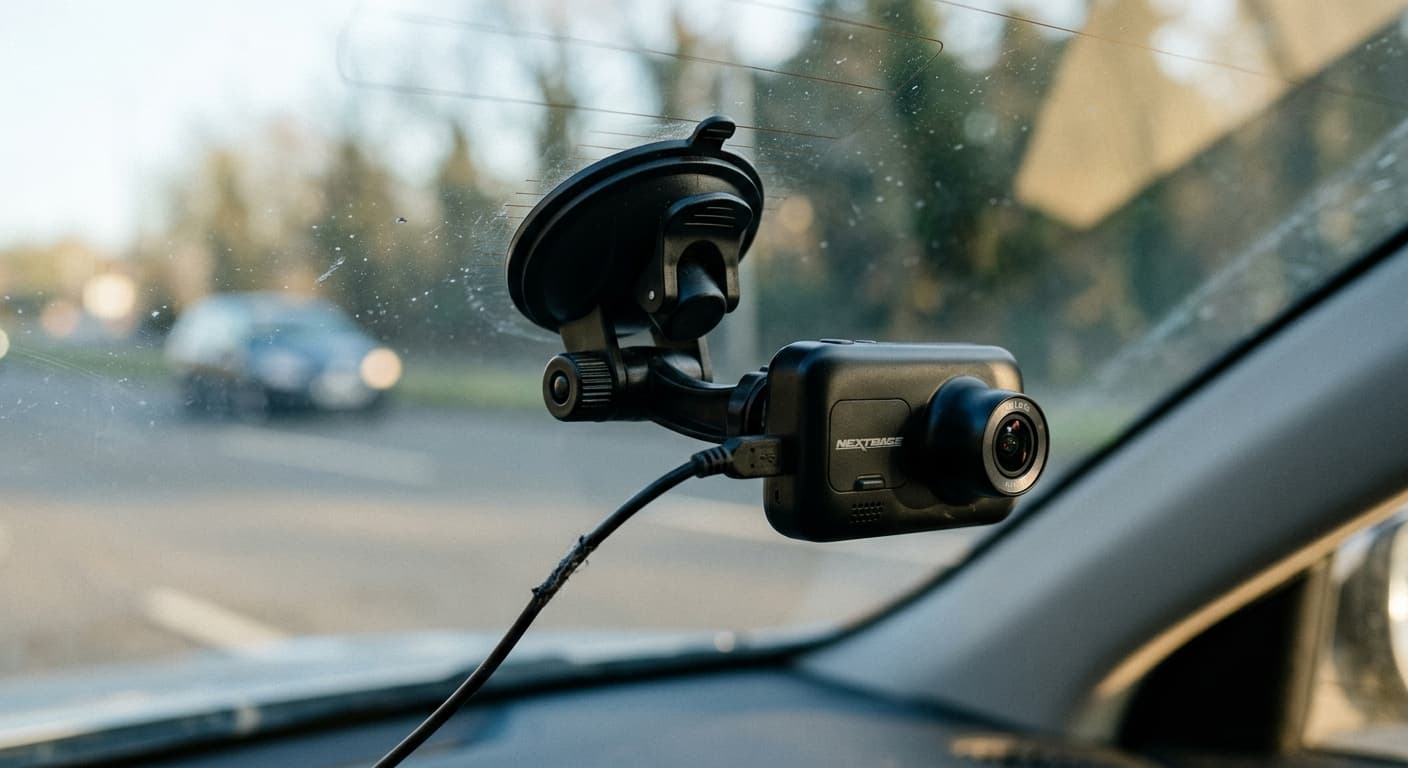
A dashcam recording by Queens driver Ashpia Natasha on October 16, 2024 exposed a staged crash on the Belt Parkway, leading to felony charges against three men. In New York, dashcam footage is admissible as criminal and civil evidence, making it the most direct defense against organized staged-accident fraud.
What Happened on the Belt Parkway
On October 16, 2024, at approximately 11:11 a.m., Ashpia Natasha was driving north in the left lane of the Belt Parkway in Rosedale, Queens, near the Nassau County border. A silver Honda Civic abruptly cut in front of her vehicle, forcing Natasha to brake sharply to avoid a collision. Seconds later, the Honda reversed directly into Natasha's car, causing significant damage to both vehicles.
What made this incident different from an ordinary rear-end collision was what happened next. The occupants of the Honda raised what appeared to be a tarp in the rear window area, presumably to block Natasha's view inside the vehicle. While the tarp obscured her line of sight, the scammers inside the Honda switched seats, a classic maneuver in staged crash schemes designed to confuse witnesses and insurance investigators.
Natasha's vehicle was equipped with dashboard cameras that captured the entire sequence of events in high definition. The video evidence would later prove invaluable in exposing the fraudulent scheme.
The Video That Caught Everything
When the occupants of the Honda realized Natasha had a functioning dashcam, they immediately abandoned their act. Fake injuries vanished. Their theatrical expressions of pain and distress disappeared as quickly as they had appeared. The scammers understood that the video evidence destroyed any chance of successfully perpetuating the insurance fraud scheme.
Ashpia Natasha shared the dashcam footage online after the incident, posting it to social media platforms including TikTok. The video went viral, accumulating tens of millions of views and sparking widespread discussion about insurance fraud, dashcam protection, and public safety on New York highways. News outlets across the country covered the incident, and the video became a powerful cautionary tale about staged crash schemes.
The viral nature of the video proved instrumental in law enforcement's investigation. The public exposure generated leads and evidence that helped authorities identify the perpetrators and connect them to additional staged crashes across the city.
The Arrests and Criminal Charges
On November 7, 2024, Maikel Martinez, 28, of Dyker Heights in Brooklyn, was arrested after arriving at JFK Airport on a flight from Ecuador. His arrest marked a significant step in bringing accountability for the Belt Parkway incident.
Queens District Attorney Melinda Katz announced that Martinez was arraigned on multiple felony charges, including:
- Staging a motor vehicle accident in the second degree
- Criminal mischief in the third degree
- Reckless endangerment in the first degree
- Conspiracy in the fifth degree
- Insurance fraud in the fifth degree
DA Katz issued a statement regarding the charges: "The defendant and others allegedly staged a crash on a busy highway and rammed an unsuspecting driver with their vehicle after they forcibly stopped her in the left lane of the Belt Parkway. Countless lives were jeopardized due to this incredibly reckless conduct."
If convicted on the top charges, Martinez faces between 2 and 7 years in state prison. He pleaded not guilty and was ordered to return to court for further proceedings.
The Victim's Story
Ashpia Natasha's account of the incident reveals the terrifying reality of staged crash schemes. Driving on a major highway, she suddenly found herself boxed in and struck without warning. The experience was not only physically dangerous but also deeply unsettling. Understanding that the collision was intentional and calculated made it even more disturbing.
Natasha's decision to share the dashcam footage publicly transformed her personal experience into a powerful tool for public education. Her courage in speaking out and her willingness to let her video serve as evidence helped protect other drivers and contributed directly to the arrest and prosecution of the perpetrators.
The incident highlights why dashcams have become essential safety devices for drivers across the United States. Natasha's dashcam captured crucial evidence that exposed the scheme in real time and proved invaluable to prosecutors building their case.
Two More Suspects Charged with Orchestrating Scheme
The investigation expanded beyond Maikel Martinez. In July 2025, Queens District Attorney Melinda Katz announced charges against two additional men accused of orchestrating a broader pattern of staged crash fraud across NYC highways.
Jaime Huiracocha, 53, and Victor Murillo, 34, were charged with:
- Staging motor vehicle accidents
- Reckless endangerment
- Conspiracy
- Insurance fraud
Huiracocha allegedly served as the mastermind of the scheme, meeting with groups of individuals and offering them thousands of dollars to participate in staged crashes. He provided detailed instructions on how to execute the schemes and used headphones and other communication methods to coordinate with co-conspirators.
Murillo allegedly drove the vehicles involved in the staged collisions.
The two men are connected to at least three separate incidents:
-
August 24, 2024 - Belt Parkway: A silver Honda Civic merged directly in front of Alyssa Attanasio's vehicle, causing a collision.
-
October 3, 2024 - Nassau Expressway: A blue Nissan Xterra suddenly cut into the middle lane in front of a truck after Huiracocha provided instructions to participants.
-
October 16, 2024 - Belt Parkway: The Ashpia Natasha incident involving Maikel Martinez.
If convicted on the top counts, Huiracocha and Murillo each face 5 to 15 years in state prison.
New York Insurance Fraud Laws and Penalties
Insurance fraud is treated as a serious felony in New York, with penalties that escalate based on the value of the fraudulent claim. These offenses are codified in Penal Law Article 176.
Degrees of Insurance Fraud
Fourth Degree (PL § 176.15): Claims exceeding $1,000 but not more than $3,000. A Class E felony punishable by up to 4 years in prison.
Third Degree (PL § 176.20): Claims exceeding $3,000 but not more than $50,000. A Class D felony punishable by up to 7 years in prison.
Second Degree (PL § 176.25): Claims exceeding $50,000 but not more than $1,000,000. A Class E felony punishable by up to 15 years in prison.
First Degree (PL § 176.30): Claims exceeding $1,000,000. A Class B felony punishable by up to 25 years in prison.
Staging Motor Vehicle Accidents
New York Penal Law § 176.32 specifically addresses the offense of staging motor vehicle accidents. This provision recognizes the distinct dangers posed by deliberately causing vehicle collisions for financial gain.
Civil Penalties
In addition to criminal penalties, New York Insurance Law § 403 provides for civil penalties imposed by the state superintendent. Individuals convicted of fraudulent insurance acts face civil penalties not exceeding $5,000 per violation, plus the amount of the fraudulent claim itself. These civil remedies can be imposed even when criminal charges are reduced or result in acquittal.
Are Dashcams Legal in New York?
Yes, dashcams are entirely legal in New York, and state law actually encourages drivers to use them as a safety and fraud-prevention tool.
Video Recording
Installing and operating a dashcam that records video is lawful in New York. There are no restrictions on recording video in your own vehicle.
Audio Recording Considerations
New York is a one-party consent state for audio recording. This means that as long as you, the driver, are aware the dashcam is recording audio, the recording is legal. You do not need to inform passengers, though many drivers choose to disclose dashcam recording as a matter of courtesy and company policy.
If pending legislation changes New York's audio recording rules in the future, one-party consent rules would be modified, but as of April 2026, one-party consent remains the law.
Mounting Requirements
While dashcams are legal, mounting them requires careful attention to placement. Dashcams cannot obstruct the driver's windshield view. The dashboard is the most practical and legally compliant location for mounting a dashcam.
The Ashpia Natasha case demonstrates exactly why dashcams are so valuable: they provide objective, contemporaneous video evidence that exposes fraud schemes and protects innocent drivers.
The Staged Crash Epidemic
Staged vehicle crashes represent a growing threat on American highways. Insurance companies and law enforcement agencies across the country are working to combat this problem, which costs the industry billions of dollars annually.
Scope of the Problem
According to the National Insurance Crime Bureau (NICB), the insurance industry receives over 100,000 questionable insurance claims annually, with more than 70% being auto-related. These fraudulent claims are estimated to cost the insurance industry approximately $30 billion per year.
Vehicle fraud in the United States exceeds $2 billion annually according to industry estimates. The problem is particularly acute in certain geographic areas. Miami-Dade County and other South Florida communities have become hotspots for staged crash fraud, with the NICB receiving over 600 questionable claims annually in those regions alone.
Types of Staged Crashes
Fraudsters employ various techniques to stage collisions:
- Rear-end collisions (deliberate braking)
- Staged single-vehicle accidents
- Vehicle rollovers
- Emergency braking schemes
- Pre-existing damage passed off as fresh
- Hit-and-run scenarios
Law Enforcement Response
In response to the epidemic, law enforcement agencies have begun dedicated investigations. In Miami-Dade County, a Staged Crash Investigation Initiative launched in March 2024 arrested 52 individuals involved in orchestrating fraudulent crashes within the first few months of operation.
The Belt Parkway case in New York demonstrates that this problem extends well beyond South Florida. Queens District Attorney Melinda Katz's aggressive prosecution of the Martinez, Huiracocha, and Murillo cases signals a renewed commitment to combating staged crash fraud throughout the tristate area.
How to Protect Yourself
Given the prevalence of staged crash schemes, drivers should take proactive steps to protect themselves, their passengers, and their insurance investments.
Install a Dashcam
A dashcam is one of the most effective tools available to document traffic incidents. High-definition video and audio recording create an objective record of events that protects you if an accident occurs.
Choose a camera with:
- High resolution (at least 1080p, preferably 4K)
- Wide-angle lens (170+ degrees)
- Night vision capability
- Loop recording to continuously overwrite old footage
- Secure mounting that doesn't obstruct your view
Maintain Safe Driving Practices
Stay alert on highways and avoid following too closely behind other vehicles. Leave adequate space between your vehicle and others. Suspicious sudden braking, especially on multi-lane highways, can be a sign of a staged collision attempt.
Document Everything
If you are involved in an accident, photograph and video the scene, all vehicle damage, license plates, and surrounding environment. Exchange information with other parties and obtain contact information from witnesses. Report the incident to police and your insurance company promptly.
Be Suspicious of Certain Scenarios
Remain vigilant if another driver:
- Suddenly swerves in front of you and brakes hard without apparent reason
- Is operating a vehicle in poor condition that seems deliberately positioned
- Quickly exits the vehicle with theatrical or exaggerated injuries
- Has multiple passengers who claim injuries despite minor impacts
- Pressures you to settle the claim privately without insurance involvement
Know Your Rights
Understand your state's recording laws and your rights as a driver. In New York, dashcam recordings are admissible as evidence in civil and criminal proceedings and can be provided to law enforcement and your insurance company.
Frequently Asked Questions
Is it legal to use a dashcam as evidence in a New York car accident?
Yes. Dashcam recordings are admissible as evidence in both criminal and civil proceedings in New York, provided the dashcam was operating legally (which it is in New York). Insurance companies also accept dashcam footage when investigating claims, and law enforcement regularly uses dashcam evidence in criminal investigations of traffic offenses and fraud.
What happens if I'm the victim of a staged crash in New York?
Report the incident immediately to police and your insurance company. Do not sign any documents or settle claims without your insurance company's involvement. If you believe the crash was staged, provide all available evidence including dashcam footage, photographs, and witness contact information to both law enforcement and your insurer. The NICB and local law enforcement can investigate potential fraud.
Can I record audio in my dashcam in New York?
Yes. New York is a one-party consent state, meaning you can record audio as long as you, the driver, consent to the recording. You do not need to inform passengers that the dashcam is recording audio, though many drivers choose to do so.
What are the charges in a staged crash case in New York?
Staged crash cases typically result in charges including staging a motor vehicle accident, conspiracy, reckless endangerment, criminal mischief, and insurance fraud. Charges vary based on the value of the claim and the extent of injuries or damage. Convictions carry substantial prison sentences and civil penalties.
How much prison time can someone get for insurance fraud in New York?
Prison sentences depend on the amount of the fraudulent claim. Fourth-degree insurance fraud carries up to 4 years. Third-degree carries up to 7 years. Second-degree carries up to 15 years. First-degree (claims over $1,000,000) carries up to 25 years. Staging motor vehicle accidents specifically also carries substantial penalties, with the Belt Parkway defendants potentially facing 7 to 15 years in prison.
Why did the scammers stop acting injured when they saw the dashcam?
Once the scammers realized Ashpia Natasha had recorded evidence of their scheme, continuing to feign injuries would have been pointless. Video evidence that showed them staging the crash, switching seats, deploying a tarp, and then immediately dropping their fake injury act once the dashcam was discovered would undermine any insurance claim they attempted to file. The video made their scheme obvious to any investigator, insurer, or judge.
Are there other staged crash cases in New York besides the Belt Parkway incident?
Yes. The investigation into the Belt Parkway case uncovered a broader organized scheme. Jaime Huiracocha and Victor Murillo are connected to at least three staged crashes: one on August 24, 2024 on the Belt Parkway, another on October 3, 2024 on the Nassau Expressway, and the October 16, 2024 Belt Parkway incident involving Maikel Martinez. Law enforcement believes additional victims may exist.
Updates
Initial publication covering the Belt Parkway staged crash, arrests, and New York dashcam and insurance fraud laws.
Initial publication covering the Belt Parkway staged crash incident, the viral dashcam video, arrests of Maikel Martinez, Jaime Huiracocha, and Victor Murillo, and New York dashcam and insurance fraud laws.
Sources and References
- Queens District Attorney - Brooklyn man charged with staging car crash on Belt Parkway in Rosedale(queensda.org)
- ABC7 New York - Dashcam foils brazen insurance fraud attempt on the Belt Parkway(abc7ny.com)
- Queens District Attorney - Two men charged with staging car crashes on New York City highways(queensda.org)
- National Insurance Crime Bureau - Staged Auto Accident Fraud(nicb.org)
- New York Penal Law Article 176 - Insurance Fraud(law.justia.com)
- New York Penal Law § 176.32 - Staging motor vehicle accidents(law.justia.com)
- New York Insurance Law § 403 - Civil Penalties(law.justia.com)
- New York Car Laws - Dashboard Camera Laws(newyorkcarlaws.com)