Idaho Dog Bite Laws: Liability and Victim Rights

How Idaho Dog Bite Liability Works
Idaho is a strict liability state for dog bite injuries. Under Idaho Code 25-2810(11), any dog that physically attacks, wounds, bites, or otherwise injures a person subjects the owner or custodian to civil liability for the injuries caused by that dog.
This statute, adopted by the Idaho Legislature in 2016, replaced the older common-law "one-bite rule" that previously governed dog bite cases in the state. The Idaho Supreme Court has acknowledged that this statute "supplanted" prior common-law theories of liability.
What Strict Liability Means for Victims
Under strict liability, a dog bite victim does not need to prove that the owner knew the dog was dangerous or had bitten someone before. The victim only needs to show three things:
- A dog bit or physically attacked them
- The defendant owned, possessed, harbored, or had custody of the dog
- The victim was not trespassing and did not provoke the dog
This is a significant advantage for victims compared to states that still follow the one-bite rule, where proving the owner's prior knowledge of the dog's dangerous tendencies can be difficult.
Who Can Be Held Liable
Idaho Code 25-2810(11) extends liability beyond just the dog's owner. The statute covers:
- The dog's owner
- Any person who has accepted responsibility as the possessor of the dog
- Any person who harbors the dog
- Any custodian of the dog
This means that dog sitters, temporary caretakers, and others who take responsibility for a dog can also face civil liability if that dog injures someone.
Defenses Available to Dog Owners
Idaho law provides several defenses that can reduce or eliminate a dog owner's liability. These defenses apply to both civil liability claims and dangerous dog designations.
Trespassing
The strict liability statute explicitly requires that the injured person was "not trespassing" at the time of the bite. If the victim was unlawfully on the property, the owner may not be liable under the statute. However, this defense may be limited when the victim is a child who does not understand property boundaries.
Justified Provocation
Under Idaho Code 25-2810(5), a dog owner is not liable when the bite resulted from "justified provocation." The statute defines justified provocation as any act or omission that a reasonable person with common knowledge of dog behavior would conclude is likely to cause a bite or attack by an ordinary dog.
Specific examples of justified provocation listed in the statute include:
| Provocation Type | Description |
|---|---|
| Self-defense or defense of others | The dog was protecting a person nearby from an attack or assault |
| Crime on property | The person was committing a crime on the owner's or custodian's property |
| Prior abuse of the dog | The person had willfully tormented, abused, or assaulted the dog |
| Pain or injury response | The dog was responding to pain or injury or protecting its offspring |
| Working dog interference | The person interfered with a hunting, herding, or predator control dog performing its duties |
| Service animal | The dog was a service animal trained to perform tasks for a person with a disability |
Comparative Negligence
Idaho follows a modified comparative negligence system under Idaho Code 6-801. This means:
- If the victim was partially at fault, their damages are reduced by their percentage of fault
- If the victim was 50% or more at fault for the incident, they are completely barred from recovering any damages
- A victim who was 30% at fault, for example, would have their total damages reduced by 30%
This defense often comes into play when the victim ignored warning signs, approached an unfamiliar dog without caution, or engaged in behavior that contributed to the attack.

Dangerous and At-Risk Dog Designations
Idaho Code 25-2810 creates two classifications for dogs involved in bite incidents. These designations carry different consequences for dog owners.
At-Risk Dogs
Under Idaho Code 25-2810(4)(a), a dog is classified as "at-risk" when it bites a person without justified provocation and does not cause a "serious injury." The statute defines serious injury as an injury characterized by bruising, laceration, or other harm that would cause a reasonably prudent person to seek medical treatment.
Dangerous Dogs
Under Idaho Code 25-2810(4)(b), a dog is classified as "dangerous" when it:
- Inflicts serious injury on a person without justified provocation, or
- Has been previously found to be at-risk and then bites or physically attacks a person again without justified provocation
Court-Ordered Restrictions
When a court finds that a dog is dangerous or at-risk, it may order the owner to comply with restrictions including:
- Confining the dog in a secure, locked enclosure when outdoors that prevents escape and unauthorized entry
- Keeping the dog on a secure leash held by a competent adult when off the property
- Requiring the dog to wear a muzzle in public areas where contact with people is likely
- Permanently identifying the dog through a color photograph maintained in a court file
- Microchipping the dog
- Spaying or neutering the dog
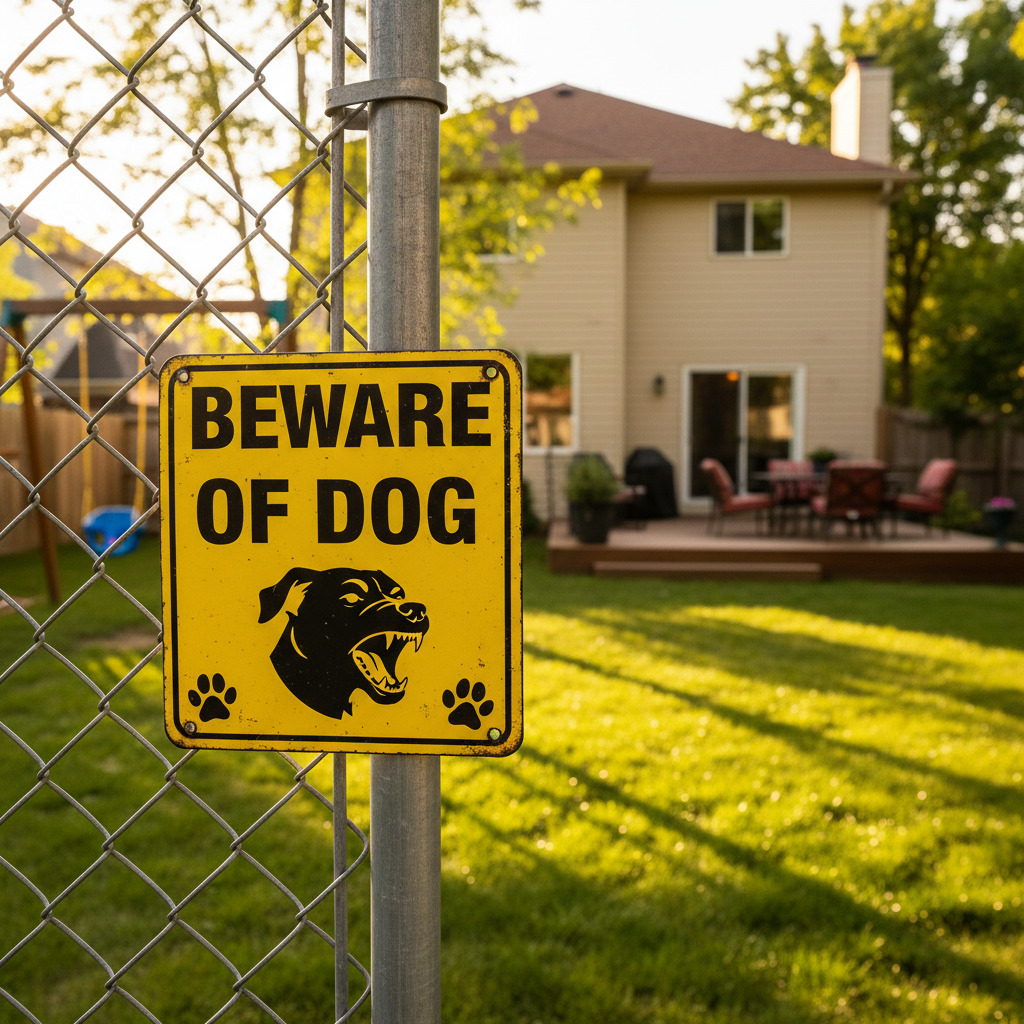
- Posting warning signs on the property
A person who maintains a dangerous or at-risk dog without complying with a court order commits a criminal offense under this statute.
Criminal Penalties for Dog Owners
Violations of Idaho's dangerous and at-risk dog laws carry escalating criminal penalties under Idaho Code 25-2811.
| Violation | Classification | Fine Range | Jail Time |
|---|---|---|---|
| First offense | Misdemeanor | $200 to $5,000 | None |
| Second offense (within 5 years) | Misdemeanor | $500 to $7,000 | Up to 6 months |
| Third or subsequent (within 15 years) | Misdemeanor | $500 to $9,000 | Up to 12 months |
In addition to fines and jail time, the court may order the dog owner to pay restitution to the victim for medical expenses, property damage, and property repair or replacement costs.
Dogs Running at Large
Separate from the dangerous dog statute, Idaho Code 25-2805 makes it an infraction to willfully or negligently allow a dog to run at large without competent supervision. Under this section, harboring a "vicious" dog outside a secure enclosure is a misdemeanor. For second or subsequent violations, the court may order the dog destroyed.
Damages Available to Dog Bite Victims
Dog bite victims in Idaho can pursue both economic and noneconomic damages through a civil lawsuit.
Economic Damages
Economic damages cover measurable financial losses and have no statutory cap. These include:
- Emergency room visits, surgery, and hospitalization costs
- Ongoing medical treatment and rehabilitation
- Prescription medications
- Lost wages during recovery
- Loss of future earning capacity
- Property damage (torn clothing, broken items)
- Costs of psychological counseling
Noneconomic Damages
Noneconomic damages compensate for subjective losses such as:
- Pain and suffering
- Emotional distress
- Scarring and disfigurement
- Loss of enjoyment of life
- Anxiety or fear of dogs following the attack
Under Idaho Code 6-1603, noneconomic damages are capped. The base cap was set at $250,000 in 2003, but the amount adjusts each July 1 based on changes to the state's average annual wage as determined by the Idaho Industrial Commission. As of 2025, the cap stands at approximately $509,013. This cap does not apply when the defendant's conduct amounts to willful or reckless misconduct or constitutes a felony.

Statute of Limitations for Dog Bite Claims
Under Idaho Code 5-219, the statute of limitations for personal injury claims in Idaho is two years from the date of the injury. Dog bite claims fall under this general personal injury deadline.
Key points about the filing deadline:
- The two-year clock starts on the date the bite occurs
- If you miss this deadline, the court will almost certainly dismiss your case regardless of its merits
- Minors receive an extension: the statute is tolled (paused) until the child turns 18, at which point the two-year period begins
- Claims against government entities (such as a city-owned dog at a municipal facility) often have shorter notice requirements, sometimes as short as 180 days
- The discovery rule may extend the deadline in rare cases where the injury was not immediately apparent
Filing promptly is important not only for legal reasons but also because evidence becomes harder to gather and witnesses' memories fade over time.
Landlord Liability for Tenant Dog Bites
Idaho courts have addressed whether landlords can be held liable when a tenant's dog bites someone. The key case is Bright v. Maznik, which established that a landlord can be held liable only if:
- The landlord knew the tenant's dog had dangerous or vicious propensities
- The landlord had the authority to remove the dog or require its removal
- The landlord failed to take action despite that knowledge
Idaho law presumes that "all dogs, regardless of breed or size, are harmless domestic animals." This presumption makes it difficult for plaintiffs to establish landlord liability without clear evidence that the landlord knew of a specific dog's dangerous behavior.
Landlords who allow pets in rental properties should consider:
- Including specific pet policies in lease agreements
- Requiring tenants to carry renter's insurance with liability coverage
- Documenting any complaints about aggressive dogs on the property
- Taking prompt action when they receive reports of dangerous dog behavior
Dog Owner Responsibilities Under Idaho Law
Idaho imposes several legal obligations on dog owners beyond simple liability for bites.
Licensing and Tags
Under Idaho Code 25-2803, dogs must wear a collar with a license tag or disc. Many Idaho counties and cities require annual dog licensing and registration.
Leash and Confinement Requirements
Idaho Code 25-2805 requires dog owners to keep their dogs under competent supervision or securely confined on their own premises. Many Idaho municipalities have local leash laws that go further than the state statute. For example, Boise requires dogs to be leashed in public parks and on sidewalks.
Liability for Livestock Damage
Under Idaho Code 25-2806, the owner of any dog that kills, worries, or wounds livestock or poultry is liable for damages. Notably, under this section, a person who finds a dog attacking livestock may lawfully kill the dog at the time.
Breed-Specific Legislation in Idaho
Idaho does not have a state-level law that prevents cities from enacting breed-specific legislation (BSL). This means local governments can pass their own ordinances restricting or banning certain dog breeds.
Currently, a small number of Idaho jurisdictions maintain breed-specific bans:
- Fruitland and Payette prohibit pit bulls within city limits
- Jerome and Preston have ordinances declaring pit bulls to be "vicious" dogs
- Kooskia prohibits pit bulls, wolf hybrids, and wolves within city limits
However, the trend in Idaho and nationwide has moved away from breed-specific bans toward behavior-based dangerous dog laws. Idaho's state dangerous dog statute (Idaho Code 25-2810) is breed-neutral, focusing on the individual dog's behavior rather than its breed.
If you own a dog of a restricted breed, check your local city and county ordinances before moving to a new area in Idaho.
How to File a Dog Bite Claim in Idaho
If a dog has bitten you or a family member in Idaho, take these steps to protect your legal rights:
Immediately after the bite:
- Seek medical attention right away, even for wounds that seem minor. Dog bites carry a high risk of infection.
- Report the incident to local animal control and law enforcement. This creates an official record.
- Take photographs of all injuries, the location where the bite occurred, and the dog if you can do so safely.
- Get the dog owner's name, address, phone number, and homeowner's insurance information.
- Collect names and contact information from any witnesses.
In the days following the bite:
- Keep all medical records, receipts, and bills related to your treatment.
- Document your recovery with photographs of wounds at different stages of healing.
- Keep a written record of missed workdays and how the injury affects your daily life.
- Preserve physical evidence such as torn or bloodied clothing.
- Consult with a personal injury attorney. Many offer free initial consultations and work on a contingency fee basis.
Important deadlines:
- File an animal control report as soon as possible
- Keep in mind the two-year statute of limitations for filing a lawsuit
- If a government entity is involved, shorter notice deadlines may apply
More Idaho Laws
Sources and References
- Idaho Code 25-2810 - Dangerous and At-Risk Dogs(legislature.idaho.gov).gov
- Idaho Code 25-2805 - Dogs Running at Large(legislature.idaho.gov).gov
- Idaho Code 25-2811 - Penalties for Dangerous Dog Violations(legislature.idaho.gov).gov
- Idaho Code 5-219 - Statute of Limitations for Personal Injury(legislature.idaho.gov).gov
- Idaho Code 6-801 - Comparative Negligence(legislature.idaho.gov).gov
- Idaho Code 6-1603 - Limitation on Noneconomic Damages(legislature.idaho.gov).gov
- Idaho Code 25-2803 - Dogs at Large, Collar and Tag Required(legislature.idaho.gov).gov
- Idaho Code 25-2806 - Liability for Livestock Killed by Dogs(legislature.idaho.gov).gov
- Idaho Code Title 25, Chapter 28 - Dogs(legislature.idaho.gov).gov