
Hawaii
Hawaii Recording Laws (2026): Hybrid Consent State Rules
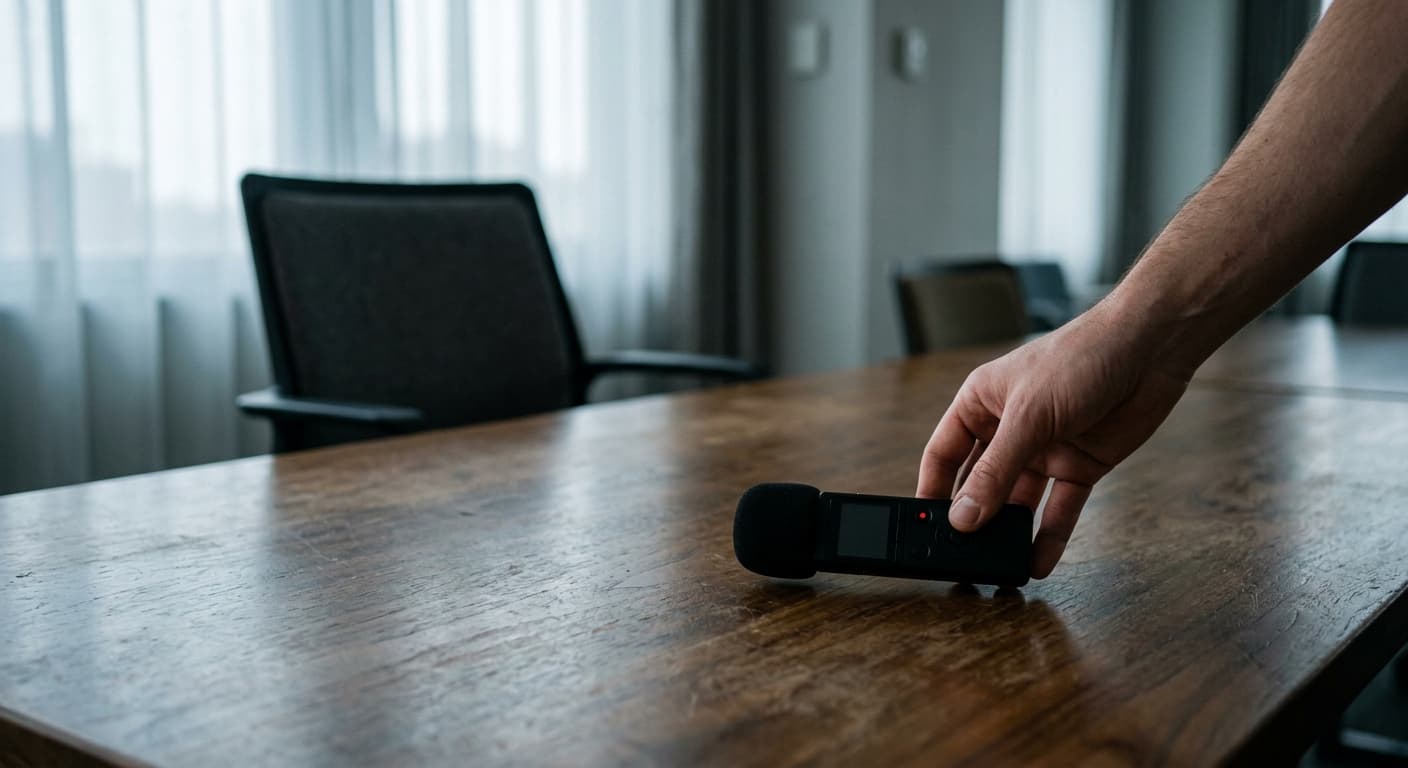
Hawaii is a hybrid consent state. Under HRS § 803-42(b)(3)(A), a party to any wire, oral, or electronic communication may record it without notifying the other parties. Inside a private place, HRS § 711-1111(1)(d) layers a separate all-party-consent rule on top. Violating either statute exposes you to criminal and civil liability.
Hawaii recording law at a glance
| Question | Answer |
|---|---|
| Consent rule | Hybrid: one-party default (HRS § 803-42); all-party in private places (HRS § 711-1111) |
| Main wiretap statute | HRS § 803-42 |
| When recording is illegal | Without being a party to the conversation; inside a private place without consent; capturing undress or sexual activity |
| Wiretap criminal penalty | Class C felony, up to 5 years and $10,000 fine |
| Private-place misdemeanor | Up to 1 year and $2,000 fine (HRS § 711-1111) |
| Intimate-imagery felony | Class C felony, up to 5 years and $10,000 fine (HRS § 711-1110.9) |
| Civil remedy | Greater of $100/day or $10,000 floor, plus punitives and attorney fees (HRS § 803-48) |
| Hidden cameras / voyeurism | Misdemeanor for private-place device; Class C felony if undress or sexual activity is captured |
| Recording police | Explicitly protected in public places by Act 164 SLH 2016 |
See the in-depth guides below for coverage by topic.
Recording in-person conversations in Hawaii
Under HRS § 803-42(b)(3)(A), a private actor who is a party to an oral, wire, or electronic communication may record it without notifying the other parties. The Hawaii Supreme Court applied this rule in State v. Okubo, 67 Haw. 197, 682 P.2d 79 (1984), holding that a participant recording does not violate the wiretap act. That remains the canonical Hawaii authority on the one-party rule.
The safe harbor has two limits. First, it disappears if your purpose is to commit a criminal or tortious act (blackmail, harassment, fraud). Second, it does not override the private-place rule. Even a participant can violate HRS § 711-1111(1)(d) by recording inside a bedroom, bathroom, hotel room, locker room, or other place where those present have a reasonable expectation of privacy. State v. Lo, 66 Haw. 653, 675 P.2d 754 (1983) confirmed that section 803-42 does not authorize bugging a private place without consent.
A "private place" is defined in HRS § 711-1100 as a location where someone may reasonably expect to be safe from casual or hostile intrusion or surveillance. Streets, public parks, restaurants, open-plan offices, and shared conference rooms are not private places. Bedrooms, bathrooms, locked private offices, and hotel rooms are.
A practical example: you can record a tense conversation with a contractor in your open kitchen or on your front porch without telling them. You cannot set a hidden recorder in your guest bedroom and leave the room.

Recording phone calls in Hawaii
The same participant safe harbor in HRS § 803-42(b)(3)(A) covers wire and electronic communications, so you may record a landline call, cell call, VoIP call, or video conference you are party to without telling the other person. This covers Zoom, Teams, Google Meet, FaceTime, and similar platforms.
The interstate call problem matters. If the other party is in California, Florida, Illinois, Maryland, Massachusetts, Pennsylvania, or Washington, those states require all-party consent. Courts and regulators have generally applied the stricter state's rule as a practical matter, so the conservative move is to disclose at the start of the call or get all-party consent.
Federal ECPA at 18 U.S.C. § 2511(2)(d) is a one-party-consent floor that matches Hawaii's wiretap rule. Hawaii's stricter private-place rule under HRS § 711-1111 is not preempted by ECPA.
For full treatment of phone-call recording rules, including business call disclosures and debt-collector obligations, see the Hawaii Phone Call Recording Laws guide.
Hidden cameras, doorbells, and nanny cams
Installing or using any device in a private place without consent of the persons entitled to privacy there is Violation of Privacy in the Second Degree under HRS § 711-1111, a misdemeanor. The statute also covers trespassory surveillance, peeping or peering into a dwelling, exterior listening devices, upskirt-style capture of intimate areas, and interception of private messages.
When the camera captures undress, sexual activity, or intimate imagery, the offense escalates to Violation of Privacy in the First Degree under HRS § 711-1110.9, a Class C felony.
On your own property, the line is simple: exterior cameras (doorbell, driveway, perimeter) pointing toward public or common areas are lawful, because no one has a privacy expectation on a public sidewalk or street. A camera inside a guest bedroom or bathroom is not lawful without the guest's consent, and if it captures undress it becomes a Class C felony regardless of property ownership.
Nanny cams in a child's bedroom present a harder case. The homeowner's Section 803-42 participant safe harbor does not apply if the homeowner is not in the room and is not part of the conversation. An audio-recording baby monitor in a bedroom points toward the section 711-1111(1)(d) misdemeanor. A camera that captures a caregiver in a private space without consent falls in the same zone.
For residential and commercial camera rules, see the Hawaii Security Camera Laws guide. For voyeurism and intimate-imagery coverage, see Hawaii Voyeurism Laws.
Penalties for illegal recording in Hawaii
Hawaii's penalty structure runs in three tiers. Each tier has a different statute and a different maximum sentence.
| Offense | Statute | Class | Max prison | Max fine |
|---|---|---|---|---|
| Unlawful interception (wiretap) | HRS § 803-42(a) | Class C felony | 5 years | $10,000 |
| Violation of Privacy in the Second Degree (private place, no consent) | HRS § 711-1111 | Misdemeanor | 1 year | $2,000 |
| Violation of Privacy in the First Degree (undress, NCII, deepfake intimate imagery) | HRS § 711-1110.9 | Class C felony | 5 years | $10,000 |
The Class C felony terms are set by HRS § 706-660 (imprisonment) and HRS § 706-640 (fine). A single course of conduct can implicate more than one tier. Surreptitiously recording a sexual encounter in a hotel room could trigger the wiretap Class C felony under section 803-42(a), the private-place misdemeanor under section 711-1111(1)(d), and the intimate-imagery Class C felony under section 711-1110.9(1)(a), depending on the proof.
On the civil side, HRS § 803-48 gives victims a cause of action for the greater of: (i) actual damages plus the violator's profits, or (ii) statutory damages of the greater of $100 per day of violation or $10,000. Add punitive damages where appropriate, plus reasonable attorney's fees and litigation costs. The fee-shifting provision is significant: it allows plaintiffs' lawyers to take cases on contingency without needing proof of specific economic loss.
Recording the police in Hawaii
Hawaii has an explicit statutory right to record police, broader than the federal First Amendment baseline. Act 164, Session Laws 2016, amended HRS § 711-1111(1)(d) to carve out recording a law enforcement officer performing official duties in a public place or where the officer has no reasonable expectation of privacy, provided you do not interfere with safety and control, scene security, investigation integrity, or public safety and order.
Hawaii sits in the Ninth Circuit, which recognized a First Amendment right to film matters of public interest (including police conduct) in publicly accessible areas in Fordyce v. City of Seattle, 55 F.3d 436 (9th Cir. 1995) and Askins v. U.S. Department of Homeland Security, 899 F.3d 1035 (9th Cir. 2018). The state statutory right under Act 164 is independently enforceable and does not depend on those federal decisions.
Practically: you may film traffic stops, arrests, and public encounters; livestream from a public sidewalk; and document federal agents (CBP, ICE, U.S. Marshals) acting in publicly accessible areas. You may not trespass, physically interfere with an arrest, enter a taped-off crime scene, or refuse a lawful order to step back.
For the full treatment of Ninth Circuit authority, open-meetings rules, and body-worn camera public-records access, see the Hawaii Laws on Recording Police guide.
Special topics in Hawaii
Deepfakes and AI intimate imagery
HRS § 711-1110.9(1)(c), added by Act 59 SLH 2021, makes it a Class C felony to intentionally create or disclose a synthetic image or video using the recognizable physical characteristics of a known person depicted nude or in sexual conduct, with intent to substantially harm the depicted person. This statute remains in force. Hawaii's election deepfake law, Act 191 SLH 2024, was permanently enjoined as facially unconstitutional in Babylon Bee LLC v. Lopez, No. 1:25-cv-00234 (D. Haw. Jan. 30, 2026) (Park, J.), and is unenforceable. S.B. 1156 (a separate sexually-explicit-deepfake misdemeanor bill carried over from the 2025 Regular Session) has not been enacted.
Federal TAKE IT DOWN Act
The TAKE IT DOWN Act, Pub. L. 119-12, signed May 19, 2025, criminalizes nonconsensual intimate imagery including AI-generated deepfakes. Criminal liability attached on enactment. Covered platforms must operate a notice-and-takedown process and remove flagged content within 48 hours; platform compliance obligations took effect May 19, 2026. The FTC enforces platform compliance. Hawaii victims can invoke state criminal charges under HRS § 711-1110.9, federal charges under TAKE IT DOWN, and platform notices once section 3 is in force.
AI voice clones and robocalls
FCC Declaratory Ruling 24-17 (Feb. 8, 2024) treats AI-generated voices in calls as "artificial or prerecorded voice" under the TCPA, requiring prior express consent. The separate FCC one-to-one consent rule (FCC 24-24) was vacated by the Eleventh Circuit in Insurance Marketing Coalition Ltd. v. FCC, 127 F.4th 303 (11th Cir. 2025) and removed from the CFR; it is not in force.
Body-worn cameras: HRS Chapter 52D and UIPA
HRS Chapter 52D governs how Hawaii county police departments deploy and retain body-worn camera footage. Key rules: officers must complete training before field use; cameras may not be used to gather intelligence on First Amendment-protected activity; footage must be retained one year for non-criminal cases, through the applicable statute of limitations for criminal cases, and at least three years for felony-level arrests. Public access is controlled by the Uniform Information Practices Act (UIPA), HRS §§ 92F-13 and 92F-14. OIP Opinion F22-01 addresses the balancing test for Maui Police Department body-camera redactions and is a useful reference.
Workplace recording and NLRB
Hawaii's one-party rule lets employees record workplace conversations they participate in. The private-place limit under HRS § 711-1111 still applies to employee restrooms, lactation rooms, and locker rooms. Under NLRB Stericycle, Inc., 372 NLRB No. 113 (Aug. 2, 2023), overbroad employer no-recording rules are presumptively unlawful under Section 7 of the NLRA. NLRB GC 25-05 (Feb. 14, 2025) is a housekeeping rescission of certain Biden-era memoranda, not a reinstatement of older frameworks; Stericycle controls. NLRB GC 25-07 (June 25, 2025) adds a narrow per se bar on surreptitious recording of collective-bargaining sessions. For full detail, see the Hawaii Workplace Recording Laws guide.
Recent legal developments
- January 30, 2026: U.S. District Judge Shanlyn A.S. Park permanently enjoined Hawaii's election deepfake law (Act 191 SLH 2024) as facially unconstitutional in Babylon Bee LLC v. Lopez, No. 1:25-cv-00234 (D. Haw.).
- May 19, 2026: Platform notice-and-takedown obligations under the federal TAKE IT DOWN Act (Pub. L. 119-12) took effect; criminal prohibition was effective on enactment in May 2025.
- 2025: FCC 24-24 (one-to-one consent rule) vacated by Insurance Marketing Coalition Ltd. v. FCC, 127 F.4th 303 (11th Cir. 2025); mandate issued April 30, 2025; rule removed from CFR.
- June 25, 2025: NLRB GC 25-07 issued, declaring surreptitious recording of collective-bargaining sessions a per se unfair labor practice.
- Act 59 SLH 2021: Added deepfake intimate-imagery felony at HRS § 711-1110.9(1)(c); remains in force.
- Act 164 SLH 2016: Added the explicit right-to-record-police carve-out to HRS § 711-1111(1)(d).
Hawaii recording laws in depth
By type of recording
- Hawaii Audio Recording Laws: One-Party Consent Rules and Penalties
- Hawaii Phone Call Recording Laws: One-Party Consent Rules for Calls
- Hawaii Video Recording Laws: Privacy Rules and Consent Requirements
- Hawaii Voyeurism Laws: Hidden Camera Penalties and Privacy Protections
- Hawaii Dashcam Laws: Recording Rules, Audio Consent, and Legal Limits (2026)
By place or relationship
- Hawaii Workplace Recording Laws: Employee and Employer Rights
- Hawaii Landlord-Tenant Recording Laws: Surveillance and Privacy Rights
- Hawaii Medical Recording Laws: Patient Rights, HIPAA, and Consent Rules (2026)
- Hawaii Laws on Recording Police: Your Rights Under Act 164
- Hawaii Laws on Recording in Public: Your Rights in Public Spaces
- Hawaii School Recording Laws: Student Privacy, FERPA, and Classroom Rules (2026)
- Hawaii Security Camera Laws: Residential and Business Surveillance Rules
More Hawaii laws
- Hawaii Alimony Laws
- Hawaii At-Will Employment Laws
- Hawaii Child Custody Laws
- Hawaii Data Privacy Laws
- Hawaii Landlord-Tenant Laws
This article is general legal information, not legal advice. Recording laws change and apply differently to each situation. For advice about your situation, consult a licensed Hawaii attorney.
More Hawaii Laws
- Hawaii AI Meeting Recording Laws
- Hawaii Alimony Laws
- Hawaii At-Will Employment Laws
- Hawaii Car Accident Laws
- Hawaii Car Seat Laws
- Hawaii Child Custody Laws
- Hawaii Child Support Laws
- Hawaii Common Law Marriage Laws
- Hawaii Data Privacy Laws
- Hawaii Deepfake Laws
- Hawaii Divorce Laws
- Hawaii Dog Bite Laws
- Hawaii Emancipation Laws
- Hawaii Expungement Laws
- Hawaii Hit and Run Laws
- Hawaii Landlord-Tenant Laws
Frequently Asked Questions
Is Hawaii a one-party or two-party consent state?
Hawaii is a hybrid consent state, not simply one-party or two-party. Under HRS § 803-42(b)(3)(A), a participant in any wire, oral, or electronic communication may record it without notifying the other parties. Inside a private place such as a bedroom, bathroom, or hotel room, HRS § 711-1111(1)(d) requires consent of everyone entitled to privacy there. The simple binary label does not fit Hawaii.
Can I record a phone call in Hawaii without telling the other person?
Yes, if you are a party to the call. HRS § 803-42(b)(3)(A) covers wire and electronic communications, so you may record a landline call, cell call, or video conference without disclosing it. The safe harbor disappears if your purpose is criminal or tortious. On multistate calls, if the other party is in a strict all-party state like California or Pennsylvania, apply the more protective rule as a practical matter.
Is recording someone without consent a felony in Hawaii?
It depends on the conduct. Unlawful interception under HRS § 803-42(a) is a Class C felony (up to 5 years, $10,000 fine). Recording inside a private place without consent under HRS § 711-1111 is a misdemeanor (up to 1 year, $2,000 fine). Recording someone in a state of undress or sexual activity, or creating or disclosing deepfake intimate imagery, under HRS § 711-1110.9 is a Class C felony.
What can I sue for if someone recorded me illegally in Hawaii?
Under HRS § 803-48, you may recover the greater of (i) actual damages plus the violator's profits, or (ii) statutory damages of the greater of $100 per day of violation or $10,000. You may also recover punitive damages where appropriate, plus reasonable attorney's fees and litigation costs. This is one of the strongest civil recording-law remedies in the country because the floor does not require proof of specific economic loss.
Are Ring doorbells and nanny cams legal in Hawaii?
Exterior cameras pointing toward public areas (street, driveway, front porch) are legal because no one has a privacy expectation there. A camera inside a private space of the home, such as a guest bedroom or bathroom, without the occupant's consent is a misdemeanor under HRS § 711-1111. If that camera captures undress, it becomes a Class C felony under HRS § 711-1110.9. Nanny cams in living areas where the homeowner is present are generally covered by one-party consent.
Can I record my boss or an HR meeting in Hawaii?
Yes. Hawaii's one-party rule under HRS § 803-42(b)(3)(A) lets you record any conversation you participate in, including workplace meetings. You do not need to tell your employer or HR. The private-place limit still applies: recording in an employee restroom or lactation room requires all-party consent. Your employer may also have a policy against recording, which can support discipline even though the recording is legal under state law.
Can I record the police in Hawaii?
Yes. Since 2016, HRS § 711-1111(1)(d) contains an explicit right to record a law enforcement officer performing duties in a public place, as long as you do not interfere with safety, scene security, or investigations. The Ninth Circuit also protects recording police as a First Amendment right under Fordyce v. City of Seattle and Askins v. DHS. You may film traffic stops, arrests, and encounters from a public sidewalk.
Are deepfakes illegal in Hawaii?
Creating or disclosing AI deepfake intimate imagery of a known person is a Class C felony under HRS § 711-1110.9(1)(c), added by Act 59 SLH 2021. Hawaii's separate election deepfake law, Act 191 SLH 2024, was permanently enjoined as unconstitutional in Babylon Bee LLC v. Lopez (D. Haw. Jan. 30, 2026) and is unenforceable. The federal TAKE IT DOWN Act (Pub. L. 119-12) adds criminal liability and a platform notice-and-takedown obligation for nonconsensual intimate imagery including deepfakes.
Sources and References
- HRS § 803-42 (Hawaii Wiretap Act; one-party rule; Class C felony)(capitol.hawaii.gov).gov
- HRS § 803-48 (civil cause of action; statutory damages floor)(capitol.hawaii.gov).gov
- HRS § 711-1111 (Violation of Privacy in the Second Degree; misdemeanor private-place rule; Act 164 SLH 2016 right-to-record-police carve-out)(capitol.hawaii.gov).gov
- HRS § 711-1110.9 (Violation of Privacy in the First Degree; Class C felony for undress, sexual activity, NCII, deepfake intimate imagery)(capitol.hawaii.gov).gov
- HRS § 706-660 (Class C felony imprisonment)(capitol.hawaii.gov).gov
- HRS § 706-640 (Class C felony fine)(capitol.hawaii.gov).gov
- HRS Chapter 52D (body-worn cameras)(capitol.hawaii.gov).gov
- HRS § 92F-13 (UIPA exceptions to disclosure)(capitol.hawaii.gov).gov
- HRS § 92F-14 (UIPA significant privacy interests)(capitol.hawaii.gov).gov
- OIP Opinion F22-01 (body-worn camera UIPA framework)(oip.hawaii.gov).gov
- Act 191, Session Laws of Hawaii 2024 (election deepfake; permanently enjoined)(data.capitol.hawaii.gov).gov
- Babylon Bee LLC v. Lopez, No. 1:25-cv-00234 (D. Haw. Jan. 30, 2026) (Bloomberg Law coverage)(news.bloomberglaw.com)
- Hawaii S.B. 1156 (2025 Regular Session, carried over to 2026; pending)(data.capitol.hawaii.gov).gov
- Askins v. U.S. Department of Homeland Security, 899 F.3d 1035 (9th Cir. 2018)(cdn.ca9.uscourts.gov).gov
- Cheairs v. City of Seattle (9th Cir. 2025) (cites Fordyce v. City of Seattle, 55 F.3d 436 (9th Cir. 1995))(cdn.ca9.uscourts.gov).gov
- ECPA, 18 U.S.C. § 2511(uscode.house.gov).gov
- DOJ Justice Manual § 9-7.302 (consensual monitoring)(justice.gov).gov
- FCC Declaratory Ruling 24-17 (AI voice in robocalls)(docs.fcc.gov).gov
- Insurance Marketing Coalition Ltd. v. FCC, 127 F.4th 303 (11th Cir. 2025) (FCC 24-24 vacated)(media.ca11.uscourts.gov).gov
- TAKE IT DOWN Act, S. 146 (Pub. L. 119-12)(congress.gov).gov
- Stericycle, Inc., 372 NLRB No. 113 (Aug. 2, 2023)(nlrb.gov).gov
- NLRB GC 25-05 (Feb. 14, 2025; housekeeping rescission)(nlrb.gov).gov
- NLRB GC 25-07 (June 25, 2025; surreptitious bargaining-session recording)(nlrb.gov).gov
- HIPAA Privacy Rule, 45 C.F.R. Part 164(ecfr.gov).gov
- 12 C.F.R. Part 1006 (CFPB Regulation F)(ecfr.gov).gov