Vermont Recording Laws: Consent Rules and Penalties
Quick Answer
Vermont is a one-party consent state for recording conversations. You can legally record phone calls and in-person conversations as long as you are a participant or have consent from at least one party involved.
Vermont stands alone among all 50 states because it has never enacted a comprehensive wiretapping statute. Instead, your recording rights in Vermont come from three sources: federal wiretap law (18 U.S.C. 2511), Vermont Supreme Court case law, and the Vermont Constitution's Article 11 privacy protections.
| Key Point | Details |
|---|---|
| Consent Type | One-party consent |
| Legal Basis | Federal law (18 U.S.C. 2511) + Vermont case law |
| Can you record your own calls? | Yes |
| Must you tell the other party? | No |
| Constitutional Protection | Article 11, Vermont Constitution |
| Key Cases | State v. Brooks (1991), State v. Geraw (2002), State v. Rheaume (2005) |
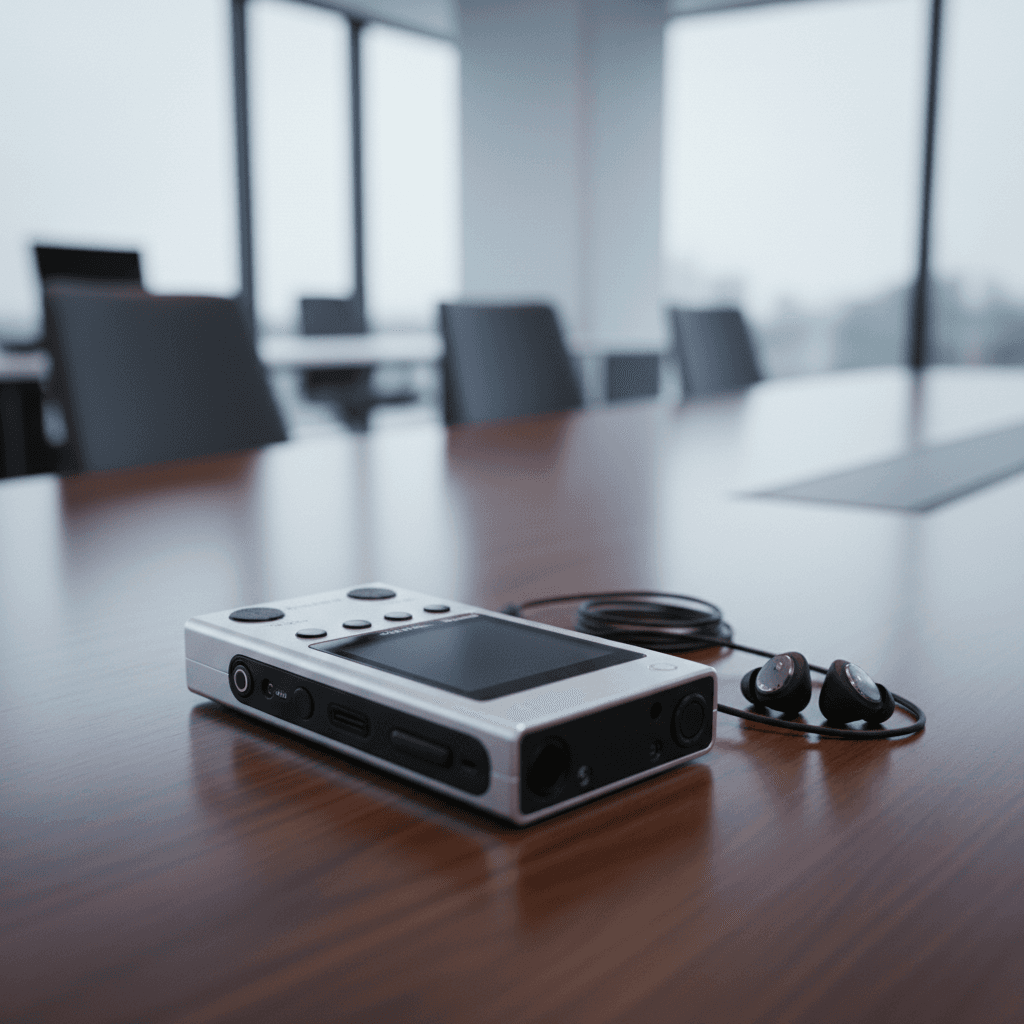
Our recommended Digital Voice Recorder.
Understanding Vermont's Recording Laws
Why Vermont Is Unique Among All States
Vermont is the only state in the country that has never passed a dedicated wiretapping or electronic surveillance statute. While all other 49 states have enacted laws modeled after the Federal Wiretap Act, Vermont relies on a combination of federal law and state court decisions to define recording rights.
This means that in Vermont:
- Federal law (18 U.S.C. 2511) serves as the primary statutory authority for recording conversations.
- Vermont Supreme Court case law provides additional guidance on privacy expectations and constitutional protections.
- Article 11 of the Vermont Constitution (the state's equivalent of the Fourth Amendment) offers privacy protections that the courts have interpreted in recording contexts.
The Key Court Cases That Define Vermont Recording Law
Three Vermont Supreme Court decisions form the backbone of the state's recording law framework:
State v. Brooks (1991) established that recording a conversation is lawful when the parties have no reasonable expectation of privacy. In this case, a conversation recorded in a public parking lot was found to be constitutional because the location was open and accessible.
State v. Geraw (2002) created the most significant limitation on recording in Vermont. The court held that secretly recording police interviews inside a private home, without a warrant, violates Article 11 of the Vermont Constitution. This ruling means you cannot place hidden recording devices in someone's home to capture conversations.
State v. Rheaume (2005) clarified the privacy standard further. The court ruled that a hospital emergency room is not a private space, finding that patients in emergency treatment areas do not have a reasonable expectation of privacy because these areas "by their very nature function as freely accessible areas."
What One-Party Consent Means in Practice
In a one-party consent framework, only one participant in a conversation needs to know about and agree to the recording. That person can be you. You do not need to announce that you are recording or obtain permission from anyone else in the conversation.
This differs from two-party (all-party) consent states like neighboring Massachusetts and New Hampshire, where every person in the conversation must agree to be recorded.
What Communications Are Covered
Vermont's recording framework applies to all forms of communication:
- Wire communications including landline calls, cell phone calls, and VoIP calls
- Oral communications including in-person conversations where there is a reasonable expectation of privacy
- Electronic communications including text messages, emails, and video calls
Recording Phone Calls in Vermont
Your Right to Record Phone Calls
Yes, you can record phone calls in Vermont. Under both federal one-party consent law and Vermont case law, you can record any phone call you participate in. You do not need to inform the other party. This applies to:
- Landline calls
- Cell phone calls
- VoIP calls (Zoom, Microsoft Teams, Google Meet, and similar platforms)
- Video calls with audio
Recording Calls Across State Lines
When you call someone in another state, the stricter recording law generally applies. This matters because Vermont borders two states with all-party consent requirements:
- Massachusetts requires all-party consent
- New Hampshire requires all-party consent
Other two-party consent states include California, Connecticut, Florida, Illinois, Maryland, Montana, Nevada (for phone calls), Pennsylvania, and Washington.
Best practice: When calling someone in an all-party consent state, especially neighboring Massachusetts or New Hampshire, inform them that you are recording or obtain their explicit consent before starting.
Business Call Recording in Vermont
Vermont businesses can record calls for quality assurance, training, or compliance purposes. While Vermont law does not require advance notice, many businesses choose to provide it as a best practice. Common methods include:
- A recorded announcement before the call begins ("This call may be recorded for quality assurance...")
- Verbal notice from the representative
- A periodic beep tone during the call
Federal Communications Commission (FCC) regulations under 47 C.F.R. 64.501 require telephone companies to provide notice before recording, which is separate from Vermont's consent framework.
Recording In-Person Conversations
When Recording Is Legal
You can record in-person conversations in Vermont when:
- You are a participant in the conversation (one-party consent)
- The conversation occurs in a location without a reasonable expectation of privacy
- You have consent from at least one party to the conversation
The Reasonable Expectation of Privacy Standard
Vermont courts have drawn clear lines about where privacy expectations exist and where they do not.
No expectation of privacy (recording generally allowed):
- Public parking lots (State v. Brooks, 1991)
- Hospital emergency rooms (State v. Rheaume, 2005)
- Public streets, sidewalks, and parks
- Public areas of businesses and stores
- Government buildings open to the public
- Public transit
Reasonable expectation of privacy (consent or warrant required):
- Private homes (State v. Geraw, 2002)
- Hotel and motel rooms
- Private offices with closed doors
- Bathrooms and changing rooms
- Medical examination rooms (unlike emergency rooms)
When Recording Is Illegal
Recording becomes illegal in Vermont in these situations:
- You are not a party to the conversation and do not have consent from any participant
- You record inside someone else's home without their knowledge or a valid warrant (State v. Geraw)
- You record in locations where people have a reasonable expectation of privacy without consent
- You leave a hidden device to capture conversations that you are not part of
- You record with the intent to commit a crime or tortious act (prohibited under 18 U.S.C. 2511)
Recording in Your Own Home
You can record conversations in your own home as long as you are participating in them. However, you cannot:
- Plant a hidden device and leave it to record conversations you are not part of
- Record guests in areas with strong privacy expectations such as bathrooms or guest bedrooms
- Record intimate activities without consent from all parties involved
Vermont Video Recording Laws

Recording in Public Spaces
Vermont has no general prohibition on video recording in public spaces. You have the right to:
- Film on public streets, parks, and sidewalks
- Record public meetings and government proceedings
- Use dashcams in your vehicle
- Film protests, demonstrations, and public events
- Take photographs in any public area
Private Property and Privacy Protections
On private property, the property owner sets the rules about recording. Vermont law provides specific protections against certain types of video recording:
Voyeurism (13 V.S.A. 2605) makes it a crime to intentionally view, photograph, film, or record a person's intimate areas without their consent in circumstances where they have a reasonable expectation of privacy.
Nonconsensual disclosure of intimate images (13 V.S.A. 2606) makes it illegal to knowingly disclose images of an identifiable person who is nude or engaged in sexual conduct, without that person's consent, with intent to harm, harass, intimidate, threaten, or coerce.
If you are recording someone's likeness for business purposes, you should obtain proper consent by having them complete a photo or video consent form.
Recording in the Workplace
Can Your Employer Record You?
Vermont employers can generally record in common work areas where employees do not have a reasonable expectation of privacy, such as sales floors, lobbies, and shared workspaces. Employers cannot record in:
- Bathrooms
- Locker rooms
- Changing areas
- Break rooms designated as private spaces
Can You Record Your Employer?
Yes. Under one-party consent, you can record conversations with supervisors, HR representatives, coworkers, or anyone else at work, as long as you are a participant in the conversation. This can be valuable for:
- Documenting workplace harassment or discrimination
- Recording performance reviews and disciplinary meetings
- Preserving important verbal instructions or agreements
- Protecting yourself during workplace disputes
Important note: While recording is legal under Vermont law, your employer may have a company policy that prohibits recording in the workplace. Violating a company policy could result in disciplinary action or termination, even though the recording itself was legal.
Recording Police and Government Officials
Your Right to Record Police Officers
Yes, you can record police officers in Vermont. The First Amendment protects the right to record law enforcement officers performing their duties in public. The First Circuit Court of Appeals, which covers Vermont, has recognized this right.
You can:
- Film traffic stops, including your own
- Record arrests happening in public
- Document any interaction with police officers
- Livestream encounters with law enforcement
Important limitations:
- Do not physically interfere with police operations
- Do not trespass on private property to record
- Follow lawful orders to move back to a reasonable distance
- Do not obstruct the officer in performing their duties
Recording Government Meetings
Vermont's Open Meeting Law (1 V.S.A. 310-314) requires most government meetings to be open to the public, and recording is generally permitted.
Recent updates to the Open Meeting Law: Vermont Act 133 (2024) now requires all non-advisory public bodies to record their meetings in audio or video format and post the recordings in a designated electronic location for at least 30 days. Vermont Act 51, which took effect on June 9, 2025, further updated these requirements by changing the posting deadline so recordings must be posted when the minutes are posted, rather than when minutes are approved. Act 51 also added an exception for field visits and site inspections.
You can record at:
- Selectboard and town council meetings
- City council meetings
- School board meetings
- State legislative proceedings
- Public hearings and comment periods
- Planning and zoning board meetings

Specific Recording Situations in Vermont
Can I Record My Landlord?
Yes, as long as you are part of the conversation. Recording interactions with your landlord can help document:
- Verbal agreements about repairs or maintenance
- Harassment or illegal entry into your unit
- Disputes about lease terms or security deposits
- Evidence for tenant rights cases under Vermont landlord-tenant law
Can I Record My Doctor?
Yes, you can record medical appointments you attend. This can help you:
- Remember complex medical instructions and treatment plans
- Document informed consent discussions before procedures
- Keep accurate records of diagnoses and prescriptions
- Share detailed information with family caregivers
Note that while recording is legal, some medical facilities may have their own policies regarding recording. The hospital emergency room exception from State v. Rheaume means there is no privacy expectation in ER treatment areas, but private examination rooms may have different expectations.
Can I Record DCF Workers?
Yes. Department for Children and Families (DCF) workers are government employees performing official duties. You can record your interactions with them as long as you are a participant in the conversation. This includes home visits, office meetings, and phone calls.
Can I Record My Ex-Spouse or Co-Parent?
Yes, during conversations you are directly participating in. This is common in custody disputes and can help document verbal agreements or problematic behavior. However:
- Do not record your children's private conversations without being present as a participant
- Do not instruct children to secretly record the other parent
- Consider how recordings may be perceived by Vermont family courts, which prioritize the best interests of the child
Can I Use a Dashcam in Vermont?
Yes. Dashcams are legal in Vermont. There are no specific state laws restricting their use. Keep in mind:
- Mount the camera so it does not obstruct your view of the road
- Audio recording from a dashcam follows one-party consent rules (you are present as a consenting party in your own vehicle)
- Dashcam footage can serve as valuable evidence in insurance claims and traffic disputes
- Check whether your auto insurance provider offers discounts for dashcam use
Using Recordings as Evidence in Vermont Courts
Are Recordings Admissible?
Recordings made legally under the one-party consent framework are generally admissible as evidence in Vermont courts. The court will evaluate:
- Authentication: Can you prove the recording is genuine, unaltered, and accurately represents the conversation?
- Relevance: Does the recording relate to a material issue in the case?
- Hearsay rules: Some recorded statements may be subject to hearsay objections, though many exceptions apply
- Prejudicial vs. probative value: The court may exclude recordings if their potential to unfairly prejudice the jury outweighs their evidentiary value
Criminal Cases vs. Civil Cases
In criminal cases, recordings obtained illegally (without proper consent or in violation of privacy rights) are typically inadmissible under Article 11 of the Vermont Constitution. Illegally obtained recordings may also result in criminal charges against the person who made the recording.
In civil cases, the rules can be more flexible. However, courts retain discretion to exclude illegally obtained evidence, and presenting such evidence could expose you to liability.
Penalties for Illegal Recording in Vermont
Federal Criminal Penalties
Because Vermont has no state wiretapping statute, federal law (18 U.S.C. 2511) provides the primary criminal penalties for illegal recording:
| Offense | Penalty |
|---|---|
| Illegal interception of communications (18 U.S.C. 2511) | Up to 5 years imprisonment and fines |
| Illegal disclosure of intercepted communications | Up to 5 years imprisonment and fines |
| Using illegally intercepted communications | Up to 5 years imprisonment and fines |
Vermont State Criminal Penalties
While Vermont lacks a wiretapping statute, several state laws impose criminal penalties for recording-related offenses:
| Offense | Statute | Penalty |
|---|---|---|
| Voyeurism (first offense) | 13 V.S.A. 2605 | Up to 2 years imprisonment, up to $1,000 fine, or both |
| Voyeurism (second or subsequent) | 13 V.S.A. 2605 | Up to 3 years imprisonment, up to $5,000 fine, or both |
| Voyeurism involving minors | 13 V.S.A. 2605(c) | Up to 5 years imprisonment, up to $5,000 fine, or both |
| Nonconsensual intimate images | 13 V.S.A. 2606 | Up to 2 years imprisonment, up to $2,000 fine, or both |
| Nonconsensual intimate images (for profit) | 13 V.S.A. 2606 | Up to 5 years imprisonment, up to $10,000 fine, or both |
| Illegal recording in a private home (Geraw) | Vermont case law | Criminal charges, evidence suppression |
Civil Liability
Victims of illegal recording in Vermont may pursue civil remedies including:
- Actual damages for harm suffered as a result of the recording
- Statutory damages under the federal wiretapping law (18 U.S.C. 2520), which provides a minimum of $10,000 per violation
- Punitive damages in cases involving willful or intentional violations
- Attorney's fees and litigation costs
- Injunctive relief to prevent further distribution or use of illegally obtained recordings
Vermont Data Privacy Act (Pending Legislation)
Vermont S.71, the Vermont Data Privacy Act, passed the Vermont Senate in March 2025 and is being considered by the House. While this bill focuses on consumer data privacy and online surveillance rather than conversation recording, it could affect how personal data (including recorded communications) is collected, stored, and shared by businesses. The bill would take effect on July 1, 2026 if enacted. This legislation is worth monitoring for its potential impact on how recorded conversations are handled as data.
More Vermont Laws
Sources and References
- Federal Wiretap Act - 18 U.S.C. 2511(law.cornell.edu)
- Vermont Constitution Article 11(legislature.vermont.gov).gov
- Vermont Title 13 Chapter 59 - Voyeurism and Intimate Images(legislature.vermont.gov).gov
- Vermont Open Meeting Law (1 V.S.A. 310-314)(legislature.vermont.gov).gov
- State v. Geraw (2002) - Vermont Supreme Court(law.justia.com)
- State v. Rheaume (2005) - Vermont Supreme Court(law.justia.com)
- Vermont Act 51 (2025) - Open Meeting Law Updates(legislature.vermont.gov).gov
- Vermont Act 133 (2024) - Open Meeting Law Recording Requirements(legislature.vermont.gov).gov
- Reporters Committee - Vermont Recording Guide(rcfp.org)
- Federal Civil Remedies - 18 U.S.C. 2520(law.cornell.edu)
- Vermont S.71 - Data Privacy Act (2025)(legislature.vermont.gov).gov