Utah Recording Laws: Consent Rules and Penalties
Quick Answer
Utah is a one-party consent state. You can legally record phone calls and in-person conversations as long as you are a party to the conversation or have consent from at least one participant. You do not need to announce that you are recording or get permission from anyone else on the call.
Illegal recording in Utah is a third degree felony, and victims can pursue civil damages of at least $10,000 or $100 per day of violation, whichever is greater.
| Key Point | Answer |
|---|---|
| Consent Type | One-Party |
| Can you record your own calls? | Yes |
| Must you inform others? | No |
| Primary Statute | Utah Code Ann. 77-23a-4 |
| Criminal Penalty | Third degree felony (misdemeanor for some first offenses) |
| Civil Damages | $100/day or $10,000 minimum (77-23a-11) |
| Statute of Limitations (Civil) | 2 years from discovery |
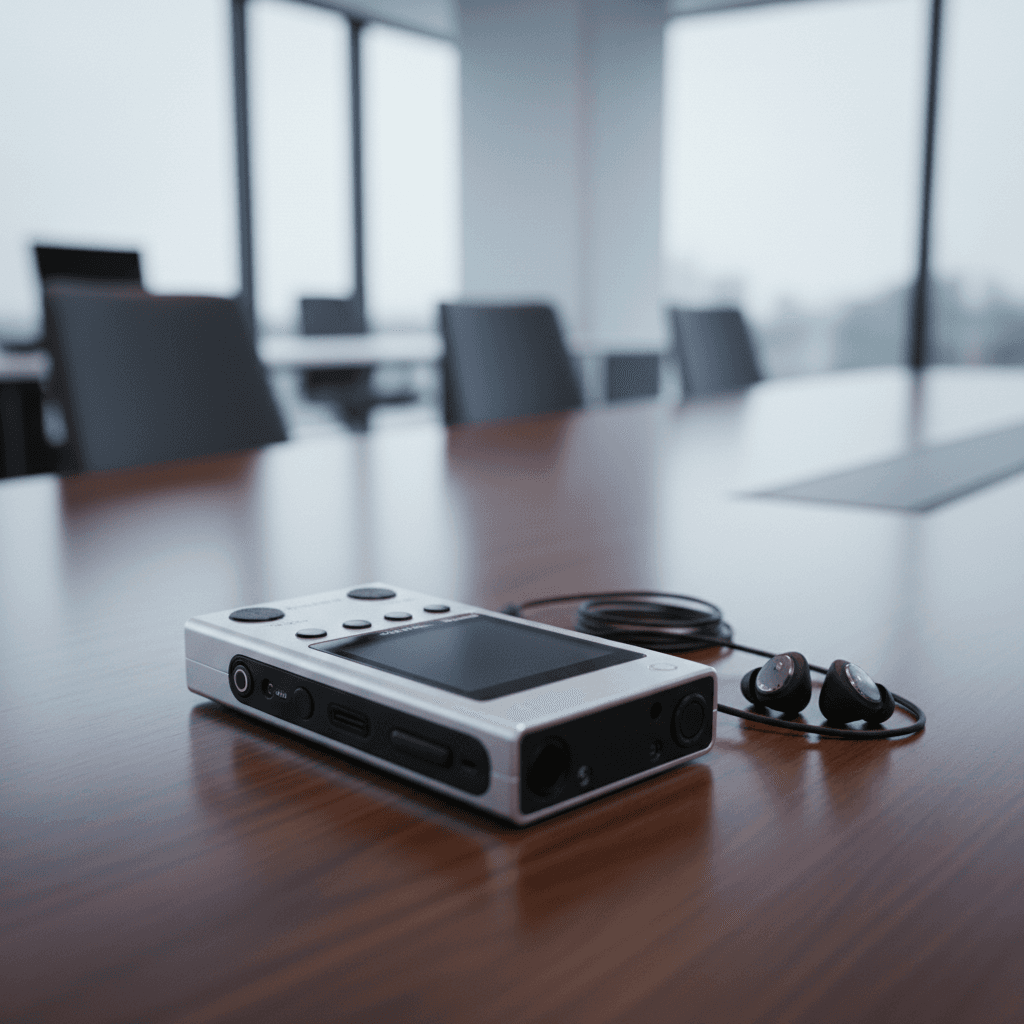
Our recommended Digital Voice Recorder.
Understanding Utah's Recording Laws
The Legal Foundation
Utah's wiretapping and electronic surveillance laws are found in the Utah Interception of Communications Act (Utah Code Ann. Title 77, Chapter 23a). The key statute is:
- Utah Code Ann. 77-23a-4 -- Offenses, Criminal and Civil, Lawful Interception
Under this statute, it is illegal to intentionally or knowingly intercept any wire, electronic, or oral communication without proper consent. Recording is legal when at least one party to the communication consents. That consenting party can be you.
2025 Criminal Code Recodification
Effective May 7, 2025, Utah completed a major recodification of its criminal code. Several privacy-related statutes were renumbered as part of this reorganization. The core wiretapping statute (77-23a-4) was not changed in substance. However, related privacy and voyeurism provisions in Title 76, Chapter 9 were reorganized. If you are looking up older case law or legal references, be aware that section numbers may have shifted.
The definitions section (77-23a-3) was also updated effective May 7, 2025, though the fundamental definitions of wire, electronic, and oral communications remain consistent with federal wiretapping law.
What Communications Are Covered
Utah's recording law applies to three categories of communication:
- Wire communications -- Phone calls, including landlines, cell phones, and VoIP services
- Oral communications -- In-person conversations where the speaker has a reasonable expectation of privacy
- Electronic communications -- Text messages, emails, video calls, and other digital transmissions
The law protects communications where a person has a reasonable expectation that the conversation is private. Public conversations that anyone could overhear are generally not protected.
One-Party vs. Two-Party Consent Explained
In a one-party consent state like Utah, only one person in the conversation needs to know about and consent to the recording. That person can be you. You do not need to say "this call is being recorded" or ask for anyone else's permission.
In contrast, two-party (or all-party) consent states like California require every person in the conversation to agree to be recorded before you can lawfully capture it.
This distinction matters when you are recording calls that cross state lines. The stricter state's law typically applies.
Recording Phone Calls in Utah
Can You Record Phone Calls in Utah?
Yes. Under Utah Code Ann. 77-23a-4, you can record any phone call you are participating in without informing the other party. This applies to:
- Landline calls
- Cell phone calls
- VoIP calls (Zoom, Microsoft Teams, Google Meet, etc.)
- Video calls with an audio component
You do not need special equipment or software. Any recording method is acceptable as long as you are a party to the call.
Recording Calls Across State Lines
If you are in Utah calling someone in a two-party consent state, the stricter law typically applies. States requiring all-party consent include:
- California
- Connecticut
- Florida
- Illinois
- Maryland
- Massachusetts
- Montana
- Nevada (for phone calls)
- New Hampshire
- Pennsylvania
- Washington
Best practice: When calling people in two-party consent states, either inform them that you are recording or get explicit consent before you begin.
Business Call Recording
Utah businesses can record calls for quality assurance, training, compliance, or dispute resolution. While one-party consent means the business does not legally need to announce the recording (as long as an employee on the call consents), many businesses still choose to provide notice. Common methods include:
- A verbal statement before the call begins
- A recorded announcement ("This call may be recorded for quality assurance purposes")
- Written notice in contracts or terms of service
Providing notice can also help avoid disputes if the other party is in a two-party consent state.
Recording In-Person Conversations
When Is It Legal?
You can record in-person conversations in Utah when:
- You are participating in the conversation
- You are in a public place where there is no reasonable expectation of privacy
- You have consent from at least one party (which can be yourself)
The key factor is participation. As long as you are part of the conversation, you can record it without telling anyone.
The Public Place Exception
Utah law recognizes that consent is not required to record conversations in public places where there is no reasonable expectation of privacy. This includes:
- Conversations on public streets, parks, or sidewalks
- Discussions in public areas of businesses (lobbies, retail floors)
- Loud conversations that can be easily overheard by bystanders
- Public government meetings and hearings
If a conversation happens in a place where anyone walking by could hear it, there is generally no expectation of privacy to protect.
When Is It Illegal?
Recording becomes illegal in Utah when:
- You are not a party to the conversation and no participant has given consent
- You are recording in areas with a reasonable expectation of privacy (bathrooms, changing rooms, private offices where the door is closed and you are not present)
- You are disclosing or using recordings that you know were obtained illegally
Third-party recording (eavesdropping on a conversation you are not part of) is the most common way people violate Utah's wiretapping law.
What About Recording in Your Own Home?
You can record conversations in your own home if you are participating in them. However, you cannot:
- Plant a hidden device and leave the room to record others without being present as a participant
- Record guests in areas with heightened privacy expectations (bathrooms, guest bedrooms)
- Record intimate activities without the consent of all parties involved
The one-party consent rule still requires that the consenting party be part of the conversation being recorded.
Utah Video Recording Laws
Public Spaces
Utah has no general prohibition on video recording in public spaces. You can:
- Film on public streets, parks, and sidewalks
- Record public meetings and government proceedings
- Use dashcams and security cameras on your own property
- Film public protests, demonstrations, or events
Video-only recording (without audio) in public spaces is broadly permitted because there is no interception of a private communication.
Private Property and Privacy
On private property, the property owner sets the rules about recording. Utah also has criminal statutes that prohibit:
- Voyeurism (formerly Utah Code Ann. 76-9-702.7, renumbered in 2025 as part of the criminal code recodification)
- Recording someone in a location where they have a reasonable expectation of privacy without their consent
- Non-consensual creation or distribution of intimate images
Violations of Utah's voyeurism statute are treated as serious criminal offenses. If you are recording someone's likeness for commercial or business purposes, you should get proper consent by having them sign a photo or video consent form.
Recording in the Workplace
Can Your Employer Record You?
Utah employers can generally record in common work areas where employees do not have a reasonable privacy expectation, such as sales floors, warehouses, and shared office spaces. However, employers cannot record in:
- Bathrooms and restrooms
- Locker rooms and changing areas
- Private break rooms where employees have a reasonable expectation of privacy
Employers should also be mindful that audio recording in the workplace carries different legal considerations than video-only surveillance. Audio recording of conversations where the employer is not a participant could violate the Interception of Communications Act.
Can You Record Your Employer?
Yes. As a one-party consent state, you can record conversations with your boss, HR representatives, coworkers, or anyone else at work, as long as you are part of the conversation. This can be valuable for:
- Documenting harassment, discrimination, or retaliation
- Recording performance reviews and disciplinary meetings
- Protecting yourself in wage or contract disputes
- Preserving important verbal instructions or commitments
Important caveat: While recording is legal under Utah state law, your employer may have internal policies that prohibit workplace recording. Violating company policy could result in disciplinary action or termination, even though the recording itself was not illegal.
Recording Police and Government Officials
Can You Record Police Officers in Utah?
Yes. The First Amendment protects your right to record law enforcement officers performing their duties in public spaces. In Utah, you can:
- Film traffic stops (including your own)
- Record arrests and police interactions happening in public
- Document encounters with officers
- Livestream police encounters
Important limitations:
- Do not physically interfere with police operations
- Do not trespass on private property to get a better recording angle
- Follow lawful orders to maintain a safe distance (within reason)
- Do not obstruct the officer's ability to perform their duties
Officers cannot legally confiscate your recording device or force you to delete footage simply because you were recording them in a public place.
Recording Government Meetings
Utah's Open and Public Meetings Act (Utah Code Ann. 52-4-101 et seq.) requires most government meetings to be open to the public. Under Section 52-4-203, public bodies are actually required to keep their own recordings of open meetings and make them available to the public within three business days.
You can record:
- City council meetings
- County commission meetings
- School board meetings
- State legislative proceedings
- Public hearings and community forums
The right to record public meetings is well-established in Utah law. Government bodies cannot prohibit members of the public from making their own recordings of open meetings.
Specific Recording Situations
Can I Record My Landlord in Utah?
Yes, if you are part of the conversation. Recording interactions with landlords can help document:
- Verbal agreements about repairs or maintenance
- Harassment, threats, or illegal entry
- Disputes about lease terms or security deposits
- Evidence for tenant rights cases or small claims court
Keep recordings stored securely. They can serve as valuable evidence if a dispute escalates to court.
Can I Record My Doctor in Utah?
Yes, you can record medical appointments that you attend. This can be helpful for:
- Remembering complex medical instructions or treatment plans
- Documenting informed consent discussions
- Having a clear record of diagnoses and recommendations
- Sharing accurate information with family caregivers
Some medical providers may have their own policies about recording. While you have the legal right to record under one-party consent, informing your doctor can help maintain a good relationship.
Can I Record DCFS Workers?
Yes. Division of Child and Family Services (DCFS) workers are government employees, and you can record your interactions with them as long as you are participating in the conversation. Many parents and guardians find it helpful to record DCFS visits to maintain an accurate record of what was said and agreed upon.
Can I Record My Ex-Spouse or Co-Parent?
Yes, during conversations you are part of. This is common in custody and divorce disputes. However:
- Do not record your children's private conversations without being present as a participant
- Do not instruct children to secretly record the other parent
- Consider how recordings may be perceived by Utah family courts
- Focus on recording conversations where you are a direct participant
Utah family courts generally allow legally obtained recordings as evidence, but judges may view secret recordings unfavorably depending on the circumstances.
Can I Use a Dashcam in Utah?
Yes. Dashcams are legal in Utah. There are no state laws specifically restricting their use. Keep in mind:
- Mount the camera so it does not obstruct your view of the road
- Audio recording through a dashcam follows one-party consent rules (you are consenting as the vehicle occupant)
- Dashcam footage can serve as valuable evidence in accident and insurance claims
- Check whether your insurance company offers dashcam-related discounts
Using Recordings as Evidence in Utah
Are Recordings Admissible in Court?
Recordings made legally under Utah's one-party consent law are generally admissible as evidence in both criminal and civil proceedings. Courts will consider:
- Authentication -- Can you demonstrate that the recording is genuine and has not been altered? Metadata, timestamps, and chain of custody all matter.
- Relevance -- Does the recording relate to a material issue in the case?
- Hearsay rules -- Some recorded statements may be excluded as hearsay unless an exception applies (such as party admissions or excited utterances)
- Prejudicial vs. probative value -- The court weighs whether the recording's evidentiary value outweighs any risk of unfair prejudice to the jury
Criminal Cases vs. Civil Cases
- Criminal cases: Illegally obtained recordings are typically suppressed (excluded from evidence) and may result in separate criminal charges against the person who made the recording
- Civil cases: Courts have more flexibility, but illegally obtained recordings may still be excluded, and the person who made them could face a counterclaim for civil damages
Preserving Recordings for Court
If you plan to use a recording as evidence, take steps to preserve its integrity:
- Save the original file without editing or copying it multiple times
- Note the date, time, location, and participants at the time of recording
- Store backup copies in a secure location
- Do not share the recording publicly before consulting with an attorney
Penalties for Illegal Recording in Utah
Criminal Penalties
Under Utah Code Ann. 77-23a-4, the penalties for illegal interception depend on the nature of the offense:
| Offense | Classification | Potential Penalty |
|---|---|---|
| Illegal interception (standard) | Third degree felony | Up to 5 years imprisonment, up to $5,000 fine |
| First offense (not for tortious/illegal/commercial purpose, unencrypted radio) | Class A misdemeanor | Up to 1 year imprisonment |
| First offense (cellular/paging radio portion) | Class B misdemeanor | Up to 6 months imprisonment |
| Disclosing illegally obtained communications | Third degree felony | Up to 5 years imprisonment, up to $5,000 fine |
The standard violation of illegally intercepting a wire, electronic, or oral communication is a third degree felony in Utah. First-time offenders may qualify for reduced misdemeanor charges if the recording was not made for tortious, illegal, or commercial purposes.
Civil Liability
Under Utah Code Ann. 77-23a-11, victims of illegal recording can pursue substantial civil remedies:
- Actual damages suffered by the victim, plus any profits the violator made from the recording
- Statutory damages of $100 per day of violation, or $10,000, whichever is greater
- Punitive damages in cases involving willful or egregious violations
- Reasonable attorney fees and litigation costs
- Injunctive relief (a court order to stop ongoing violations)
The statute of limitations for civil claims is two years from the date the victim first has a reasonable opportunity to discover the violation.
Good Faith Defense
Utah law provides a complete defense against both criminal and civil liability for anyone who relied in good faith on a court order, warrant, grand jury subpoena, legislative authorization, or other statutory authorization when conducting the interception.
More Utah Laws
Sources and References
- Utah Interception of Communications Act - Offenses, Criminal and Civil, Lawful Interception(le.utah.gov).gov
- Utah Interception of Communications Act - Full Chapter(le.utah.gov).gov
- Utah Interception of Communications Act - Definitions (Updated May 2025)(le.utah.gov).gov
- Utah Civil Remedy for Unlawful Interception (77-23a-11)(codes.findlaw.com)
- Utah Open and Public Meetings Act(le.utah.gov).gov
- Utah Open Meetings - Recording Requirements (52-4-203)(le.utah.gov).gov
- Utah Voyeurism Statute (76-9-702.7)(le.utah.gov).gov
- Reporters Committee for Freedom of the Press - Utah Recording Guide(www.rcfp.org)