District of Columbia Recording Laws: Consent Rules and Penalties
Quick Answer
The District of Columbia is a one-party consent jurisdiction. You can legally record any conversation you participate in without telling the other parties. If you are not part of the conversation, you need consent from at least one participant before recording.
| Key Point | Details |
|---|---|
| Consent Type | One-Party |
| Can you record your own calls? | Yes |
| Must you inform others? | No |
| Primary Statute | D.C. Code § 23-542 |
| Maximum Fine | $12,500 |
| Maximum Prison Time | 5 years |
| Civil Damages | $100/day minimum, at least $1,000 |
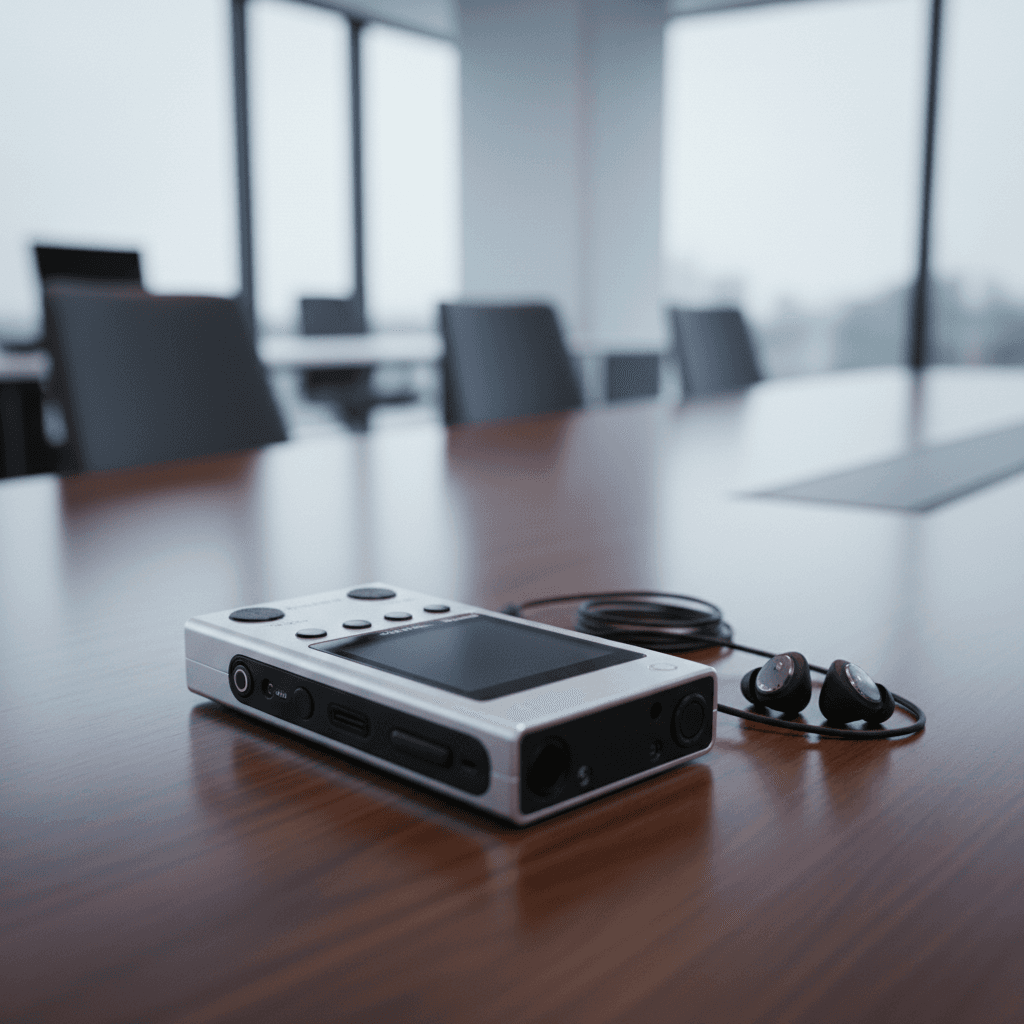
Our recommended Digital Voice Recorder.
Understanding D.C.'s Recording Laws
The Legal Foundation
The District of Columbia's wiretapping and electronic surveillance laws are codified in Title 23, Chapter 5, Subchapter III of the D.C. Code. Several key statutes govern recording:
- D.C. Code § 23-541 defines key terms including "wire communication," "oral communication," and "intercept."
- D.C. Code § 23-542 prohibits the interception, disclosure, and use of wire or oral communications without authorization.
- D.C. Code § 23-543 prohibits the possession, sale, distribution, manufacture, or assembly of devices primarily designed for surreptitious interception.
- D.C. Code § 23-554 authorizes civil lawsuits and damages for victims of illegal interception.
Under Section 23-542(a), it is a crime to willfully intercept, disclose, or use wire or oral communications without authorization. Section 23-542(b) provides the one-party consent exception that allows a participant in a conversation to record it.
One-Party vs. Two-Party Consent Explained
In a one-party consent jurisdiction like D.C., only one person in the conversation needs to know about and agree to the recording. That person can be you. You do not need to announce "this call is being recorded" or get anyone else's permission.
In contrast, two-party (or all-party) consent states like neighboring Maryland require every participant in the conversation to agree before recording can begin.
The "Injurious Act" Exception
D.C.'s one-party consent rule has an important limitation. Under D.C. Code § 23-542(b), the one-party consent exception does not apply if the recording is made for the purpose of committing:
- Any criminal act
- Any tortious act (a civil wrong) in violation of federal, state, or D.C. law
- Any other "injurious act"
This means you cannot use the one-party consent privilege as a shield if your intent in recording is to harm someone through unlawful or wrongful means. For example, recording a conversation to facilitate blackmail or extortion would still be illegal even though you participated in the conversation.
Important Note About Maryland
If you live in D.C. and call someone in Maryland, keep in mind that Maryland is a two-party consent state. Courts generally apply the stricter law in interstate communications. You may need all parties' consent when someone on the call is located in Maryland.
Recording Phone Calls in D.C.
Can You Record Phone Calls in D.C.?
Yes. Under D.C. Code § 23-542(b), you can record any phone call you participate in without informing the other party. This applies to:
- Landline calls
- Cell phone calls
- VoIP calls (Zoom, Teams, Google Meet, etc.)
- Video calls with audio
The law treats all of these as "wire communications" and applies the same one-party consent standard to each.
Recording Calls Across State Lines
D.C. shares borders with Maryland and Virginia. When making interstate calls, the consent requirements of both jurisdictions can come into play:
- Virginia follows one-party consent (same as D.C.)
- Maryland follows all-party consent (stricter than D.C.)
If you record calls with people in Maryland or other all-party consent states, the stricter law typically applies. States that require all-party consent include:
- California
- Florida
- Illinois
- Maryland
- Massachusetts
- Montana
- New Hampshire
- Pennsylvania
- Washington
Some states, like Connecticut and Nevada, apply different rules depending on whether the conversation happens in person or over the phone.
Best practice: Given D.C.'s location between Maryland and Virginia, consider informing callers or getting consent when you are unsure of their location.
Business Call Recording
D.C. businesses can record calls for quality assurance, training, or compliance purposes. Businesses typically obtain consent through:
- A recorded announcement before the call begins ("This call may be recorded...")
- Verbal consent from the caller
- A periodic beep tone during the call
Even though D.C. law only requires one-party consent, many businesses choose to notify callers as a best practice and to comply with potential interstate requirements.
Recording In-Person Conversations
When Recording Is Legal
You can record in-person conversations in D.C. when:
- You participate in the conversation
- You are in a public place where there is no reasonable expectation of privacy
- You have consent from at least one party (which can be yourself)
The key factor is participation. As long as you are part of the conversation, you can record it without telling anyone.
When Recording Is Illegal
Recording becomes illegal when:
- You are not a party to the conversation and lack consent from any participant
- You are recording in a private setting without being present or having consent
- You are recording for criminal, tortious, or injurious purposes
- You are using a device primarily designed for surreptitious interception in violation of D.C. Code § 23-543
Recording in Your Own Home
You can record conversations in your own home if you participate in them. However, you cannot:
- Plant a hidden device and leave to record others without being present
- Record guests in areas with privacy expectations (bathrooms, guest bedrooms)
- Record intimate activities without consent, which may violate D.C.'s voyeurism statute (D.C. Code § 22-3531)

D.C. Video Recording Laws

Public Spaces
D.C. has no general prohibition on video recording in public spaces. You can:
- Film on public streets, parks, and the National Mall
- Record near government buildings from public areas
- Use dashcams in your vehicle
- Film public protests and demonstrations
Private Property
On private property, the property owner sets the rules. D.C. also has specific privacy laws that restrict certain types of recording:
Voyeurism (D.C. Code § 22-3531): It is illegal to secretly observe or record someone in a place where they have a reasonable expectation of privacy, such as a restroom or changing area. Voyeurism is a misdemeanor punishable by up to 1 year in prison and fines up to $2,500.
Nonconsensual Pornography (D.C. Code § 22-3052): D.C. prohibits the disclosure of intimate images without the depicted person's consent. Unlawful disclosure to 5 or fewer people is a misdemeanor with penalties of up to 180 days in jail and a $1,000 fine. Publishing intimate images to 6 or more people carries harsher penalties.
If you record someone's likeness for business purposes, you should obtain proper consent by having them fill out a photo or video consent form.
Recording in the Workplace
Can Your Employer Record You?
D.C. employers can generally install cameras in common work areas where employees do not have a privacy expectation (lobbies, sales floors, hallways). Employers cannot record in:
- Bathrooms
- Locker rooms
- Changing areas
Audio recording follows the same one-party consent rules. An employer who is party to a conversation can record it, but secretly recording conversations they are not part of is illegal.
Can You Record Your Employer?
Yes. As a one-party consent jurisdiction, you can record conversations with your boss, HR representatives, coworkers, or anyone else at work as long as you participate in the conversation. This can help with:
- Documenting harassment or discrimination
- Recording performance reviews
- Protecting yourself in workplace disputes
- Preserving important verbal instructions
Caution: Your employer may have internal policies against recording. While the recording itself is legal under D.C. law, violating a company policy could lead to disciplinary action or termination.
Recording Police and Government Officials
Can You Record Police Officers in D.C.?
Yes. The First Amendment protects your right to record law enforcement officers performing their duties in public. Every federal circuit court to address this question has recognized this right. In D.C., you can:
- Film traffic stops, including your own
- Record arrests happening in public
- Document interactions with police
- Livestream encounters
Important limitations:
- Do not physically interfere with police operations
- Do not trespass to get a better recording angle
- Follow lawful orders to step back to a reasonable distance
- Do not obstruct the officer's duties
Police officers cannot order you to stop recording, delete your footage, or confiscate your device simply because you are filming. If an officer violates your right to record, you may have grounds for a civil rights complaint.
Recording in Federal Buildings
D.C. contains many federal buildings with specific rules. Generally:
- Recording inside federal courthouses is prohibited
- Some federal buildings restrict photography and recording in secure areas
- Public areas outside federal buildings are generally open to recording
- Rules vary by agency, so check posted signs and ask security personnel
Recording Government Meetings
D.C.'s Open Meetings Act (D.C. Code § 2-575) requires that all meetings of public bodies be recorded by electronic means. The public can request access to these recordings. You can also bring your own recording equipment to:
- D.C. Council meetings
- Advisory Neighborhood Commission (ANC) meetings
- Public hearings
- Board and commission meetings
Under D.C. Code § 2-578, a full record of each meeting must be made available for public inspection within 7 business days.
Specific Situations
Can I Record My Landlord in D.C.?
Yes, if you participate in the conversation. Recording interactions with landlords can help document:
- Verbal agreements about repairs or maintenance
- Harassment or illegal entry
- Disputes about lease terms or rent increases
- Evidence for tenant rights cases before the D.C. Office of the Tenant Advocate
Can I Record My Doctor in D.C.?
Yes, you can record medical appointments you attend. Many patients find this helpful for:
- Remembering complex medical instructions or medication details
- Documenting informed consent discussions
- Keeping a record of diagnoses and treatment plans
- Sharing information accurately with family caregivers
Note that while recording is legal, some medical facilities may have their own policies. HIPAA does not prohibit patients from recording their own appointments.
Can I Record CFSA Workers?
Yes. Child and Family Services Agency (CFSA) workers are government employees performing public duties. You can record your interactions with them as long as you participate in the conversation.
Can I Record My Ex-Spouse or Co-Parent?
Yes, during conversations you participate in. This is common in custody disputes. However, keep these points in mind:
- Do not record your children's private conversations without being present
- Do not use children to secretly record the other parent
- Consider how recordings may be viewed by D.C. family courts
- A judge may question recordings that appear designed to provoke or entrap
Can I Use a Dashcam in D.C.?
Yes. Dashcams are legal in D.C. There are no specific laws restricting their use, but you should:
- Mount the camera so it does not obstruct your view
- Keep in mind that audio recording inside the vehicle follows one-party consent rules
- Check if your auto insurance offers dashcam discounts
Recording in D.C. Courts
Recording is prohibited in both D.C. Superior Court and federal courts located within the District. This ban applies at both trial and appellate levels and covers:
- Audio recording
- Video recording
- Photography
Violating court recording rules can result in contempt charges, fines, or removal from the courtroom.
Using Recordings as Evidence in D.C.
Are Recordings Admissible in Court?
Recordings made legally under D.C.'s one-party consent law are generally admissible as evidence. Courts evaluate recordings based on:
- Authentication: Can you prove the recording is genuine and unaltered?
- Relevance: Does the recording relate to the issues in the case?
- Hearsay rules: Some out-of-court statements may be excluded unless an exception applies
- Prejudicial vs. probative value: Could the recording unfairly influence the jury?
Illegally Obtained Recordings
Recordings made in violation of D.C. Code § 23-542 face serious consequences:
- Criminal cases: Illegally intercepted communications are inadmissible as evidence and may result in separate criminal charges against the person who made the recording
- Civil cases: Courts can exclude illegally obtained evidence, and the recorder may face a civil lawsuit under D.C. Code § 23-554
Penalties for Illegal Recording in D.C.
Criminal Penalties
D.C. law imposes significant criminal penalties for illegal recording:
Illegal Interception (D.C. Code § 23-542(a)(1)): Willfully intercepting wire or oral communications without authorization carries a fine of up to $12,500 (per D.C. Code § 22-3571.01) or imprisonment of up to 5 years, or both.
Illegal Disclosure (D.C. Code § 23-542(a)(2)): Knowingly disclosing the contents of an illegally intercepted communication carries the same penalties: up to $12,500 in fines and up to 5 years in prison.
Illegal Use (D.C. Code § 23-542(a)(3)): Using the contents of an illegally intercepted communication also carries up to $12,500 in fines and up to 5 years in prison.
Illegal Devices (D.C. Code § 23-543): Possessing, selling, distributing, manufacturing, or assembling a device primarily designed for surreptitious interception carries fines up to $12,500 and up to 5 years in prison. Such devices can also be seized and forfeited under D.C. Code § 23-544.
| Offense | Maximum Fine | Maximum Prison Time |
|---|---|---|
| Illegal interception | $12,500 | 5 years |
| Illegal disclosure | $12,500 | 5 years |
| Illegal use | $12,500 | 5 years |
| Illegal device possession/sale | $12,500 | 5 years |
Civil Liability
Under D.C. Code § 23-554, victims of illegal recording can file a civil lawsuit and recover:
- Actual damages suffered as a result of the illegal interception
- Statutory damages of $100 per day for each day of the violation, with a minimum of $1,000
- Punitive damages to punish the offender and deter future violations
- Attorney fees and reasonable litigation costs
The court awards whichever is greater: actual damages or the statutory minimum. The District of Columbia itself cannot claim governmental immunity to avoid liability under this section.
Sources and References
- D.C. Code § 23-542 - Interception, disclosure, and use of wire or oral communications prohibited(code.dccouncil.gov).gov
- D.C. Code § 23-541 - Definitions(code.dccouncil.gov).gov
- D.C. Code § 23-543 - Possession, sale, distribution of intercepting devices prohibited(code.dccouncil.gov).gov
- D.C. Code § 23-544 - Confiscation of intercepting devices(code.dccouncil.gov).gov
- D.C. Code § 23-554 - Authorization for recovery of civil damages(code.dccouncil.gov).gov
- D.C. Code § 22-3571.01 - Fines for criminal offenses(code.dccouncil.gov).gov
- D.C. Code § 22-3531 - Voyeurism(code.dccouncil.gov).gov
- D.C. Code § 22-3052 - Nonconsensual pornography(code.dccouncil.gov).gov
- D.C. Code § 2-575 - Open Meetings Act(code.dccouncil.gov).gov
- D.C. Code § 2-578 - Record of meetings(code.dccouncil.gov).gov
- Digital Media Law Project - District of Columbia Recording Law(www.dmlp.org)
- Reporters Committee for Freedom of the Press - District of Columbia(www.rcfp.org)