Kentucky Dog Bite Laws: Liability and Victim Rights

Overview of Kentucky Dog Bite Laws
Kentucky is a strict liability state when it comes to dog bite injuries. Under KRS 258.235(4), "any owner whose dog is found to have caused damage to a person, livestock, or other property shall be responsible for that damage."
This means a dog bite victim does not need to prove negligence, prior knowledge of aggression, or that the dog had ever bitten before. The victim only needs to show three things:
- The defendant owned or kept the dog.
- The dog caused the injury.
- The victim was lawfully present at the location where the bite occurred.
Kentucky's strict liability framework gives dog bite victims a stronger legal position compared to states that follow the "one-bite rule," where owners escape liability for a first attack.

Key Statutes Governing Dog Bites in Kentucky
Several Kentucky Revised Statutes work together to form the state's dog bite legal framework.
KRS 258.235: Owner Liability and Vicious Dog Rules
This is the primary dog bite statute. It covers multiple topics across its subsections:
| Subsection | Topic |
|---|---|
| (1) | Any person may kill or seize a dog observed attacking someone, without liability |
| (2) | Livestock owners may kill a dog trespassing and pursuing their livestock |
| (3) | Vicious dogs returned by court must be confined in a locked enclosure at least 7 feet high |
| (4) | Owner strict liability for all damage caused by their dog |
| (5) | Court proceedings against owners of dogs that attack humans without provocation off the owner's premises |
| (7) | Vicious dogs running at large may be killed by animal control or peace officers |
KRS 411.182: Pure Comparative Negligence
Kentucky follows a pure comparative negligence standard. In dog bite cases, this means a victim's damages are reduced by the percentage of fault assigned to them. Unlike modified comparative negligence states, Kentucky allows recovery even if the victim was more than 50% at fault.
For example, if a court finds a victim 30% responsible for provoking a dog and awards $100,000 in damages, the victim would receive $70,000.
KRS 413.140: Statute of Limitations
Under KRS 413.140, personal injury claims (including dog bite injuries) must be filed within one (1) year from the date of the incident. This is one of the shortest statutes of limitations in the country.
KRS 413.170: Tolling for Minors and Disabled Persons
Under KRS 413.170, the one-year limitation period does not begin to run for minors or persons with legal disabilities until the disability is removed. For children, the clock starts when they turn 18.

What Victims Must Prove in a Dog Bite Claim
Because Kentucky uses strict liability, victims carry a lighter burden of proof than in negligence-based states. A successful claim requires proving:
- Ownership or control. The defendant owned, harbored, or kept the dog at the time of the attack.
- The dog caused damage. The dog bit or otherwise physically injured the victim.
- Lawful presence. The victim had a legal right to be where the bite occurred, meaning they were not trespassing.
Victims do not need to prove:
- The owner was careless or negligent.
- The owner knew the dog had bitten before.
- The dog had shown aggressive tendencies previously.
Damages Available to Dog Bite Victims

Kentucky dog bite victims can seek both economic and non-economic damages.
Economic Damages
These cover measurable financial losses:
- Emergency room visits, surgery, and hospitalization costs
- Ongoing medical treatment and rehabilitation
- Prescription medication
- Lost wages from missed work
- Reduced future earning capacity
- Property damage (torn clothing, broken personal items)
Non-Economic Damages
These compensate for intangible harms:
- Physical pain and suffering
- Emotional distress and psychological trauma
- Scarring and permanent disfigurement
- Loss of enjoyment of life
- Post-traumatic stress disorder (PTSD)
According to the Insurance Information Institute, the national average cost per dog bite insurance claim reached $69,272 in 2024. Most homeowner's insurance policies cover dog bite liability up to the policy limits, typically between $100,000 and $300,000.
Legal Defenses Available to Dog Owners
Even under strict liability, Kentucky law provides several defenses that can reduce or eliminate an owner's financial responsibility.

Provocation
If the victim provoked the dog through teasing, hitting, tormenting, or invading the animal's space, the owner may argue reduced liability. The provocation must be the type of behavior that would cause a normally calm dog to react aggressively.
Under Kentucky law, a child under seven years old cannot be found guilty of contributory negligence, so the provocation defense is more limited when young children are involved.
Trespassing
Strict liability under KRS 258.235(4) requires that the victim was lawfully present at the location of the attack. If the victim was trespassing on private property, the owner may have a valid defense.
However, Kentucky courts may still impose liability if the owner knew trespassers frequently entered the property, or if the trespasser was a child too young to understand property boundaries.
Comparative Negligence
Under KRS 411.182, the court allocates fault among all parties. If the victim ignored warning signs, attempted to pet an unfamiliar dog without permission, or acted recklessly, their recovery is reduced proportionally.
Assumption of Risk
Professionals who work with animals, such as veterinarians, dog groomers, and kennel workers, may have assumed the risk of being bitten as part of their employment. This defense can limit or prevent recovery in certain circumstances.
Dangerous and Vicious Dog Designations
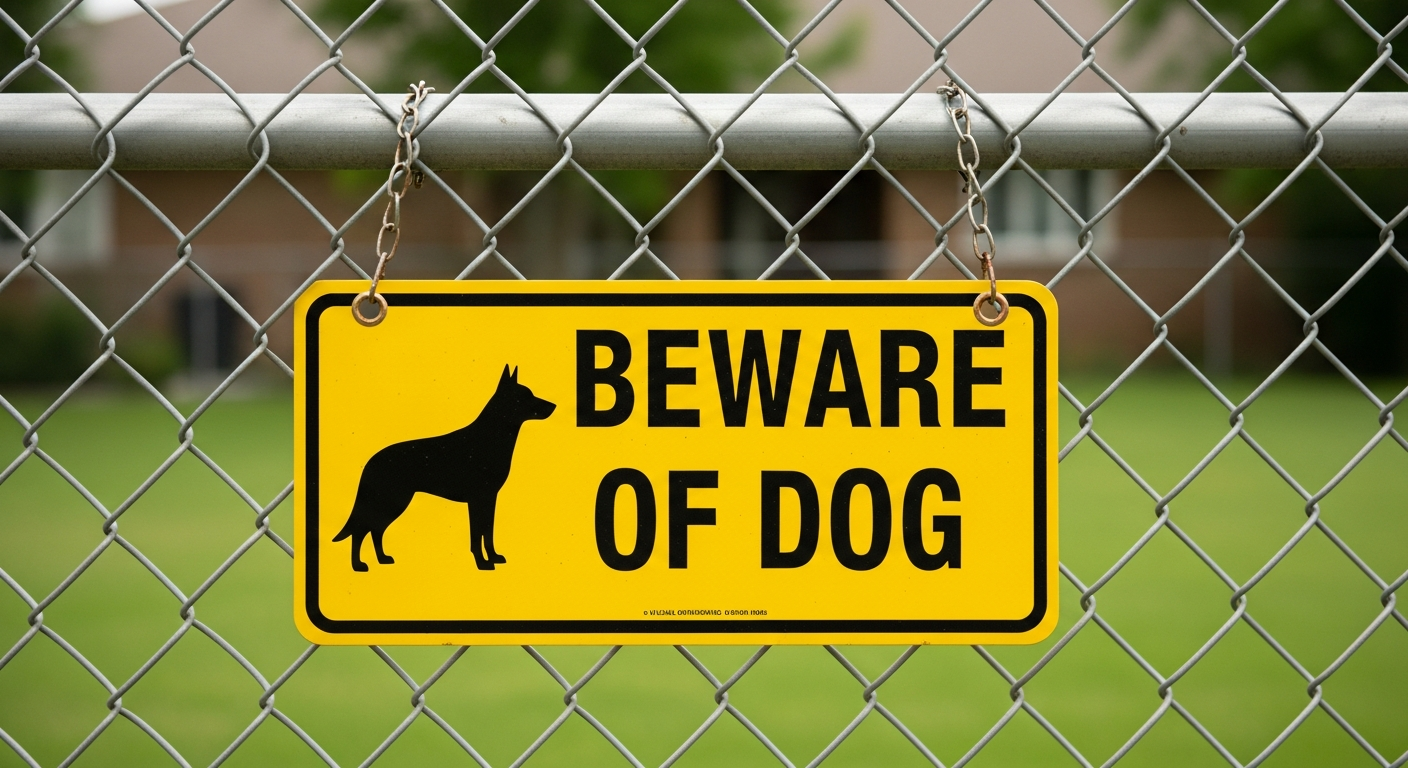
Kentucky law under KRS 258.235 provides a process for declaring dogs vicious. Under subsection (5), any person attacked by a dog may file a complaint in District Court. If the court finds that the dog "viciously and without cause, attacked a human being when off the premises of the owner or keeper," the court may:
- Order the owner to keep the dog securely confined in a locked enclosure at least seven feet high with a secured top.
- Order the dog to be destroyed.
- Impose penalties under KRS 258.990(3)(b).
Requirements for Owners of Vicious Dogs
Owners of court-designated vicious dogs face strict confinement rules under KRS 258.235(3):
- The dog must be kept in a locked enclosure at least seven (7) feet high or a locked kennel run with a secured top.
- The dog may only leave the enclosure to visit a veterinarian or to be surrendered to an animal shelter.
- The dog must be muzzled whenever it leaves the enclosure.
- Any vicious dog found running at large may be killed by an animal control officer or peace officer without liability.
Penalties for Violations
Under KRS 258.990, violating the vicious dog confinement requirements carries a fine of $50 to $200. Other violations of KRS 258.095 to 258.365 carry fines of $5 to $100, imprisonment for 5 to 60 days, or both.
Reporting Requirements and Rabies Quarantine
After a dog bite occurs in Kentucky, several reporting and public health procedures apply.
Medical Provider Reporting
Any physician or medical provider who treats an animal bite must report the incident to the local health department within 12 hours.
Rabies Quarantine
Under Kentucky administrative regulations, local health officers have the authority to quarantine any dog, cat, or ferret that has bitten a human for a period of up to 10 days. This quarantine applies whether or not the animal has a current rabies vaccination.
If the animal dies during quarantine or is suspected of having rabies, the owner must send the animal's head to a state-approved laboratory for testing.
Rabies Vaccination Requirements
Under KRS 258.015, every dog owner must have their dog vaccinated against rabies by four months of age and revaccinated at the intervals required by the vaccine manufacturer. A Kentucky-licensed veterinarian must administer the vaccination.

Landlord Liability for Dog Bites in Kentucky
Kentucky landlords may be held liable for injuries caused by a tenant's dog under certain conditions.
The Benningfield Decision
In Benningfield v. Zinsmeister (2012), the Kentucky Supreme Court held that a landlord who permits a tenant to keep a dog on leased premises can be considered an "owner" under KRS 258.235. This ruling established that landlords may share strict liability for dog bite injuries occurring on or immediately adjacent to the rental property.
When Landlord Liability Applies
A landlord may face liability when:
- The landlord knew or should have known the tenant's dog was dangerous.
- The landlord had the authority to require the dog's removal but failed to act.
- The bite occurred on or immediately adjacent to the rental property.
- The landlord permitted the tenant to keep the dog on the premises.
Limiting Landlord Liability
Landlords can reduce their exposure by:
- Including detailed pet policies in lease agreements.
- Requiring tenants to carry renter's insurance with liability coverage.
- Conducting periodic property inspections.
- Acting promptly when notified of aggressive animal behavior.
Breed-Specific Legislation in Kentucky
Kentucky does not have a statewide breed-specific ban. However, the state allows individual municipalities to enact their own breed-specific legislation (BSL).
Cities with Breed Restrictions
Several Kentucky cities have enacted breed-specific ordinances. For example, Covington, Kentucky prohibits keeping "vicious dogs," which the ordinance defines to include pit bulls and wolf-hybrids, unless owners meet specific requirements:
- Proper registration with the city
- Secure confinement with warning signs posted
- Use of a leash and muzzle when outside the enclosure
- Microchip implantation
- Proof of rabies vaccination and sterilization
- Minimum $100,000 in liability insurance
Trend Toward Behavior-Based Laws
Many Kentucky communities have moved away from breed-specific bans and adopted behavior-based dangerous dog ordinances instead. These laws focus on the individual dog's actions rather than its breed. Check your local city or county ordinances for any breed-specific restrictions in your area.
Criminal Penalties for Dog Owners
In serious cases, Kentucky dog owners may face criminal charges in addition to civil liability.
Misdemeanor Charges
Dog owners may face misdemeanor charges when:
- A dog causes injury because the owner violated local leash or confinement laws.
- The owner failed to confine a court-designated vicious dog.
- The owner violated any provision of KRS 258.095 to 258.365.
Penalties include fines of $5 to $100, imprisonment for 5 to 60 days, or both under KRS 258.990.
Felony Charges
Felony-level charges may apply when:
- A dog kills or causes serious physical injury to a person.
- The owner knew the dog was dangerous and deliberately failed to take precautions.
- The owner intentionally used the dog as a weapon to assault someone.
These cases are typically prosecuted under Kentucky's general criminal statutes for assault, manslaughter, or criminal negligence rather than the animal control statutes.
Filing a Dog Bite Claim in Kentucky: Step by Step

If you have been bitten by a dog in Kentucky, take these steps to protect your legal rights:
- Get medical treatment immediately. Even minor bites can lead to infection. Keep all medical records and receipts.
- Report the bite to animal control. Contact your local animal control agency and file a report. This creates an official record of the incident.
- File a police report. A police report adds another layer of official documentation.
- Document the scene and injuries. Photograph your injuries, the location of the attack, and the dog if you can do so safely.
- Identify the dog and owner. Get the owner's name, address, phone number, and homeowner's insurance information.
- Collect witness information. Get names and contact details for anyone who saw the attack.
- Preserve physical evidence. Keep torn or bloodstained clothing in a sealed bag.
- Do not give recorded statements to insurance adjusters without consulting an attorney first.
- Consult a personal injury attorney. Kentucky's one-year statute of limitations means you must act quickly. Many attorneys offer free consultations for dog bite cases.
Statute of Limitations: Act Quickly
Kentucky's one-year statute of limitations under KRS 413.140 is among the shortest in the nation. Missing this deadline almost always results in permanent loss of your right to file a lawsuit.
Key timing considerations:
- The clock begins on the date the bite occurs.
- Minors have extended deadlines under KRS 413.170; the one-year period does not start until they turn 18.
- Claims against government entities (such as a city-owned animal shelter) may require even shorter notice periods.
- Property damage claims follow a separate five-year statute under KRS 413.120.

Insurance Coverage for Dog Bite Claims
Most dog bite claims in Kentucky are paid through the dog owner's homeowner's or renter's insurance policy.
Typical Coverage
- Standard homeowner's policies cover dog bite liability up to the policy limit, usually $100,000 to $300,000.
- If damages exceed the policy limit, the dog owner is personally responsible for the remaining amount.
- Some insurers exclude certain breeds or require additional riders for coverage.
Filing an Insurance Claim
You can file a claim directly against the dog owner's homeowner's insurance. The insurance company will assign an adjuster to evaluate the claim and may offer a settlement. You are not required to accept the first offer.

More Kentucky Laws
Sources and References
- KRS 258.235 - Authority to kill or seize dog; Return by court to owner of vicious dog; Liability for damage(apps.legislature.ky.gov).gov
- KRS 411.182 - Allocation of fault in tort actions; Award of damages(apps.legislature.ky.gov).gov
- KRS 413.140 - Actions to be brought within one year(apps.legislature.ky.gov).gov
- KRS 413.170 - Limitations tolled during disability(apps.legislature.ky.gov).gov
- KRS 258.990 - Penalties for animal control violations(apps.legislature.ky.gov).gov
- KRS 258.015 - Dogs, cats, and ferrets to be vaccinated against rabies(apps.legislature.ky.gov).gov
- KRS 413.120 - Actions to be brought within five years (property damage)(apps.legislature.ky.gov).gov
- Kentucky Cabinet for Health and Family Services - Rabies Program(chfs.ky.gov).gov
- Insurance Information Institute - Spotlight on Dog Bite Liability(iii.org)