Illinois Dog Bite Laws: Liability and Victim Rights

Illinois Dog Bite Liability Under the Animal Control Act
Illinois is a strict liability state for dog bite injuries. Under 510 ILCS 5/16 of the Illinois Animal Control Act, a dog owner is liable for the full amount of injuries when their dog attacks, attempts to attack, or injures any person who is peacefully conducting themselves in a place where they have a legal right to be.
This means the victim does not need to prove negligence or prior knowledge of the dog's dangerous behavior. Illinois law places the burden of responsibility squarely on the owner.
What Strict Liability Means for Dog Bite Victims
In states that follow a "one-bite rule," victims must prove the owner knew or should have known their dog was dangerous. Illinois rejects this approach entirely. Under strict liability, a victim only needs to show three things:
- The defendant was the dog's owner (or keeper, harborer, or custodian)
- The dog attacked, attempted to attack, or injured the victim
- The victim was lawfully present and was not provoking the dog
There is no requirement to prove the dog had a history of aggression or that the owner failed to take reasonable precautions.
Broad Definition of "Owner" Under Illinois Law
The Animal Control Act defines "owner" much more broadly than most people expect. Under 510 ILCS 5/2.16, an "owner" includes any person who:
- Has a right of property in the animal
- Keeps or harbors the animal
- Has the animal in their care
- Acts as the animal's custodian
- Knowingly permits a dog to remain on premises they occupy
This broad definition means that dog sitters, temporary caretakers, and even people who allow a dog to stay on their property can face liability for bite injuries.
Dog Owner Responsibilities in Illinois
Illinois law imposes several legal obligations on dog owners designed to protect the public from dangerous animals.

Leash and confinement laws vary by municipality across Illinois, but most cities and counties require dogs to be leashed in public areas. The state requires rabies vaccination under 510 ILCS 5/8, and most local jurisdictions require licensing and registration.
Owners of dogs that have been designated as dangerous face additional requirements, including maintaining secure enclosures, using muzzles in public, posting warning signs, and carrying liability insurance.
Violating any of these requirements can strengthen a victim's case and may result in additional civil or criminal penalties for the owner.
Victim Rights and Recoverable Damages
Dog bite victims in Illinois can recover compensation for the full amount of their injuries. The Animal Control Act does not cap the damages available in dog bite cases.

Economic Damages
Economic damages cover the financial losses directly caused by the dog bite injury:
- Emergency room visits, surgery, and hospitalization costs
- Ongoing medical treatment and rehabilitation
- Prescription medications
- Lost wages from time missed at work
- Reduced future earning capacity
- Property damage (torn clothing, broken eyeglasses, etc.)
Non-Economic Damages
Non-economic damages compensate victims for the personal impact of the injury:
- Physical pain and suffering
- Emotional distress and psychological trauma
- Scarring and permanent disfigurement
- Loss of enjoyment of life
- Post-traumatic stress disorder (PTSD)
Children are especially vulnerable to severe dog bite injuries, and courts often award significant non-economic damages in cases involving minors.
Legal Defenses Available to Dog Owners
Even under Illinois's strict liability framework, dog owners have several potential defenses that can reduce or eliminate their liability.
Provocation
The most common defense is provocation. If the victim provoked the dog by teasing, tormenting, hitting, or otherwise agitating the animal, the owner may not be liable. Illinois courts evaluate provocation from the dog's perspective, asking whether the victim's actions were sufficient to cause a normally calm dog to react aggressively.
Even unintentional provocation can serve as a defense. For example, accidentally stepping on a dog's tail or startling a sleeping dog may qualify.
Trespassing
The strict liability statute only protects victims who are "peaceably conducting" themselves in a place where they "may lawfully be." If the victim was trespassing on private property at the time of the bite, the owner may have a complete defense.
However, this defense is weaker when applied to children, because Illinois courts recognize that young children may not understand property boundaries.
Comparative Negligence
Illinois follows a modified comparative negligence standard under 735 ILCS 5/2-1116. If the victim is found to be partially at fault for the bite, their recovery is reduced in proportion to their degree of fault. If the victim is more than 50% at fault, they are barred from recovering any damages.
For example, if a victim ignored warning signs about a dangerous dog and suffered a bite, a jury might assign 30% of the fault to the victim, reducing their compensation by that amount.
Assumption of Risk
Professionals who work with animals, such as veterinarians, dog groomers, and kennel workers, may face a limited assumption of risk defense. However, this defense does not automatically bar recovery. Courts examine whether the specific risk that caused the injury was a known and accepted part of the professional's work.
Dangerous Dog Designations Under Illinois Law
The Illinois Animal Control Act establishes a formal process for designating dogs as "dangerous" or "vicious," with escalating consequences for owners.
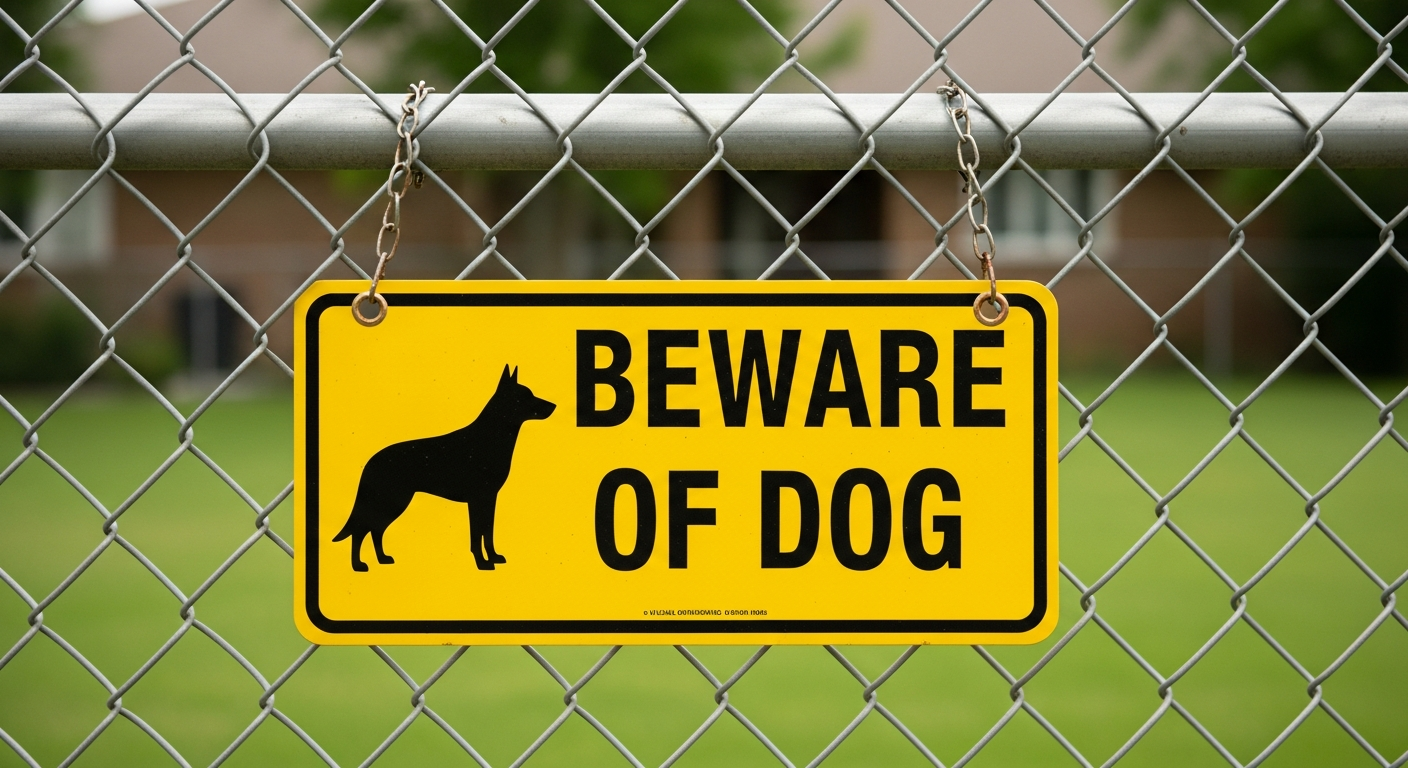
How a Dog Gets Designated as Dangerous
Under 510 ILCS 5/15, a dog may be declared dangerous if it:
- Bites or attacks a person without provocation while off the owner's property
- Kills or seriously injures a domestic animal while off the owner's property
- Has been previously designated as potentially dangerous and continues aggressive behavior
Local animal control administrators conduct hearings to determine whether a dog should be classified as dangerous. Owners have the right to appeal the designation.
Requirements for Owners of Dangerous Dogs
Once a dog is designated as dangerous, the owner must comply with strict requirements:
| Requirement | Details |
|---|---|
| Liability Insurance | Minimum $100,000 coverage |
| Secure Enclosure | Locked enclosure with roof, walls, and floor |
| Leash and Muzzle | Required whenever the dog is off the owner's property |
| Warning Signs | "Dangerous Dog" signs posted on the property |
| Microchipping | Permanent identification required |
| Notification | Must inform animal control of any changes in ownership or address |
Failure to comply with these requirements can result in criminal charges and seizure of the dog.

Statute of Limitations for Dog Bite Claims
Illinois sets a strict deadline for filing dog bite lawsuits. Under 735 ILCS 5/13-202, the statute of limitations for personal injury claims is 2 years from the date of the bite.
Missing this deadline almost always results in losing the right to file a lawsuit, regardless of the strength of the case.
Important Exceptions to the Two-Year Deadline
- Minors: The two-year clock does not begin running until the child turns 18. A child bitten at age 10 would have until age 20 to file a lawsuit.
- Government entities: Claims against government-owned dogs or dogs on government property may require a shorter notice period, sometimes as little as one year.
- Discovery rule: In rare cases where the full extent of injuries is not immediately apparent, the clock may start when the victim discovers or reasonably should have discovered the injury.
Criminal Penalties for Dog Owners in Illinois
Beyond civil liability, Illinois imposes criminal penalties on owners whose dogs cause serious harm. The severity of the charges depends on the circumstances and whether the dog was previously designated as dangerous.
Misdemeanor Charges
Owners may face misdemeanor charges for:
- Violating local leash laws or confinement requirements
- Failing to register or license their dog
- Allowing a dangerous dog to roam at large
Felony Charges Under the Animal Control Act
The Animal Control Act imposes escalating felony charges for owners of dangerous dogs:
| Offense | Charge Level | Potential Prison Time |
|---|---|---|
| Dangerous dog attacks a person (owner complied with requirements) | Class 4 Felony | 1 to 3 years |
| Dangerous dog seriously injures a person (owner failed to comply) | Class 3 Felony | 2 to 5 years |
| Dangerous dog kills a person (owner failed to comply) | Class 2 Felony | 3 to 7 years |
| Owner knowingly allowed dangerous dog to run at large, resulting in death | Class 2 Felony | 3 to 7 years |
Criminal penalties can include fines, probation, imprisonment, and mandatory euthanasia of the dog.
Landlord Liability for Dog Bites in Illinois
Landlords in Illinois face potential liability for tenant dog bites, but only under specific circumstances. The broad "owner" definition in the Animal Control Act means a landlord can be liable if they "harbor" or "keep" a tenant's dog.
However, Illinois courts have established that simply allowing tenants to keep dogs on rental property does not make a landlord a "harborer." The landmark case Steinberg v. Petta clarified that harboring requires "some degree of care, custody, or control" over the animal.
A landlord may be held liable when:
- The landlord had actual knowledge that the tenant's dog was dangerous
- The landlord exercised some control over the dog
- The attack occurred in a common area under the landlord's control
- The landlord could have required the tenant to remove the dog but failed to act
Landlords should include clear pet policies in lease agreements and consider requiring tenants with dogs to carry renter's insurance with adequate liability coverage.
Breed-Specific Legislation in Illinois
Illinois has a complicated relationship with breed-specific legislation (BSL). The state Animal Control Act under 510 ILCS 5/15 specifies that vicious dogs "shall not be classified in a manner that is specific to breed." This language appears to prohibit breed-based restrictions at the state level.
However, because of the home rule provision in the Illinois Constitution, some municipalities have the power to pass local ordinances that override state law. As a result, several Illinois cities and villages have enacted their own breed-specific restrictions:
- Some municipalities completely ban certain breeds, particularly pit bulls
- Other communities impose additional requirements on owners of specific breeds, such as mandatory secure enclosures
- Many Illinois communities have moved away from breed-specific bans in favor of behavior-based dangerous dog ordinances
If you own a breed that may be subject to local restrictions, check your city or village ordinances for specific rules that apply in your area.

How to File a Dog Bite Claim in Illinois
If you have been bitten by a dog in Illinois, taking the right steps immediately after the incident can protect your legal rights and strengthen your claim.

- Seek immediate medical attention. Get treatment right away, even for seemingly minor bites. Dog bites carry a high risk of infection, and medical records serve as critical evidence.
- Report the incident. File a report with your local animal control agency and the police. This creates an official record of the attack.
- Document everything. Take photographs of your injuries, the location where the attack occurred, and the dog if you can do so safely.
- Gather witness information. Get names and contact information from anyone who saw the attack.
- Identify the owner. Obtain the dog owner's name, address, and homeowner's or renter's insurance information.
- Preserve physical evidence. Keep torn clothing, broken items, and any other physical evidence from the attack.
- Contact a personal injury attorney. An attorney experienced in dog bite cases can evaluate your claim and handle negotiations with insurance companies.
Avoid giving recorded statements to the dog owner's insurance company before consulting with an attorney, as these statements can be used to minimize your claim.
More Illinois Laws
Sources and References
- 510 ILCS 5/16 - Animal Attacks or Injuries(ilga.gov).gov
- 510 ILCS 5/2.16 - Definition of Owner(ilga.gov).gov
- 510 ILCS 5/15 - Dangerous and Vicious Dogs(ilga.gov).gov
- 510 ILCS 5/8 - Inoculation of Dogs and Cats(ilga.gov).gov
- 735 ILCS 5/13-202 - Personal Injury Statute of Limitations(ilga.gov).gov
- 735 ILCS 5/2-1116 - Modified Comparative Negligence(ilga.gov).gov
- Illinois Animal Control Act - Full Text(ilga.gov).gov
- Illinois Constitution - Home Rule Provision(ilga.gov).gov